

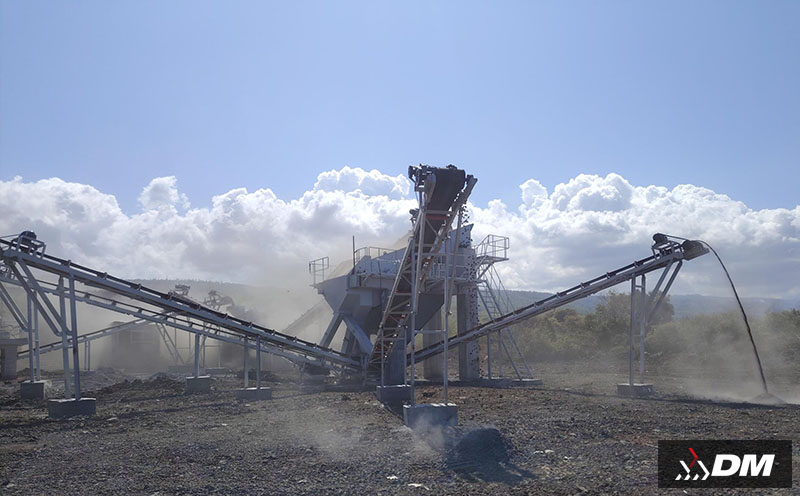
A crusher plant—often referred to as a crushing line or a full crushing and screening system—encompasses a coordinated sequence of operations integrating crushing machinery, screening devices, material conveyors, and auxiliary components. Its primary function is to transform raw feedstocks (including ores, construction debris, limestone, and granite) through a multi-stage process of primary, secondary, and tertiary crushing, followed by precise screening and classification. The end result is a consistent supply of finished materials that meet strict industry specifications. As a cornerstone of material processing, crusher plants are indispensable across mining, aggregate production, construction waste recycling, metallurgy, and building materials sectors.
1. Core Components of a Crusher Plant
Unlike a random assembly of standalone machines, a fully functional crusher plant is a custom-engineered system tailored to material properties, finished product requirements, and production capacity goals. Its key components include the following critical elements:
1.1 Feeding Equipment
Serving as the "front-end gateway" of the entire line, feeding equipment (such as vibratory feeders) ensures a steady, uniform flow of raw materials into the primary crusher. This controlled feeding prevents equipment overload and inefficiencies caused by inconsistent material input, laying the groundwork for stable plant operation.
1.2 Crushing Equipment
The heart of the processing line, crushing equipment is divided into distinct stages based on the desired particle size reduction:
- Primary crushing equipment: Jaw crushers are the workhorses here, reducing large raw materials to a medium particle size suitable for further processing;
- Secondary crushing equipment: Cone crushers and impact crushers take over, refining the output from primary crushers to smaller, more uniform particles;
- Tertiary crushing equipment: Sand makers and hammer crushers cater to high-precision applications, producing millimetre-scale fine particles ideal for premium aggregates and sand products.
1.3 Screening Equipment
Installed downstream of each crushing stage, screening equipment (notably Dongmeng’s YK series vibrating screens) sorts crushed materials according to pre-set size criteria. Materials that meet finished product specifications are directed to storage areas, while oversized particles are recirculated back to the appropriate crusher for reprocessing. This closed-loop system guarantees consistent product gradation and adherence to quality standards.
1.4 Conveying Equipment
Belt conveyors act as the "vascular system" of the crusher plant, connecting feeding, crushing, screening, and finished product storage zones. By enabling seamless material transfer between different machines, conveyors ensure unobstructed workflow and optimal overall plant efficiency.
1.5 Auxiliary Equipment
Beyond core processing machinery, crusher plants rely on auxiliary systems to enhance performance and compliance. These include dust collection systems (for environmental protection), sand washers (to remove soil and impurities), and centralized electrical control systems (for unified equipment operation and parameter adjustment). These additions boost product quality, operational safety, and environmental sustainability.
2. Operational Workflow of a Crusher Plant
Taking a typical sand and gravel aggregate plant as an example, the standard operational process unfolds as follows:
- Raw material feeding: Excavators or loaders transfer large ore or rock into a hopper, where a vibratory feeder meters the material evenly into the jaw crusher;
- Primary crushing: The jaw crusher reduces raw materials to semi-finished products with a particle size of 100–300 mm, which are then transported to a vibrating screen via a belt conveyor;
- Screening and classification: The vibrating screen separates oversized materials, which are returned to the jaw crusher for re-crushing, while appropriately sized material is sent to a cone or impact crusher;
- Secondary/tertiary crushing: Secondary crushers further reduce material size to 20–50 mm. For fine sand or high-grade aggregates, the material is processed in a sand maker for final refinement;
- Finished product screening and storage: A final screening stage sorts materials into distinct gradations (e.g., 0–5 mm fine sand, 5–10 mm aggregate, 10–20 mm aggregate), which are then conveyed to dedicated finished product silos to complete the process.
3. Key Features and Application Scenarios of Crusher Plants
3.1 Core Characteristics
- Customization: Equipment configurations are flexibly adapted to material type (hard rock, soft rock, construction waste), desired product gradation, and production capacity (ranging from tens to hundreds of tons per hour);
- High efficiency: Synchronized operation of all components enables continuous material processing, delivering far greater output than standalone machines;
- Standardization: Rigorous screening ensures finished product uniformity, meeting industry standards for construction sand, road aggregates, and other applications;
- Environmental friendliness: Integrated dust control, noise reduction, and spray systems ensure compliance with modern industrial environmental regulations.
3.2 Primary Application Scenarios
- Sand and gravel plants: Producing aggregates for construction, road, and bridge projects;
- Mining operations: Crushing iron ore, copper ore, limestone, and other minerals to facilitate subsequent processing or transportation;
- Construction waste treatment: Recycling concrete blocks, bricks, and demolition debris into reusable aggregates, promoting resource circularity;
- Metallurgical and chemical industries: Processing raw materials to meet strict particle size requirements for production processes.
4. Overview
A crusher plant represents a comprehensive material processing solution that integrates feeding, crushing, screening, and conveying. Its core value lies in converting raw materials into industry-ready finished products through standardized, continuous operations. Driven by advancements in mining, infrastructure, and environmental sectors, crusher plant technology is evolving rapidly—moving toward greater intelligence, energy efficiency, and eco-friendliness—and remains a vital support system in global material processing.
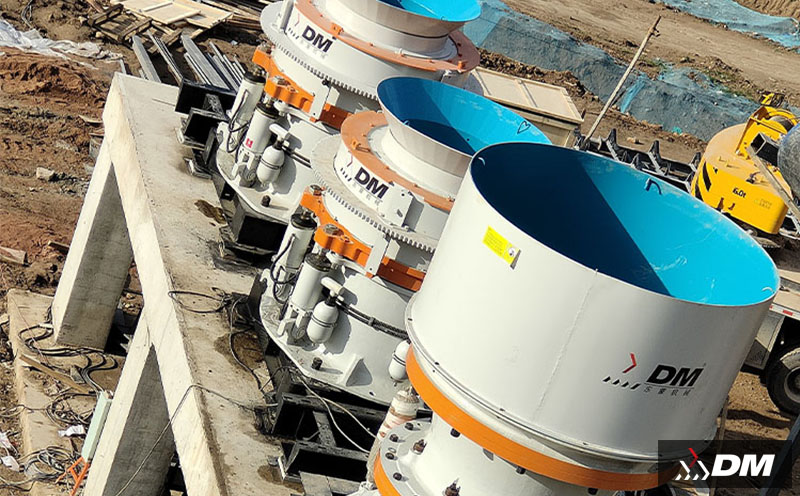
Step-by-Step Guide to Establishing a Crusher Plant
Building a high-efficiency, stable, and demand-aligned crusher plant is not a simple equipment procurement task, but a systematic project requiring scientific planning, equipment selection, design, and commissioning. Success depends on aligning multiple factors, including material characteristics, production capacity targets, site conditions, and industry regulations. Whether for a sand and gravel plant, mining enterprise, or construction waste recycling project, a well-structured construction process is critical to ensuring long-term production efficiency and economic returns. This guide outlines the key steps in developing a crusher plant from concept to operation.
1. Pre-Construction Research and Requirement Definition
Before initiating plant construction, a comprehensive feasibility study is essential to clarify core requirements and avoid costly errors in equipment selection or layout design:
- Material property verification: Precisely determine the type (e.g., granite, limestone, construction waste), hardness, moisture content, clay content, and maximum feed size of the raw material. This data is the foundation for selecting appropriate crushing equipment (e.g., cone crushers for hard rock, impact crushers for soft rock or construction waste);
- Finished product specification: Define the required particle size gradations (e.g., 0–5 mm fine sand, 5–10 mm aggregate), production capacity (hourly/daily/annual output), and end-use of the product (construction sand, road aggregates, mineral processing). Different applications demand distinct standards for particle size and purity;
- Site and compliance assessment: Evaluate the construction site’s area, topography, and geological conditions (e.g., mountainous vs. flat terrain). Confirm access to water, electricity, and transportation infrastructure. Simultaneously, research local environmental, safety, and land use regulations to ensure full project compliance.
2. Equipment Selection: Scientific Matching of Core Components
Equipment selection directly impacts plant efficiency and operational costs, and must be based on the findings of the pre-construction research:
- Feeding equipment: Choose a vibratory feeder model that matches the raw material feed rate, ensuring alignment with the processing capacity of downstream crushers. This prevents equipment blockages from over-feeding or reduced output from under-feeding;
- Crushing equipment: Follow the "primary-secondary-tertiary" crushing hierarchy. Jaw crushers are preferred for primary crushing (ideal for large raw materials). For secondary crushing, select cone crushers (hard rock) or impact crushers (soft rock) based on material hardness. Sand makers are used for tertiary crushing if sand production is required, while hammer crushers suffice for fine-grained aggregate;
- Screening equipment: Select the number of layers and screen mesh size of circular vibrating screens based on finished product gradation needs. Additional layers enable more precise classification, matching the number of required product fractions;
- Conveying equipment: Choose belt conveyor width, length, and speed based on equipment layout distance and material throughput. Consider the maximum incline angle (typically no more than 18°) to ensure efficient material transfer;
- Auxiliary equipment: In high environmental regulation areas, install baghouse dust collectors and spray dust suppression systems. For high-clay raw materials, integrate sand washers. Additionally, include centralized electrical control cabinets, silos, and steel structure supports to ensure seamless plant operation.
3. Crusher Plant Layout Design: Balancing Efficiency and Practicality
An optimal layout not only boosts production efficiency but also reduces material transport costs and enhances operational safety:
- Process optimization: Follow the material flow sequence of "raw material → primary crushing → screening → secondary crushing → tertiary crushing → finished product screening → finished product storage." Minimize conveyor distances between equipment to reduce material recirculation and energy consumption;
- Site utilization: Adapt the layout to topographical features. Mountainous sites can leverage natural elevation differences for gravity-fed material flow, reducing the number of conveyors. Flat sites require clear zoning of raw material, processing, finished product, and office areas to avoid operational conflicts;
- Maintenance and operation space: Reserve a minimum of 1.5 meters of maintenance access between equipment to facilitate future servicing, spare part replacement, and personnel movement. Plan dedicated waste and dust collection zones to maintain a clean production environment.
4. Site Infrastructure and Equipment Installation
- Infrastructure construction: Complete site levelling, foundation pouring (reinforced foundations are mandatory for crushing equipment to prevent vibration-induced displacement), water and electrical pipeline installation, and finished product silo foundation construction in accordance with equipment layout drawings. All infrastructure must meet equipment load-bearing and dimensional requirements;
- Equipment installation: Engage professional equipment manufacturers or installation teams for compliance with technical specifications. Install core crushing equipment first, followed by feeding, screening, and conveying systems. Ensure equipment levelness and coaxiality meet standards, and adjust conveyor belt tension to optimal levels;
- Auxiliary facility installation: Simultaneously install and commission dust collection, sand washing, and electrical control systems. Verify that all auxiliary equipment is fully integrated with the main crushing line for synchronized operation.
5. Commissioning and Trial Production: Validating Plant Stability
Following equipment installation, comprehensive commissioning and trial production are necessary to identify and resolve issues, and optimize performance:
- No-load commissioning: Conduct no-load operation tests for each individual piece of equipment. Verify normal speed, noise, and vibration levels, and confirm the effectiveness of electrical control system start/stop and protection functions;
- Load commissioning: Gradually introduce raw materials for low-load trial production. Monitor crushing efficiency, screening accuracy, and material conveying smoothness, while recording operational parameters for all equipment;
- Parameter optimization: Adjust feed rate, crusher discharge setting, and screen amplitude based on trial production data. Continue fine-tuning until finished product particle size and production capacity meet pre-set targets;
- Personnel training: Provide professional training for operation and maintenance staff. Ensure proficiency in equipment operation procedures, daily inspection checkpoints, and common fault troubleshooting methods.
6. Compliance Acceptance and Official Production Launch
- Compliance acceptance: Complete environmental testing (dust and noise emissions), safety certification (equipment protection, fire safety facilities), and special equipment inspections (e.g., conveyors, pressure vessels). Obtain all relevant acceptance documents to ensure regulatory compliance;
- Official production: After passing acceptance, gradually increase plant load to full production capacity. Establish a daily equipment maintenance log and implement regular servicing (e.g., lubrication, wear part replacement) to ensure long-term stable operation.
7. Post-Launch Operation and Continuous Optimization
Once the crusher plant is operational, ongoing monitoring and optimization are essential for sustained performance:
- Production capacity and quality monitoring: Regularly test finished product particle size and output. Adjust production parameters in response to market demand changes;
- Equipment maintenance management: Establish a wear part replacement schedule (e.g., crusher liners, screen meshes) to prevent product quality degradation or equipment failure due to component wear;
- Energy consumption and cost control: Track operational costs including water, electricity, spare parts, and labour. Reduce unit product costs by optimizing equipment parameters and improving equipment utilization rates;
- Environmental upgrade: Update dust collection and noise reduction equipment in line with the latest environmental policies. Ensure continuous compliance with evolving regulatory requirements.
Overview
Building a crusher plant is a systematic endeavour spanning from demand research to commissioning and production. Its success hinges on "precision matching": aligning equipment selection with material and finished product requirements, optimizing layout design for site conditions, and integrating operation management with cost and efficiency goals. Whether constructing a new plant or upgrading an existing one, scientific planning, professional equipment selection, and standardized installation and commissioning are essential. The result is an efficient, stable, and compliant crusher plant that delivers both economic and social benefits.












We will answer your email shortly!