

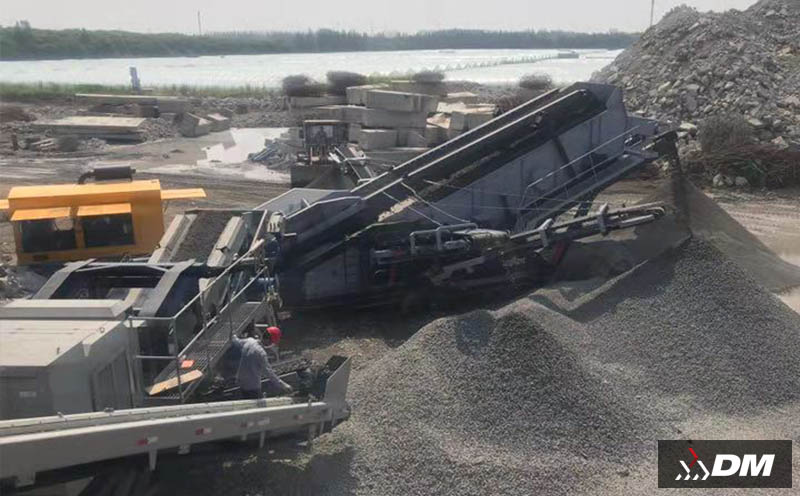
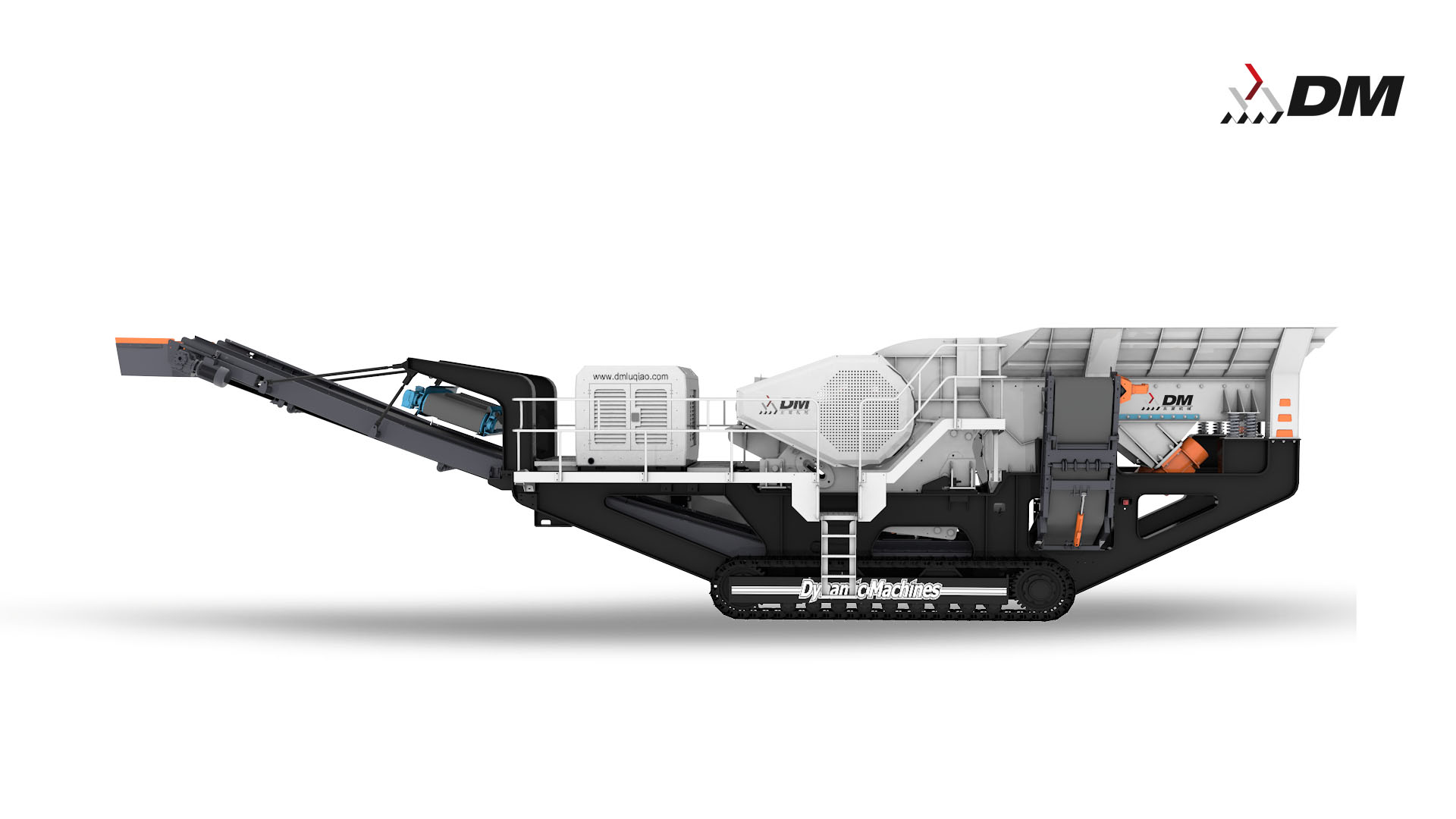
Mobile crusher output quality is not decided by the machine itself but by how the crushing unit, the feed method and the shaping stage are matched together. The same truckload of crushed stone sold by someone else fetches a higher price than yours, and the problem often lies not in the sales channel but in particle shape. Many owners of sand and gravel plants and construction waste processing projects have run into exactly this situation: they crush the material with a mobile crusher, output goes up, and yet when they take it to a ready-mix concrete station or batching plant the price quoted is two or three yuan per ton lower. Ask why, and the answer is usually one sentence — the flaky and elongated particle content exceeds the limit, and the particle shape is poor. Shanghai Dongmeng has been deeply engaged in crushing and screening equipment manufacturing for many years. Starting from particle shape, the most easily overlooked link in the chain, we set out below the root causes of "material that will not sell at a good price."
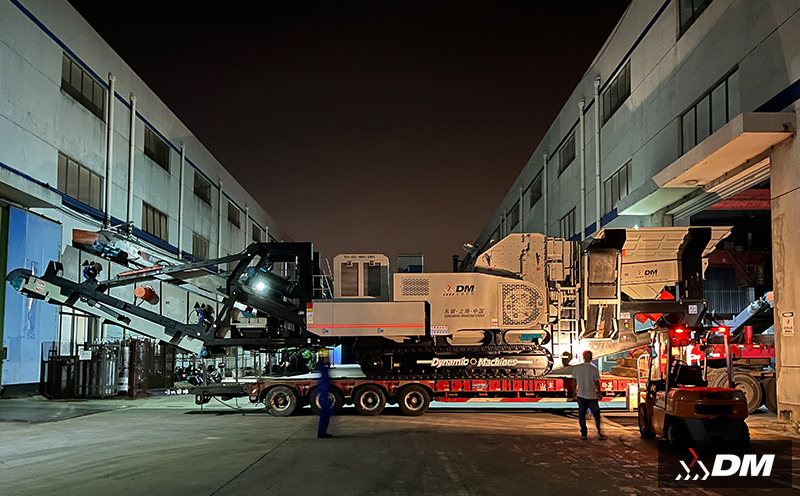
1. What Exactly Holds Aggregate Prices Back?
Look at the standard first, then talk about price. More than one index is involved, and flaky and elongated particles matter most.
Under the relevant aggregate standards, high-grade aggregate (Class I) is required to contain no more than 5% flaky and elongated particles, with Class II and Class III requirements loosening step by step. This index directly determines which projects the aggregate can enter and what price it can fetch. Flaky and elongated particles have several hard drawbacks. First, they create a high void ratio in the pile, so the same weight occupies more volume, and the batching plant must adjust its mix proportions accordingly, increasing cement consumption. Second, they bond poorly with the paste, so the strength of the concrete produced is unstable. Third, they tend to block pipes during pumping, which is what construction teams fear most.
So when a batching plant pushes the price down on receipt, it is not being difficult — those costs ultimately come back to itself. The two or three yuan per ton you lose is precisely the risk cost it needs to set aside.
2. Why Does Mobile Crusher Output Contain So Many Flaky Particles?
Three reasons account for most cases: the wrong crushing unit, insufficient feed, and a missing shaping stage.
The first is a mismatch between the crushing unit selected and the material. Primary crushing calls for a mobile jaw crushing station, secondary crushing of hard rock calls for a mobile cone crushing station, and low- to medium-hardness material calls for a mobile impact crushing station. That is the basic division of labor. Use a jaw crusher to produce finished aggregate directly, or use a cone crusher on low- to medium-hardness material, and the particle shape will not be good.
The second is insufficient feed. A cone crusher must be "choke fed" — this is the precondition for inter-particle (laminated) crushing to work. When the feed is insufficient, material is squeezed as single particles in the crushing chamber rather than laminated against each other, and the flaky and elongated particle content rises by 3 to 6 percentage points. On many sites the crushing unit is fine; it is the bin feed arrangement that was never set up properly, and particle shape is lost for nothing.
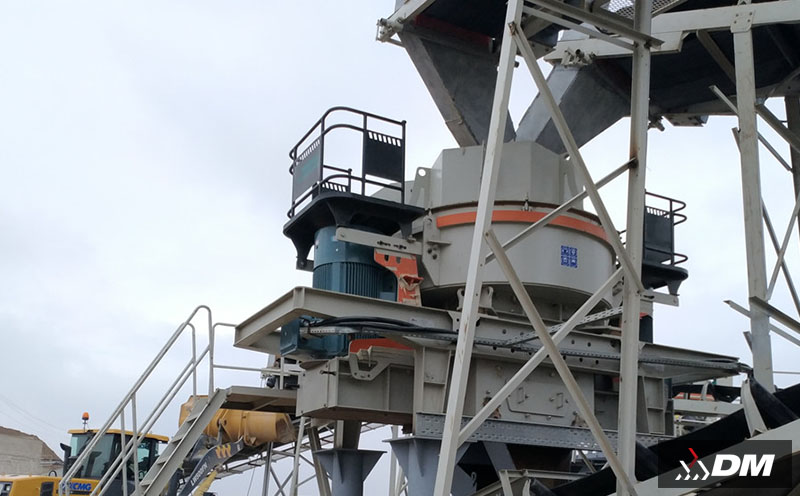
The third is crushing without shaping. To bring flaky and elongated particles below 5%, a further shaping pass through a vertical shaft impact crusher is usually needed, which can press the content further down to the 3% to 6% range. Skip this step and the finished product will always fall short.
The table below can be used as a self-check:
| Crusher type | Typical role | Flaky and elongated content reference |
|---|---|---|
| Jaw crushing station | Primary crushing, large hard rock feed | Generally not assessed (primary stage) |
| Cone crushing station | Secondary crushing of hard rock, laminated crushing | About 8%–15% |
| Impact crushing station | Medium and fine crushing of low- to medium-hardness material | About 5%–8% |
| Vertical shaft impact crusher (shaping) | Finished product shaping, sand making | About 3%–6% |
3. How Much Can Adjusting the Feed Improve?
Feed saturation is the easiest point to change on site and the fastest to show results.
A cone crusher relies on material layers squeezing one another, so material must be retained in the crushing chamber. A common mistake on site is running the vibrating feeder too hard, so material rushes into the chamber in one surge and cannot be held there; both the reduction ratio and the particle shape deteriorate. The correct approach is to keep the feed rate within a reasonable range relative to the chamber volume, so that the chamber stays "choke fed" and the material is squeezed repeatedly inside it, with flaky particles broken off again and again.
This step costs almost nothing — it only requires adjusting the feeder frequency and adding level detection or a simple variable-frequency interlock. For a mobile crusher already in production whose particle shape does not meet spec, this is the first place to try.
4. Is It Worth Adding a Shaping Machine?
A quick calculation makes it clear; the key is how many grades the finished product can move up.
Suppose a line produces 300 tons per hour, which at 10 hours a day is 3,000 tons. If flaky and elongated content exceeds the limit and the price is pushed down by 3 yuan per ton, the daily loss is 9,000 yuan, and at 25 working days a month that is 225,000 yuan. This is a pure price loss — the material is still the same material.
Once a shaping stage is added and the particle shape meets spec, the aggregate can move up from being usable only as low-grade backfill to entering roadbed cement-stabilized layers, permeable bricks, and even high-grade concrete aggregate. The price uplift per ton is usually far greater than the electricity and wear cost added by the shaping stage. The advantage of a mobile station is that the shaping unit can travel as an independent module with the rest of the plant, without building a separate stationary line for it. By any reckoning, this is worth doing.
5. How Should a Mobile Crusher Be Configured to Produce Good Material Consistently?
Match the crushing unit, feed, shaping and screening as one system, rather than buying a few machines separately.
First, set the crushing unit by material. High hardness and strong abrasiveness (granite, basalt and the like) call for a jaw crusher plus a cone crusher; low to medium hardness (limestone, construction waste) calls for a jaw crusher plus an impact crusher. Fix the process route first, then discuss the model.
Second, set the shaping stage by finished product. If Class I aggregate is required (no more than 5% flaky and elongated particles), put a vertical shaft impact crusher into the plan. If the output is only for backfill, this stage can be omitted and the investment put into capacity instead.
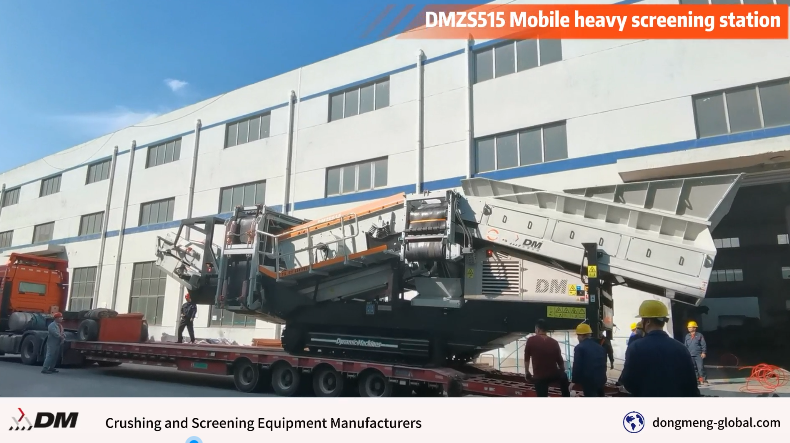
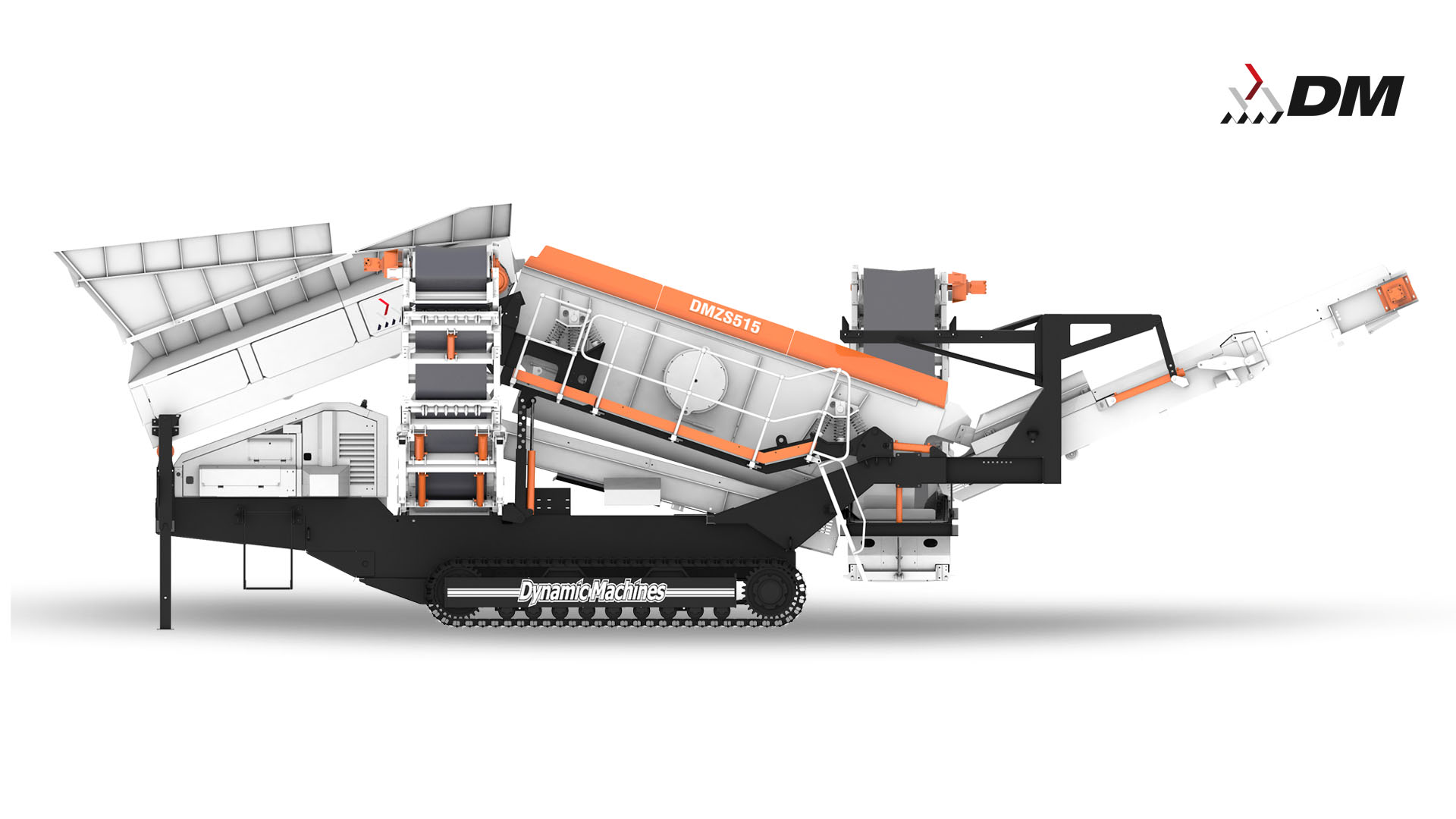
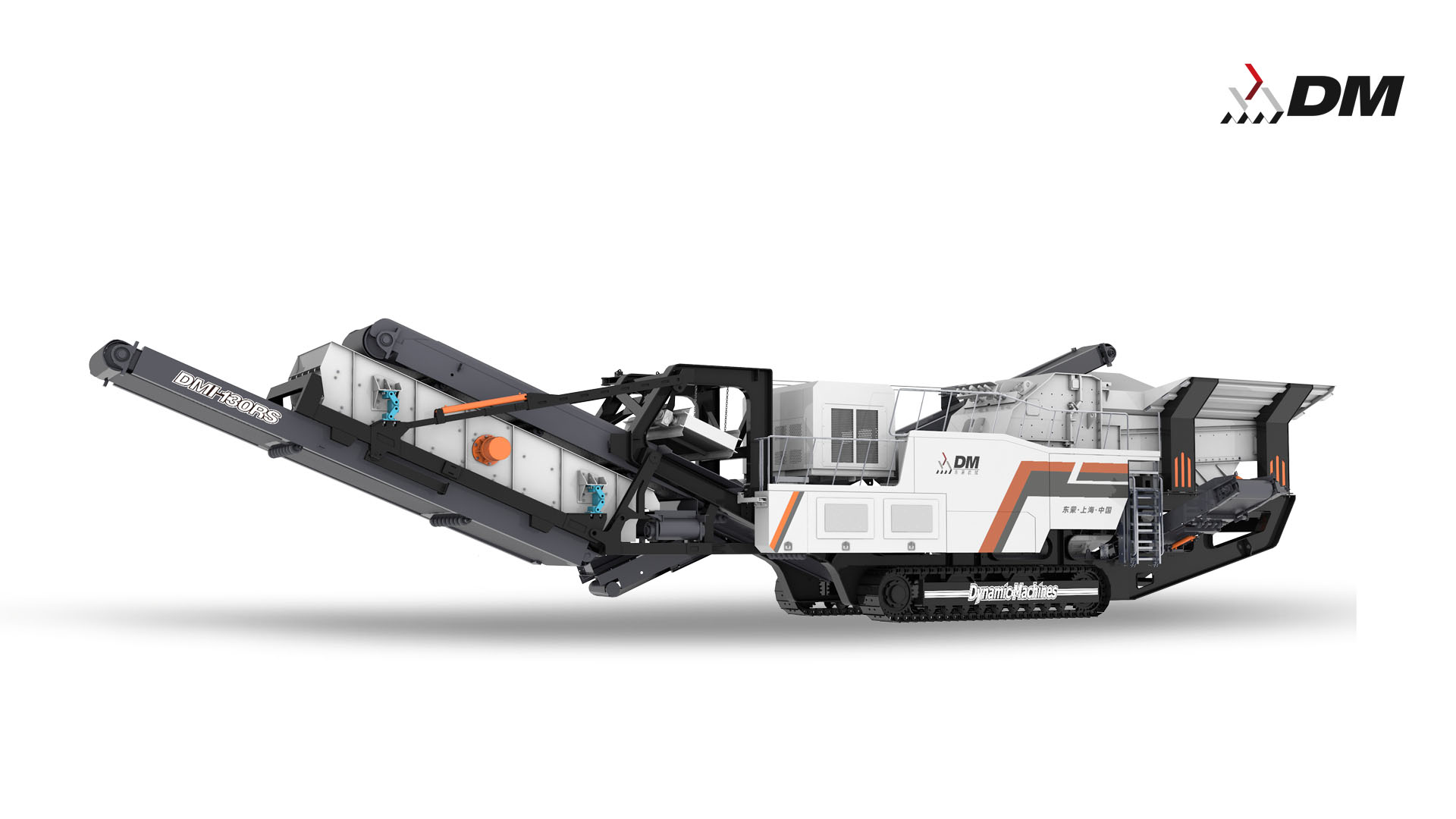
Third, set the structure by site. A mobile station suits projects where the material moves and the site changes, and the modular configuration allows units to be added or removed as needed, avoiding a single large heavy-asset investment. Dongmeng's mobile crushing and screening equipment is offered in both external power and dual diesel-electric series, matched to actual power supply conditions and operating rhythm.
Fourth, set operations and maintenance by stability. Fluctuations in particle shape usually come from everyday issues such as worn wear parts, damaged screen meshes and unstable feed. Keeping a log of replacement intervals for jaw plates, blow bars and screen meshes saves far more trouble than chasing the cause after the fact.
6. Why Does Choosing the Source Factory Avoid Detours?
Because particle shape is designed, not adjusted into place afterwards.
A mobile crusher is not a standard part. The same model configured for different materials, different capacities and different output specifications calls for a completely different solution. Holding flaky and elongated content consistently at a given level requires an overall design spanning chamber profile, feed method, screening configuration and shaping unit — not on-site trial and error after delivery. This is also why Dongmeng advises customers to have four elements ready when requesting a quotation: material type, feed size, output specification and capacity. With the information complete, the solution can be accurate.
As a complete crushing and screening solution provider, Shanghai Dongmeng has mature supporting experience across both extra-large and small mobile crushing station production lines. The company has participated in drafting the industry standard for Construction Waste Crushing Equipment since 2018, holds ISO 9001:2015 international quality system certification, and has successively entered the supplier lists of major state-owned groups such as China Railway and China Railway Construction. As a crusher factory, Dongmeng can provide customers with one-stop customized solutions covering crushing and screening equipment and complete production lines, tailored to material type, capacity requirements, finished product requirements and site conditions, with particle shape taken into account from the process design stage.
Conclusion: Particle Shape Is an Index That Earns Money
Flaky and elongated particle content looks like a technical parameter, but in the accounts it becomes a difference of a few yuan per ton. Whether a mobile crusher produces good material does not depend on whether the equipment is expensive; it depends on whether the process is matched correctly, the feed is sufficient, and the shaping stage is present.
If your material is being pushed down in price because of particle shape, or you are preparing to set up a mobile crushing production line, you are welcome to consult Shanghai Dongmeng. We can tailor a complete solution to your material and finished product requirements.
Shanghai Dongmeng is a high-tech enterprise integrating the research and development, production, sales and service of tracked and stationary crushing and screening equipment and solid waste treatment equipment. With many years of crushing unit production experience and technical accumulation, and drawing on the advantages of the high-quality industrial chain in the Yangtze River Delta, the company continues to develop highly competitive products. Its stationary crushing and screening equipment and tracked mobile crushing stations are well received in the market and are widely used in construction waste recycling, mining, engineering construction, earthworks and other fields. As an equipment developer and manufacturer and a full-service solution provider in the crushing and screening field, Shanghai Dongmeng has many years of crushing unit production experience and rich technical accumulation. In addition to its own strong independent research and development capability, the company holds a number of domestic design patents and boldly introduces advanced foreign technology, launching a large number of new products every year. Dongmeng products now cover many series including crushing, screening and sand making. Dongmeng crushing and screening equipment has successively entered the supplier lists of numerous state-owned groups such as China Railway and China Railway Construction, has repeatedly won government project orders in the Middle East and other regions, and has earned unanimous praise from customers worldwide. The company has become one of China's major production and export bases for crushed stone, screening and sand making equipment.
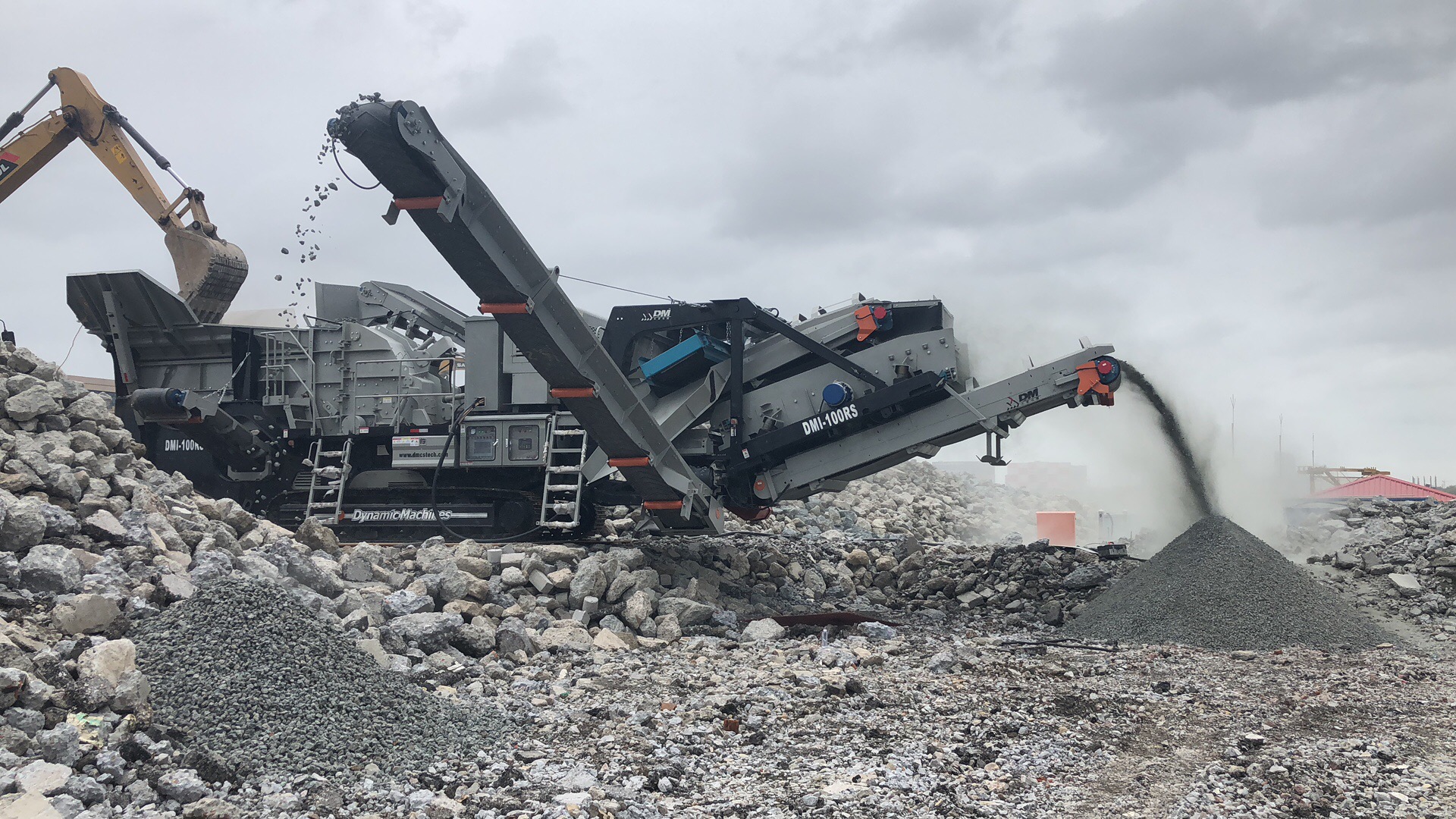
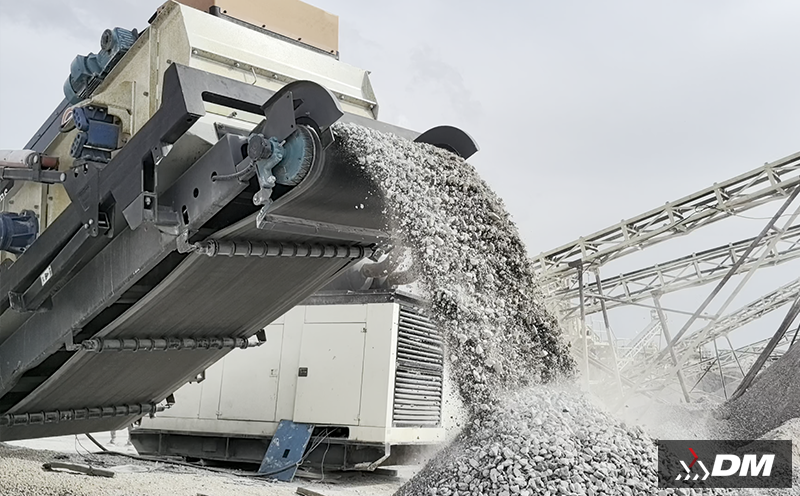
We will answer your email shortly!