


Crusher will suffer reduced production capacity, fast wear of wear-resistant parts and frequent shutdowns if improperly selected or operated when processing high-hardness and high-abrasion rocks like granite, basalt and diabase. Hard rock crushing is one of the harshest working conditions that test equipment in sand aggregate and mineral processing. Only by properly matching raw materials and the Crusher can the production line run stably and efficiently. This article focuses on seven core issues of processing hard materials with Crusher, helping manufacturers select models scientifically, operate reasonably and continuously reduce costs.
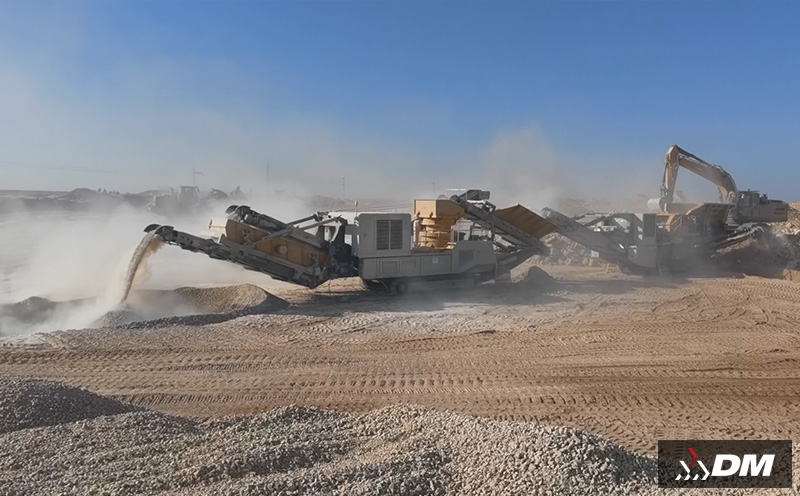
1. Why Is the Crusher Challenged by Hard Rock?
Rocks with high hardness and strong abrasiveness bring heavy consumption to impact components and wear-resistant parts of the Crusher. Jaw plates and hammers made of ordinary materials have sharply shortened service life under hard rock working conditions. Frequent replacement not only increases consumable costs, but also occupies effective production time. Besides, hard rock puts higher requirements on structural strength of the crushing chamber. Unreasonable chamber design may cause material jamming and motor stalling, further dragging down production capacity.
Therefore, for hard rock processing, users must choose Crusher with reinforced structure and high-quality wear-resistant parts, instead of blindly adopting production schemes designed for soft materials.
2. How to Select the Model of Crusher?
For hard rock crushing, models should be reasonably matched according to different process stages. Jaw Crusher is adopted in primary crushing. Its large feeding opening and high compressive strength can withstand impact from large blocks of hard rock. Cone Crusher is used for secondary and fine crushing. The laminating crushing method brings low abrasion and good particle shape for hard rock. If shaping is required, vertical shaft impact crusher can be equipped in the later stage.
The key of model selection is to match the capacity of Crusher in each stage, avoiding excess capacity at the front end and long-term overload at the back end, which leads to high energy consumption and frequent failures of the whole production line.
3. How to Set Parameters for the Crusher?
Correct parameter setting is the premise for efficient operation of Crusher in hard rock crushing. Discharge gap, feed particle size and crushing ratio should be adjusted according to material hardness and target finished product specification. For hard rock, follow the principle of more crushing and less grinding, control crushing ratio and avoid excessive crushing in a single stage.
Meanwhile, feeding to the Crusher must be uniform and continuous to prevent impact overload caused by concentrated large blocks. Reasonably set the feeder frequency and keep the Crusher working under stable load. This is the core to extend service life and stabilize production capacity.
4. How to Equip Wear-resistant Parts for the Crusher?
Under hard rock working conditions, wear-resistant parts are the most cost-sensitive component of the Crusher. Jaw plates, hammers and liners should adopt high wear-resistant materials such as high manganese steel and high chromium cast iron. Match hardness according to material abrasion to avoid rapid wear caused by soft material or brittle fracture caused by overly hard material.
In addition, build inspection and replacement records for wear-resistant parts of the Crusher. Replace parts before critical wear to protect the machine body and prevent poor particle shape and capacity decline caused by excessive wear. Reasonable management of wear-resistant parts is the most direct way to reduce costs in hard rock crushing.
5. How to Control Energy Consumption of the Crusher?
Hard rock crushing generally has high energy consumption, so energy control is the focus of improving economic benefits. First, ensure the Crusher runs within the efficient load range and avoid idling and long-term overload. Second, reduce energy waste through reasonable crushing ratio and staged crushing.
For large production lines, variable frequency feeding and intelligent monitoring can be applied to enable the Crusher to automatically adjust operating status according to incoming materials and lower power consumption per ton of material. Only by cutting energy consumption can profit space of hard rock crushing be expanded.
6. How to Guarantee Continuous Operation of the Crusher?
Working conditions for hard rock are harsh, so it is particularly important to guarantee continuous operation of the Crusher. Strengthen daily inspection, focusing on bearing temperature, lubrication status, fasteners and wear of wear-resistant parts. Regularly clean the feeding port and crushing chamber to prevent jamming from foreign objects.
At the same time, build spare parts inventory and emergency response plans for faults to shorten downtime. Replace emergency repair with planned maintenance to maintain high availability of the Crusher and realize stable material supply of the production line.
7. How to Extend the Service Life of the Crusher?
Extending the service life of the Crusher essentially means carrying out maintenance before faults occur. Standardized operation, uniform feeding, regular maintenance and timely replacement of wear-resistant parts are basic requirements. On this basis, introduce data monitoring to predict hidden dangers through parameters such as current, temperature and vibration, and further reduce major failures.
A well-maintained Crusher can obviously prolong its service life, reduce equipment cost averaged per ton of aggregate, and bring real returns for long-term operation.
Conclusion: Processing hard materials with Crusher relies on matching and details. Selecting the proper model, setting accurate parameters, equipping qualified wear-resistant parts, controlling energy consumption, ensuring continuous operation and prolonging service life are all indispensable links. For sand and mining enterprises, well managing and using the Crusher under hard rock conditions not only brings stable production capacity and qualified aggregate, but also serves as a long-term way to reduce per-ton material cost and improve project competitiveness.











We will answer your email shortly!