

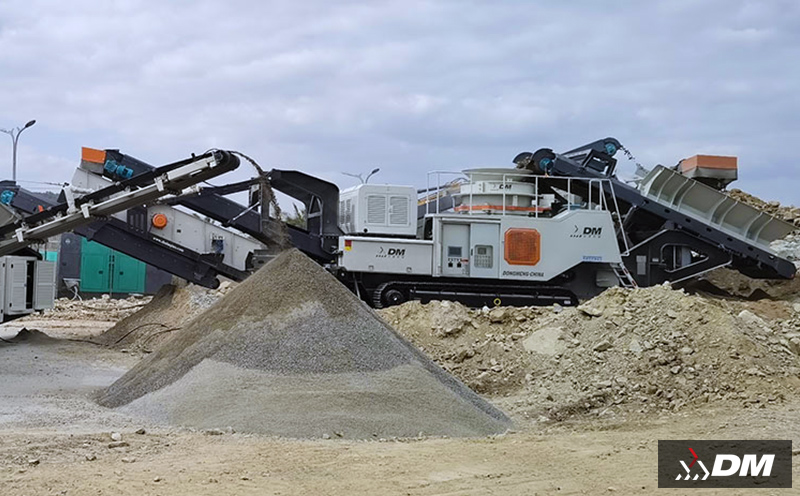
1. Overview of Mobile Crusher
Mobile crusher is a new‑generation integrated crushing equipment capable of free relocation. It integrates feeding, crushing, screening and conveying functions, thoroughly solving industry pain points of traditional fixed crushers such as foundation pouring, fixed site and complicated disassembly‑assembly. Requiring no complex installation, the equipment can be put into production right after arriving on site. It can directly complete rock crushing and solid‑waste processing at construction sites. Widely used in mine exploitation, road infrastructure, construction waste recycling, river rock crushing and other scenarios, it serves as core equipment for lightweight and green production in engineering construction and sand‑aggregate industries.
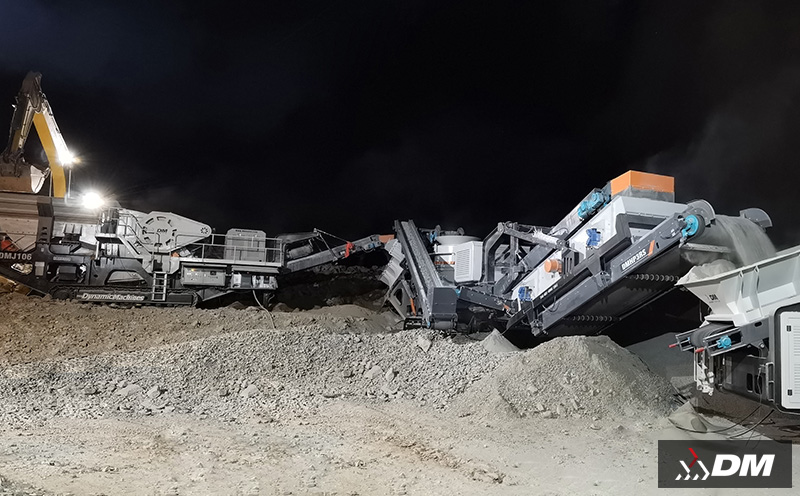
2. Working Principle of Mobile Crusher
Mobile crusher adopts vehicle‑mounted integrated structure. The crushing main unit, vibrating feeder, vibrating screen and belt conveying system are all mounted on a mobile chassis. After being transported to the construction site, no civil construction or equipment assembly is needed. Production can start after simple leveling and commissioning. Raw stones, construction waste and other materials are evenly fed into the crushing chamber, refined through extrusion, impact, inter‑particle crushing and other processes, then graded and screened by the screening system to produce qualified sand and aggregate of various specifications. The whole crushing production process is completed in one stop, greatly simplifying construction procedures and shortening production cycles.
3. Main Model Classification and Applications of Mobile Crusher
3.1 Mobile Jaw Crusher
Focusing on coarse crushing with large feeding size and high crushing ratio, it features excellent compression resistance, wear resistance and stable performance. It can efficiently process high‑hardness bulk stones such as granite, basalt and iron ore. It is mainly used for primary crushing of mine raw ore and raw‑material processing for large‑scale earth‑rock works. As the main model for hard‑rock coarse‑crushing conditions, it delivers low failure rate and great durability.
3.2 Mobile Impact Crusher
It excels at medium‑fine crushing and rock shaping. Finished aggregates feature regular particle shape and low flaky content with high quality. It adapts to medium‑low‑hardness materials including limestone, blue stone, concrete blocks and construction waste. It is widely applied in construction‑waste recycling, municipal infrastructure and high‑quality sand‑aggregate production projects.
3.3 Mobile Cone Crusher
Adopting inter‑particle crushing principle, it specializes in fine medium‑fine crushing for high‑hardness and high‑abrasion rocks. With outstanding wear resistance, stable capacity and uniform finished‑product gradation, it suits high‑grade sand‑aggregate production and large‑scale hard‑rock mine processing. It is often matched with mobile jaw crusher to form a complete mobile crushing production line.
3.4 Tire‑mounted vs Track‑mounted Mobile Crusher
The tire‑mounted model features flexible transition and high cost‑performance, suitable for paved hard surfaces and short‑term construction within fixed areas. The track‑mounted model has good ground‑contact performance and strong trafficability. It can adapt to mountainous, muddy and rugged construction sites, covering a wider range of harsh field working conditions.
4. Core Advantages of Mobile Crusher
4.1 Flexible Relocation without Site Limitations
Mobile crusher gets rid of site constraints of fixed production lines. It can relocate at any time following construction progress without fixed workshops or foundation infrastructure. It perfectly fits scattered construction sites, temporary projects and field mines where traditional equipment cannot work, greatly improving construction flexibility.
4.2 Fast Commissioning and Lower Construction Costs
Fully debugged before delivery, the equipment requires no on‑site assembly and can be quickly put into operation, greatly shortening project preparation cycles. Materials can be crushed and reused on‑site, eliminating high expenses for long‑distance raw‑stone transportation, hoisting and stacking. It effectively cuts comprehensive costs on labor, infrastructure and material transit.
4.3 Multi‑purpose for Various Materials
The equipment enjoys strong compatibility. It can process natural ore, river pebbles and engineering stones, and recycle solid waste such as demolition construction waste, mine tailings and industrial residues. One machine meets diverse production requirements. It can switch between coarse crushing, medium‑fine crushing and rock‑shaping processes according to working conditions, achieving much higher equipment utilization rate than traditional fixed equipment.
4.4 Intelligent, Convenient, Stable and Safe Operation
New‑generation mobile crusher is equipped with intelligent electric‑control system supporting one‑click start‑stop and intelligent speed regulation. It is fitted with protection functions including overload protection, blockage early warning and automatic cavity clearing. Simple operation reduces labor dependence. It can run continuously for 24 hours with low failure probability, featuring higher safety and automation level.
5. Applicable Scenarios of Mobile Crusher
Mobile crusher targets flexible mobile‑crushing operations for projects with frequent relocation, short construction periods or limited site space. Core application scenarios include on‑site recycling of urban construction waste, temporary aggregate processing for highway, railway and water‑conservancy infrastructure, field mountain‑mine mobile exploitation, river‑pebble cleaning and crushing, earth‑rock works for site leveling, mine‑tailings solid‑waste recycling, etc. It is the preferred equipment for modern green construction and flexible sand‑aggregate production.
6. Notes on Mobile Crusher Selection
6.1 Select Model According to Material Hardness
For high‑hardness rocks, mobile cone crusher is preferred. Mobile jaw crusher is adopted for coarse crushing of large hard‑rock raw ore. Mobile impact crusher is recommended for construction waste and soft stones. Accurately match material characteristics to avoid equipment overload, excessive wear and insufficient capacity.
6.2 Select Chassis According to Construction Terrain
For flat sites with frequent short‑distance relocation, choose cost‑effective tire‑mounted mobile crusher. For mountainous, muddy and rugged complex conditions, prioritize track‑mounted models with superior trafficability to guarantee smooth passage and stable operation.
6.3 Configure According to Capacity and Finished‑product Requirements
Match corresponding screening and conveying modules based on hourly output and finished‑aggregate specifications. It can work as standalone unit or multi‑machine linkage production line, balancing production efficiency and finished sand‑aggregate quality to meet material standards of different projects.
7. Key Points for Daily Maintenance of Mobile Crusher
Standard maintenance can effectively extend service life and stabilize output of mobile crusher. Regularly check wear status of wearing parts such as jaw plates, blow bars and liners, and replace aged accessories in time. Lubricate traveling system, transmission bearings and hydraulic system on a regular basis. Clean residual materials and silt on machine body after each relocation and implement dust‑proof and rust‑proof treatment. Regularly inspect hidden dangers of electric‑control and power systems. Never operate the equipment with faults to maintain long‑term efficient and stable performance.
8. Conclusion
Mobile crusher features core strengths of flexible relocation, fast commissioning, low cost and multi‑function. It breaks site limitations of traditional fixed crushing equipment and adapts to diversified scenarios including modern infrastructure construction, green solid‑waste recycling and flexible mine exploitation. Compared with conventional crushing equipment, it delivers more flexible construction, faster commissioning and better comprehensive benefits. Proper model selection based on material properties, construction conditions and capacity requirements together with regular maintenance can give full play to equipment performance, lower production costs and create higher economic value for various crushing projects.












We will answer your email shortly!