

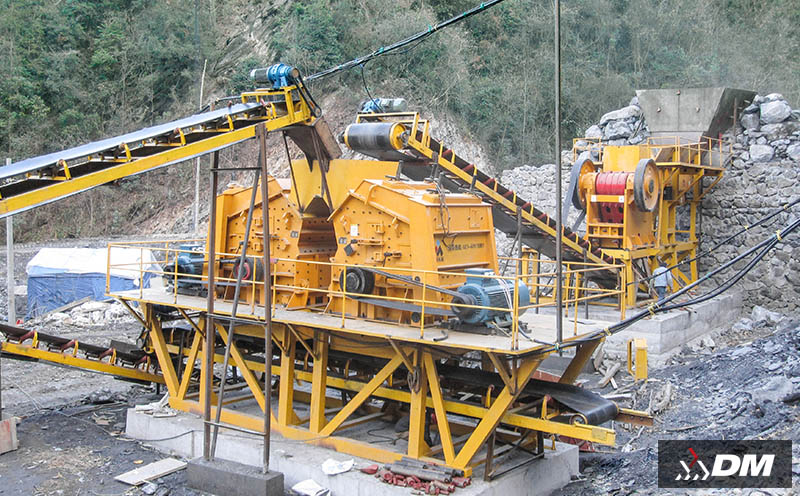
In aggregate production and recycling, particle shape is currency. Flaky, elongated particles are rejected by specifiers, while well-shaped cubical aggregates command premium prices and ensure superior performance in asphalt and concrete. Simultaneously, the construction and demolition waste recycling sector faces unique challenges: variable feed material, embedded contaminants, and the need for high reduction ratios in a single pass. Impact crushing technology, in stationary configuration, has emerged as the definitive solution for these shape-critical and recycling-intensive applications. A fixed impact crusher serves as the workhorse of permanent aggregate plants and recycling facilities, delivering exceptional cubical product shape and high reduction ratios that transform raw material into premium, specification-compliant products.
Mastering Particle Shape and Reduction
The fundamental advantage of a fixed impact crusher lies in its crushing mechanism. Rather than compressing material between surfaces, impactors use high-speed rotors and aprons to shatter rock along natural fracture lines. This produces exceptionally cubical particles with desirable texture for binding matrices. In permanent aggregate plants, fixed impact crusher installations are particularly valuable in limestone and softer rock applications where abrasion is manageable. Modern designs feature multiple apron adjustments and rotor speed variability, allowing precise control over product gradation and shape. For tertiary crushing stages, fixed impact crusher units consistently produce manufactured sand and chip products that meet stringent specification requirements. The ability to adjust rotor speed and apron positions on the fly allows operators to optimize product shape for specific applications, whether producing asphalt chips, concrete aggregates, or manufactured sand.
The fundamental advantage of a fixed impact crusher lies in its crushing mechanism. Rather than compressing material between surfaces, impactors use high-speed rotors and aprons to shatter rock along natural fracture lines. This produces exceptionally cubical particles with desirable texture for binding matrices. In permanent aggregate plants, fixed impact crusher installations are particularly valuable in limestone and softer rock applications where abrasion is manageable. Modern designs feature multiple apron adjustments and rotor speed variability, allowing precise control over product gradation and shape. For tertiary crushing stages, fixed impact crusher units consistently produce manufactured sand and chip products that meet stringent specification requirements. The ability to adjust rotor speed and apron positions on the fly allows operators to optimize product shape for specific applications, whether producing asphalt chips, concrete aggregates, or manufactured sand.
Recycling: Turning Waste Into Revenue
Construction and demolition waste presents a unique set of challenges that fixed impact crusher units are uniquely suited to handle. Reinforced concrete, asphalt millings, and mixed debris contain rebar, wire, and other contaminants that would damage cone or jaw crushers. A fixed impact crusher’s open design and hydraulic release mechanisms allow tramp metal to pass through or be ejected safely. In recycling facilities, these units can process material at high capacities, often eliminating the need for secondary crushing entirely. The ability to handle variable feed materials without frequent adjustments or damage makes fixed impact crusher installations ideal for recycling operations where feed consistency cannot be guaranteed. Integrated magnetic separators and air classifiers further enhance product quality by removing contaminants before they reach the crusher, protecting wear parts and ensuring clean, marketable end products.
Construction and demolition waste presents a unique set of challenges that fixed impact crusher units are uniquely suited to handle. Reinforced concrete, asphalt millings, and mixed debris contain rebar, wire, and other contaminants that would damage cone or jaw crushers. A fixed impact crusher’s open design and hydraulic release mechanisms allow tramp metal to pass through or be ejected safely. In recycling facilities, these units can process material at high capacities, often eliminating the need for secondary crushing entirely. The ability to handle variable feed materials without frequent adjustments or damage makes fixed impact crusher installations ideal for recycling operations where feed consistency cannot be guaranteed. Integrated magnetic separators and air classifiers further enhance product quality by removing contaminants before they reach the crusher, protecting wear parts and ensuring clean, marketable end products.
Wear Management in Abrasive Applications
Impact crusher wear parts represent a significant operating cost, particularly when processing abrasive materials. Modern fixed impact crusher designs incorporate wear-resistant alloys and reversible blow bars to maximize utilization. Apron liners and impact plates are designed for easy replacement, minimizing downtime. Selecting the appropriate blow bar metallurgy for the specific application—whether manganese steel for tough abrasion or chrome iron for less abrasive materials—is critical to controlling cost-per-ton metrics. Hydraulic apron adjustment systems allow operators to compensate for wear without stopping production, maintaining optimal crushing geometry throughout the wear cycle. Predictive wear monitoring technologies provide real-time data on blow bar condition, enabling proactive maintenance scheduling and preventing unexpected failures.
Impact crusher wear parts represent a significant operating cost, particularly when processing abrasive materials. Modern fixed impact crusher designs incorporate wear-resistant alloys and reversible blow bars to maximize utilization. Apron liners and impact plates are designed for easy replacement, minimizing downtime. Selecting the appropriate blow bar metallurgy for the specific application—whether manganese steel for tough abrasion or chrome iron for less abrasive materials—is critical to controlling cost-per-ton metrics. Hydraulic apron adjustment systems allow operators to compensate for wear without stopping production, maintaining optimal crushing geometry throughout the wear cycle. Predictive wear monitoring technologies provide real-time data on blow bar condition, enabling proactive maintenance scheduling and preventing unexpected failures.
Optimizing Circuit Design
Successful impact crushing depends on proper circuit design. In stationary plants, fixed impact crusher units are often paired with vibrating screens in closed circuit to ensure proper sizing and recirculation. Feed rate control and rotor speed adjustment must be synchronized with screen capacity to prevent overloading. Recirculating conveyors should be designed to handle oversize material without degradation or spillage. Proper chute design and transfer points ensure even feed distribution across the rotor width, maximizing crushing efficiency and wear uniformity. Automated control systems coordinate crusher operation with screen performance, adjusting feed rates and rotor speed to maintain optimal circuit balance. This level of integration is only possible with permanent installations, delivering efficiency gains that mobile units cannot match.
Successful impact crushing depends on proper circuit design. In stationary plants, fixed impact crusher units are often paired with vibrating screens in closed circuit to ensure proper sizing and recirculation. Feed rate control and rotor speed adjustment must be synchronized with screen capacity to prevent overloading. Recirculating conveyors should be designed to handle oversize material without degradation or spillage. Proper chute design and transfer points ensure even feed distribution across the rotor width, maximizing crushing efficiency and wear uniformity. Automated control systems coordinate crusher operation with screen performance, adjusting feed rates and rotor speed to maintain optimal circuit balance. This level of integration is only possible with permanent installations, delivering efficiency gains that mobile units cannot match.
Economic Considerations and Application Matching
The decision to deploy a fixed impact crusher must be grounded in material characteristics and product requirements. Fixed impact crusher installations offer superior economics for high-volume limestone and soft rock aggregate production, where wear costs are predictable and product shape is paramount. In recycling applications, they excel at processing contaminated concrete and asphalt, turning waste streams into revenue-generating products. For hard rock applications, wear costs may be higher, but the superior product shape often justifies the investment, particularly for premium asphalt and concrete markets. Some producers employ hybrid strategies, using fixed impactors for tertiary shaping while deploying cone crushers for secondary reduction, balancing wear costs with product quality requirements.
The decision to deploy a fixed impact crusher must be grounded in material characteristics and product requirements. Fixed impact crusher installations offer superior economics for high-volume limestone and soft rock aggregate production, where wear costs are predictable and product shape is paramount. In recycling applications, they excel at processing contaminated concrete and asphalt, turning waste streams into revenue-generating products. For hard rock applications, wear costs may be higher, but the superior product shape often justifies the investment, particularly for premium asphalt and concrete markets. Some producers employ hybrid strategies, using fixed impactors for tertiary shaping while deploying cone crushers for secondary reduction, balancing wear costs with product quality requirements.
In conclusion, fixed impact crushers are indispensable tools for shape-critical aggregate production and recycling. Their ability to produce premium cubical products, handle contaminated feed materials, and deliver high reduction ratios makes them uniquely valuable in modern crushing circuits. By matching crusher configuration to material characteristics and application requirements, producers can maximize yield, minimize wear costs, and capture premium market segments. In an industry where product quality and operational flexibility increasingly determine success, fixed impact crusher technology remains at the forefront of innovation and value creation, delivering the cubical yield that specifiers demand and producers profit from.












We will answer your email shortly!