

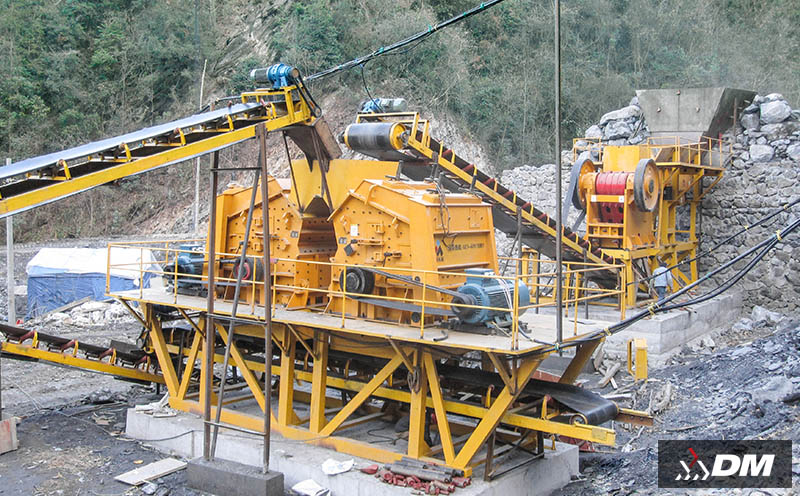
In the aggregate industry, particle shape matters. Flat and elongated aggregates weaken concrete, increase water demand, and reduce asphalt pavement durability. Premium-priced concrete aggregates, asphalt surface courses, and railway ballast all require cubical, well-shaped particles that interlock properly and meet strict flakiness index standards. While jaw and cone crushers handle primary and secondary reduction efficiently, they cannot always deliver the final particle shape that high-end specifications demand. This is where the fixed impact crusher comes into its own. Using high-velocity impact rather than compression, a stationary impactor shatters rock along natural cleavage lines, producing remarkably cubical particles with excellent surface texture. For limestone and medium-hard rock quarries, recycled concrete operations, and any application where finished aggregate shape is a selling point, the fixed impact crusher is the key to producing premium products that command top market prices.
Why Particle Shape Determines Aggregate Value
The difference between ordinary aggregate and premium aggregate is often just particle geometry—but that difference shows up in every cubic meter of concrete and every ton of asphalt mix. Cubical particles with rough surfaces interlock better, giving concrete higher compressive strength with less cement. They also improve workability, reduce shrinkage cracking, and enhance the durability of the finished structure. For asphalt, cubical aggregate creates a stronger, more rut-resistant pavement. Conversely, flat and elongated particles can cause segregation, reduce compactability, and ultimately lead to premature pavement failure. Because of these performance differences, specifications around the world—from EN 933-3 flakiness index to ASTM D 4791 flat and elongated particle ratios—set strict limits on particle shape. Aggregate that meets these tighter limits sells for significantly more per ton. Producing that shaped product efficiently is the job of the fixed impact crusher.
How a Fixed Impact Crusher Works and Why It Shapes Better
Impact Crushing Principle
A fixed impact crusher operates on a fundamentally different principle from jaw or cone crushers. Material enters the crushing chamber and is struck by high-speed blow bars mounted on a spinning rotor. The rock is accelerated against heavy impact aprons (breaker plates) lining the chamber, shattering along natural fracture planes. The material bounces back, is struck again, and continues to be reduced until it is small enough to pass through the gap at the bottom of the chamber. This repeated impact action produces particles with multiple fresh fracture faces and a naturally cubical shape—far superior to the more slabby or flaky output from compression crushers, especially in softer or medium-hard rock.
Versatile Reduction Ratios
The fixed impact crusher offers a very high reduction ratio, often 20:1 or more in a single stage. This means it can take a relatively large feed—up to 500–700 mm in primary impactor configurations—and produce a finished, sized product in one pass. For smaller plants, this can eliminate an entire crushing stage, simplifying the flow sheet and reducing capital and operating costs. In tertiary configuration, a fixed impact crusher takes secondary cone or jaw product and polishes it into a premium-shaped finished aggregate.
Simple, Accessible Design
Stationary impact crushers have a straightforward mechanical layout: a rotor on bearings, two or three adjustable impact aprons, and a hinged or removable housing for easy maintenance access. Blow bar changes, apron adjustments, and routine inspections are all relatively quick compared to the liner change procedures on cone crushers. For operations with limited maintenance staff, this simplicity is a real advantage.
Key Application Scenarios
Limestone and Dolomite Quarries
Limestone is the ideal feed for a fixed impact crusher. It is soft enough that blow bar wear remains economical, yet brittle enough that the impact action produces excellent cubical shape. Many limestone quarries use a primary jaw followed by a secondary impactor, or even a single-stage primary impactor, to produce high-quality concrete aggregate and asphalt chip. The resulting product shape is consistently better than what a cone crusher alone can achieve on limestone, and the wear cost per ton is competitive.
Recycled Concrete and C&D Finishing Circuits
For C&D recycling operations producing high-grade recycled concrete aggregate (RCA), the fixed impact crusher is often the preferred secondary or tertiary machine. It further reduces primary-crushed concrete, removes residual mortar from the natural aggregate surface, and produces a clean, cubical product suitable for use in concrete, asphalt, or structural backfill. The impact action also helps liberate remaining rebar and other contaminants, making downstream cleaning more effective.
Asphalt Surface Course Aggregate
Asphalt surface course requires carefully sized, well-shaped aggregate to produce a smooth, durable, and skid-resistant pavement. A fixed impact crusher in the tertiary stage produces the cubical 0–8 mm, 8–11 mm, and 11–16 mm fractions that premium asphalt plants demand. The sharp, fresh fracture faces also improve adhesion with bitumen, enhancing pavement performance and longevity.
Soft to Medium-Hard General Aggregate Production
For sandstone, limestone, dolomite, and other medium-hard rock types, a fixed impact crusher can serve as both secondary and tertiary crusher in a compact plant layout. The high reduction ratio means fewer stages, fewer machines, fewer conveyors, and a lower overall plant cost. This makes impactor-based plants popular with smaller to mid-sized aggregate producers who want maximum product quality with minimum complexity.
Customer Benefits and Value Proposition
Premium Product Pricing
The most direct financial benefit of a fixed impact crusher is the ability to produce shaped aggregate that sells at a premium. Depending on the local market, well-shaped concrete aggregate can command 10–30% more per ton than standard crushed rock. For high-volume producers, this price differential translates into very substantial additional revenue each year, often paying back the crusher investment quickly.
High Reduction Ratio Fewer Stages
Because a single fixed impact crusher can achieve what might otherwise require two stages of compression crushing, plant designers can simplify the flow sheet. Fewer machines mean lower capital cost, less conveyor structure, a smaller footprint, and fewer points of potential failure. For greenfield plants with limited space or budget, this is a significant advantage.
Quick Product Size Changes
Adjusting the product size on a fixed impact crusher is straightforward—simply reposition the impact aprons or change rotor speed on variable-speed drives. This allows operators to shift between product gradations quickly to match market demand. Some modern designs also feature hydraulic apron adjustment, making size changes even faster and safer.
Effective for Abrasive Softer Materials
While cone crushers win on the hardest, most abrasive rock, the fixed impact crusher is often more economical for softer to medium-hard materials. Blow bars made from high-chrome white iron or martensitic steel offer excellent wear life on limestone and recycled concrete, and the cost per ton of wear parts is often lower than cone crusher liners in these applications.
Selection Logic: When to Choose Impact Over Cone
Choosing between a fixed impact crusher and a fixed cone crusher depends primarily on three factors: material hardness and abrasiveness, required particle shape, and total cost of ownership. For rock above approximately 200 MPa unconfined compressive strength—granite, basalt, hard gabbro—the cone crusher is almost always the better choice because blow bar wear becomes prohibitively expensive. For limestone, dolomite, sandstone, recycled concrete, and similar materials under 180 MPa, the impactor often delivers better shape at lower cost. The decision also depends on product specifications. If the market demands premium-shaped aggregate and the application is suitable, the impact crusher's shape advantage can justify its selection even if wear costs are slightly higher. Operators should always calculate total cost per ton of saleable product—not just cost per ton processed—when comparing the two technologies.
Operation and Maintenance Best Practices
Feed Consistency
Impact crushers perform best with a steady, controlled feed rate. Flooding the chamber causes packing and excessive wear; trickle feeding causes uneven rotor loading and poor shape. A properly sized vibrating feeder or belt feeder ahead of the fixed impact crusher is essential for consistent performance.
Blow Bar Rotation and Replacement
Blow bars wear from the impact face, and most designs allow bars to be flipped or rotated to use both edges. Monitoring wear and rotating bars at the right interval maximizes total wear life. When bars are fully worn, replacement should be done following the manufacturer's procedure, with proper safety precautions—rotor locking, proper lifting equipment, and trained personnel. Modern impactors often feature hydraulic opening systems that make blow bar changes faster and safer.
Apron Gap and Geometry
The gaps between the rotor and each impact apron control the product size and reduction ratio. Operators should check and adjust these gaps regularly, especially after blow bar changes or as bars wear. Apron liners also wear and should be inspected on the same schedule as blow bars.
Rotor Balance and Bearing Care
The high-speed rotor of a fixed impact crusher must be properly balanced. Uneven blow bar wear or damaged rotor surfaces can cause dangerous vibration that damages bearings and frame. Vibration monitoring on the main bearings is highly recommended as an early warning system. Bearing lubrication must follow the manufacturer's schedule precisely—high-speed bearings are less forgiving of neglect than the slower bearings on cone or jaw crushers.
Conclusion
The fixed impact crusher occupies a unique and valuable position in the crushing and screening industry. No other technology can match its combination of high reduction ratio, excellent particle shaping, and operating simplicity for soft to medium-hard rock and recycled materials. For limestone quarries, recycled concrete operations, and aggregate producers targeting premium concrete and asphalt markets, the stationary impactor is the machine that turns ordinary crushed rock into high-value specification aggregate. When selected for the right application, operated with consistent feed, and maintained with disciplined blow bar and apron management, a fixed impact crusher delivers not just crushed rock—but a better product that sells for more per ton, improves downstream concrete and asphalt performance, and strengthens an operator's competitive position in the market.












We will answer your email shortly!