

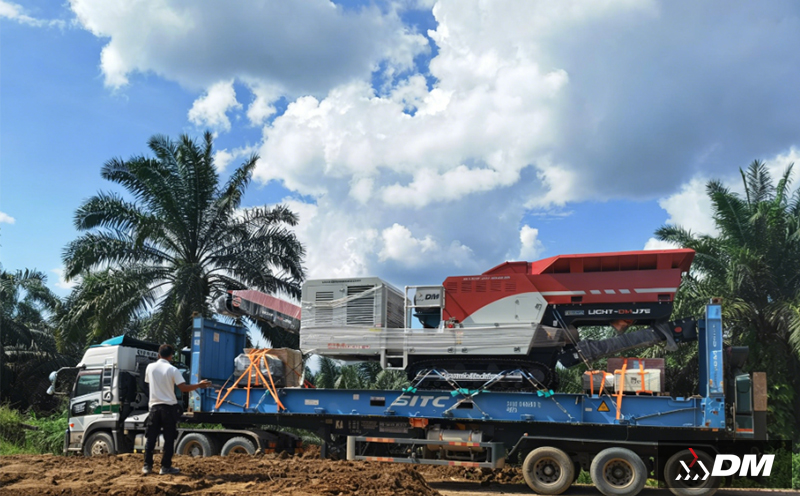
In various mobile construction scenarios such as global mine aggregate mining, road infrastructure construction, and construction waste recycling from old urban reconstruction projects, mobile crusher features integrated design and self-mobility, greatly reducing civil engineering and material transportation costs and becoming mainstream crushing equipment for overseas projects. However, construction sites across the globe face vastly different working conditions. Complex raw material environments including high temperature and heavy rainfall, high clay content, mixed steel bars, and oversized raw stones frequently lead to blockage, the most common fault of mobile crushers. Once the crushing cavity is blocked, the equipment has to shut down for cleaning, extending construction periods and increasing maintenance losses. Blockage is not simply caused by improper operation, but a combination of material properties, operation standards, equipment structure and matching performance. To fundamentally reduce downtime losses due to blockage, besides standardizing on-site operation procedures, it is critical to select a professional crusher manufacturer with dedicated R&D capabilities for anti-blockage structures, which can lower failure risks through original equipment optimization. Shanghai Dongmeng has been engaged in the manufacturing of crushing and screening equipment for global markets for many years. It iterates the cavity, electronic control and feeding supporting systems of mobile crushers targeting blockage pain points at construction sites worldwide, and provides complete crushing solutions with low blockage rate and stable performance for overseas customers.
Basic Structure of Different Crushers and Underlying Logic of Blockage
The mainstream crushers on the market include jaw crushers for primary crushing, impact crushers for medium and fine crushing, cone crushers and sand making machines. Fixed crushers are equipped with independent feeding, screening and conveying devices, allowing separate capacity adjustment of each component. In contrast, the mobile crusher integrates the entire crushing production line on wheeled or tracked chassis, with feeding, crushing, discharging and conveying systems running in linkage. Imbalance in any link will directly trigger cavity blockage. Small manufacturers only simply assemble general crusher mainframes without linkage adaptation and anti-blockage optimization. Their straight crushing cavity walls are prone to material adhesion, the feeding system lacks variable frequency speed regulation, and there is no overload reverse protection, leading to frequent jamming by wet clay and oversized stones. Mature crusher manufacturers analyze tens of thousands of global on-site working conditions during equipment design, optimize curved cavity structures, linked electronic control systems and pre-screening impurity removal modules to reduce blockage risks from the hardware source. All series of mobile crushers from Shanghai Dongmeng are upgraded with exclusive anti-blockage structures for construction waste and high-humidity mine stones, adapting to complex raw material conditions in Southeast Asia, Africa, the Middle East, Europe and America.
Classification of Core Causes for Mobile Crusher Blockage
1. Blockage risks brought by physical and chemical properties of raw materials
Raw material is the fundamental factor causing blockage, and raw materials vary greatly in different regions around the world. Sand and gravel with high clay and moisture content, as well as damp construction waste, easily adhere to the inner wall of the crushing cavity, gradually narrowing the effective cavity space and resulting in blockage. When feeding size exceeds the rated upper limit of the equipment, oversized stones get stuck between the feed inlet and crushing cavity and cannot move downwards. Hard materials such as granite and basalt take longer to crush. If the feeding speed remains unchanged, materials will continuously accumulate inside the cavity and cannot be discharged in time. Construction waste mixed with steel bars, wood and other sundries will wind around the rotor and liners, hindering material downward movement and causing complete cavity jamming. Ordinary crushers without targeted optimization cannot handle such complex materials and need frequent shutdowns for cleaning. Shanghai Dongmeng mobile crushers adopt widened feed inlets with anti-adhesion coatings on inner walls, equipped with front grille pre-screening and high-strength magnetic iron removers to separate oversized materials and metal impurities in advance and reduce material adhesion and winding problems.
2. Man-made blockage caused by non-standard on-site operations
Unstandardized operation by workers is a major cause of frequent blockage at construction sites. First, unbalanced feeding control: one-time mass feeding or unstable feeding speed makes the crusher unable to process materials as fast as they are delivered, causing accumulation inside the cavity. Second, failure to follow no-load start-stop rules: residual materials left in the cavity before shutdown lead to overload and blockage when restarting with materials inside. Third, unreasonable adjustment of discharge gap: an excessively narrow gap hinders the discharge of finished aggregates and causes reverse accumulation inside the cavity. Fourth, asynchronous operation of upstream and downstream equipment: if the rear conveyor and screening machine break down and stop, the front feeder continues to deliver materials, resulting in accumulated blockage. Shanghai Dongmeng equipment is equipped with multilingual operation manuals, clearly marking the standard feeding speed and discharge gap for various materials to reduce operation errors of new overseas workers.
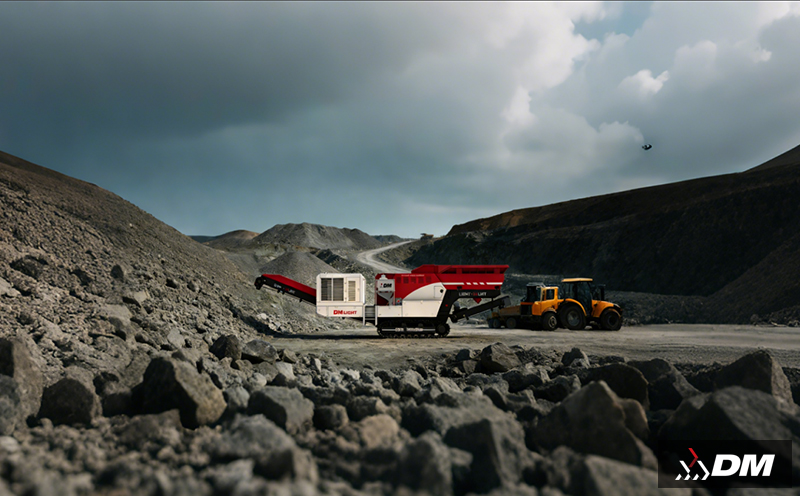
3. Blockage induced by worn spare parts and power system failures
Aging vulnerable parts directly weaken crushing capacity and trigger blockage. Severely worn jaw plates, blow bars and liners reduce crushing force, making stones hard to pulverize and discharge quickly. Loose and slipping transmission V-belts fail to fully transmit motor power to the rotor and sharply lower crushing efficiency. Unstable motor voltage and insufficient power reserve lead to sudden rotor speed drop under heavy load, causing material accumulation and jamming. Meanwhile, long-term lack of maintenance leads to stuck bearings and failed lubrication, slowing down mainframe operation and simultaneous blockage shutdowns. Shanghai Dongmeng adopts thickened high-manganese steel wear-resistant accessories to extend replacement cycles, with centralized lubrication points on the whole machine to simplify daily maintenance at overseas construction sites and reduce blockage faults caused by worn parts.
4. Inherent equipment design defects, blockage frequency determined by manufacturer's manufacturing capacity
Frequent blockage of many devices originates from insufficient R&D capacity of crusher manufacturers. Small workshop manufacturers copy general crusher mainframes with straight crushing cavities unfavorable for material sliding, without variable frequency linked feeding or automatic reverse anti-blockage electronic control and overload protection. The capacity of supporting equipment does not match that of the crusher, with the feeder handling far more materials than the rated capacity of the crusher, bringing inherent blockage risks. Experienced crusher manufacturers avoid defects through integrated whole-machine design: optimized curved diversion crushing cavities, variable frequency linked feeding systems and built-in PLC intelligent anti-blockage modules that automatically reverse to clear accumulated materials upon overload without manual disassembly and cleaning. As a professional crusher manufacturer serving the global market, Shanghai Dongmeng conducts continuous wet material full-load operation tests on every mobile crusher before delivery to verify anti-blockage performance, and its equipment has far lower blockage failure rates than ordinary industry models after commissioning.
Multi-layer Anti-blockage Design of Shanghai Dongmeng Mobile Crushers Adapted to Global Working Conditions
Relying on years of practical experience in overseas projects, Shanghai Dongmeng carries out comprehensive technical optimization targeting blockage pain points of mobile crushers and develops multi-level anti-blockage solutions. In hardware, streamlined anti-adhesion crushing cavities, front grille pre-screening and independent high-strength magnetic iron removal units are adopted to filter blockage-prone impurities at the source. In electronic control, an intelligent linkage system is equipped with interlock start-stop functions for feeder, crusher and conveyor. The feeding system will be automatically cut off when rear equipment stops, and the motor reverses automatically to clear materials under overload. A wet material pre-treatment device can be optionally matched to adapt to construction sites with high clay content in rainy seasons. Meanwhile, the enterprise provides global multilingual maintenance training, original wear-resistant spare parts warehousing and remote technical guidance to help customers adjust equipment parameters according to local raw materials and comprehensively reduce shutdown losses caused by blockage. The product line covers wheeled and tracked mobile jaw crushers, impact crushers and integrated screening machines, meeting full-scenario crushing demands for mines, demolition and road construction.
Conclusion
Blockage of mobile crushers is the joint result of material properties, on-site operation, equipment wear and whole-machine design. Standardized operation and regular maintenance can temporarily alleviate faults, but stable long-term production fundamentally relies on selecting a high-quality crusher manufacturer with in-depth crushing industry experience and dedicated anti-blockage R&D strength. Shanghai Dongmeng continuously optimizes the cavity structure, intelligent electronic control and supporting systems of mobile crushers to reduce blockage faults through original equipment design. It provides low-failure and high-output complete mobile crushing equipment for global mines, construction waste recycling and infrastructure projects, helping overseas customers cut downtime losses and improve comprehensive project benefits.












We will answer your email shortly!