

In aggregate production, customers do not buy crushed stone only by weight. They buy size, consistency, cleanliness, and reliability. A product that does not meet grading requirements can be rejected even if the crushing plant has produced enough tons. Poor screening causes contaminated stockpiles, rework, low customer confidence, and lost sales. For quarry owners, sand and gravel producers, and fixed crushing plant operators, a fixed screening machine is one of the most important tools for turning crushed material into market-ready aggregate.
A fixed screen is often viewed as a supporting machine, but in practice it defines the value of the final product. Crushers reduce material size, but the screening machine decides what can be sold, what must return for further crushing, and what should be separated as fines. When screening is undersized or poorly configured, the whole plant suffers. When it is designed correctly, it improves product quality, plant balance, and profitability.
Screening Is the Quality Gate
Every aggregate customer has expectations. Concrete plants need consistent grading to control mix design. Asphalt producers require clean, properly sized stone for stable pavement performance. Road contractors need base material within specification. Drainage and landscaping customers want uniform appearance and function. A fixed screening machine acts as the quality gate that protects these requirements.
If oversize particles enter a finished product stockpile, the customer may reject the load. If too many fines remain in coarse aggregate, concrete performance or asphalt binder demand may be affected. If products are poorly separated, the producer may have to reprocess material or sell it at a lower price. Accurate screening reduces these risks and builds market trust.
Matching Screen Design to Material
There is no universal screening solution. The correct fixed screening machine depends on material type, moisture, feed size, required cut points, capacity, and number of final products. Dry crushed granite behaves differently from wet limestone, natural sand, recycled concrete, or clay-contaminated scalping material. Screen angle, vibration stroke, deck number, screen media, and feed distribution all matter.
A quarry producing several aggregate sizes may need a multi-deck vibrating screen after secondary and tertiary crushing. A sand and gravel plant may require washing and dewatering equipment. A fixed plant handling sticky material may need special screen media to reduce blinding. The best results come from treating screening as an engineered process, not an accessory added after crusher selection.
Improving Crushing Circuit Efficiency
A fixed screening machine does more than separate finished products. It also controls the load inside the crushing circuit. In closed-circuit operation, qualified material exits the process while oversize returns to a cone crusher or impact crusher. If screening efficiency is poor, too much finished product may return unnecessarily, increasing wear and energy consumption. At the same time, oversize contamination may reduce final product quality.
Efficient screening keeps the circuit balanced. Crushers process only the material that still needs reduction. Conveyors carry predictable loads. Stockpiles remain cleaner. The result is higher effective capacity and lower cost per ton. In many plants, improving screening performance can increase total output without replacing the main crusher.
Fixed Screening for High-Volume Plants
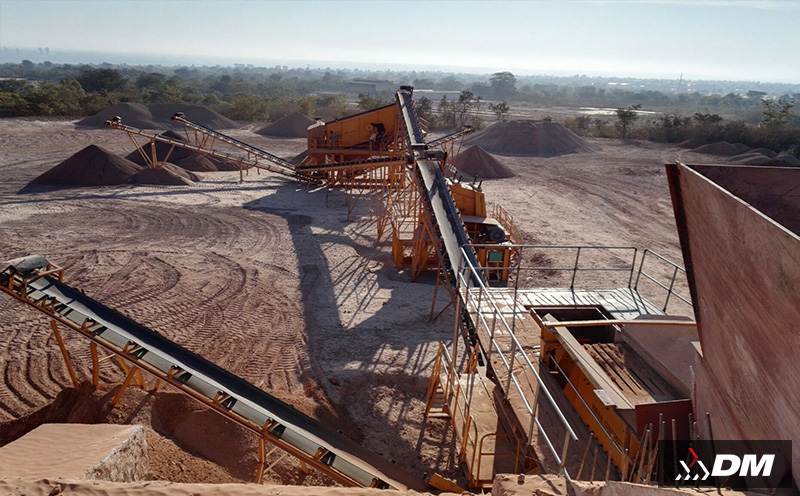
A fixed screen is especially valuable when production volume is high and the site is long-term. Compared with temporary equipment, a fixed screening machine can be integrated into a stable structure with proper feed chutes, walkways, dust covers, washing systems, and conveyors. This supports continuous operation and safer maintenance.
For large aggregate plants, fixed screening also allows better stockpile planning. Each product size can have its own conveyor and storage area. The plant can produce multiple commercial products at the same time, such as 0-5 mm, 5-10 mm, 10-20 mm, 20-31.5 mm, and oversize return material. This product flexibility helps quarry owners serve different market segments from one production line.
Solving Common Screening Problems
Many plant issues can be traced back to screening. Blinding occurs when particles block screen openings, reducing capacity and accuracy. Pegging happens when near-size particles become stuck in the apertures. Uneven feed distribution overloads one side of the screen while the other side is underused. Excessive moisture can cause material to stick together and reduce separation.
A properly selected fixed screening machine helps solve these problems through correct screen media, feed box design, vibration parameters, and maintenance access. Operators may use polyurethane panels for wear resistance, wire mesh for sharper separation, rubber media for noise reduction, or anti-clogging designs for sticky material. The right solution depends on the specific material and product target.
Supporting Washing and Cleaner Products
In some markets, aggregate cleanliness is as important as size. Clay, silt, and dust can reduce product value and limit use in concrete or asphalt. A fixed screening machine can be combined with washing equipment to remove fine contamination and improve product quality. Wet screening, rinsing screens, sand washing units, and dewatering screens may be used depending on the material.
For sand and gravel producers, fixed screening and washing can create higher-value products from natural deposits. For crushed stone plants, washing may help meet strict specifications for concrete aggregate. Cleaner products often command better prices and open access to more demanding customers.
Maintenance That Protects Accuracy
Screening accuracy declines when media is worn, damaged, or incorrectly tensioned. Regular inspection is essential. Operators should check screen panels, side plates, springs, bearings, drive systems, bolts, chutes, and support structures. A fixed screening machine should be installed with safe platforms and enough space for media replacement.
Maintenance should also include monitoring product quality. If customers report oversize contamination or excess fines, the screen should be inspected immediately. Small changes in screen condition can have a large effect on final aggregate quality. Preventive maintenance protects both machine performance and customer relationships.
Choosing the Right Screen for Business Goals
The best screening solution starts with market demand. A quarry selling high volumes of road base may prioritize capacity and durability. A producer supplying concrete plants may focus on precise separation and clean aggregate. A plant producing manufactured sand may require fine screening and washing. A fixed screening machine should be selected according to the products that generate the highest value, not only the current crusher output.
Future expansion should also be considered. If the market may require additional product sizes, the screen structure and conveyor layout should allow upgrades. Choosing a screen with adequate area and suitable deck configuration can prevent bottlenecks as production grows.
Return on Investment Through Product Value
The return on a fixed screening machine comes from better product pricing, fewer rejected loads, lower reprocessing cost, and improved plant efficiency. Cleanly separated aggregate can be sold into higher-value applications. Reduced circulating load lowers crusher wear and energy use. Better stockpile control reduces confusion during loading and delivery.
For overseas customers competing in demanding aggregate markets, product consistency is often the difference between being a low-price supplier and becoming a preferred long-term partner. Screening quality directly supports that reputation.
Conclusion
A fixed screening machine is not just the final step in an aggregate plant. It is the quality gate, circuit controller, and product value creator. By separating material accurately, supporting clean stockpiles, reducing crusher recirculation, and helping meet customer specifications, fixed screening improves both technical performance and business results. For quarry, sand and gravel, concrete aggregate, asphalt aggregate, and construction material producers, investing in the right screening system is a direct investment in cleaner products, stronger customer trust, and more profitable tons.












We will answer your email shortly!