

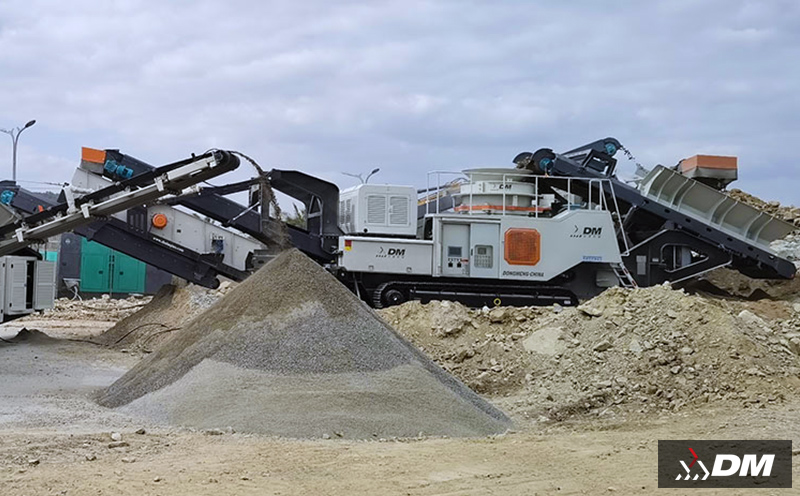
Many mines and quarries have stockpiles that represent trapped value. Oversize rock waits beside the plant. Mixed material from older production runs takes up yard space. Satellite pits contain useful stone but are too far from the main crusher to justify a permanent installation. Contractors may have piles of partially processed aggregate that do not meet current customer specifications. These materials are not waste, but they are not yet revenue.
A tracked mobile cone crusher gives producers a flexible way to recover value from these difficult material sources. Instead of building new fixed infrastructure or repeatedly hauling material long distances, the mobile cone can move to the stockpile, reduce oversize, improve product shape, and prepare material for final screening. For operations facing yard congestion, changing market demand, or scattered reserves, this flexibility can unlock profit that is already sitting on the ground.
The value of mobile cone crushing is not only relocation speed. It is the ability to treat overlooked material as a business opportunity.
The Problem with Mixed and Oversize Stockpiles
Stockpiles accumulate for many reasons. A previous crushing circuit may have produced too much oversize. A project may have required one product size but left behind another. Weather, market changes, or equipment limitations may have created material that could not be sold at the time. In some cases, quarry operators avoid reprocessing these piles because moving them back through the main plant would disrupt normal production.
These stockpiles consume space, complicate traffic flow, and tie up working capital. Worse, they may slowly degrade through contamination, segregation, or weather exposure. If a producer has paid to drill, blast, load, crush, and move the material once, leaving it unsold is a direct loss of potential revenue.
A tracked mobile cone crusher can be deployed specifically to process these piles without shutting down the main plant. It can reduce oversize material, reshape intermediate fractions, and prepare feed for a mobile or fixed screening machine. This allows the producer to create saleable products from material that was previously stranded.
Why Cone Crushing Adds Value
A cone crusher uses compression crushing to reduce stone while maintaining strong control over product size. It is especially useful for secondary and tertiary crushing of hard and medium-hard rock. In mobile form, this capability can be brought to satellite material sources, temporary stockyards, or remote sections of a quarry.
For mixed stockpiles, the objective may be to produce a consistent 10-20 mm aggregate, a road base product, or feed for manufactured sand production. The tracked mobile cone crusher can be adjusted to target the required output, especially when paired with screening and recirculation. This makes it possible to respond to market demand without redesigning the entire fixed plant.
Cone crushing can also improve particle shape when used correctly in a closed circuit. For producers trying to upgrade older crushed material into a more acceptable specification, this can make the difference between discount sales and higher-value aggregate.
Satellite Pit and Remote Material Applications
Many quarry and mining operations have material sources that are valuable but inconvenient. A satellite pit may contain good rock, but the volume may not justify a permanent crushing plant. A remote bench may be active for only part of the year. A contractor may need to process material near a temporary infrastructure project. In these cases, hauling unprocessed rock to the main plant can be expensive and slow.
A tracked mobile cone crusher can work with a mobile jaw crusher, mobile screen, or existing feed stockpile to create a temporary processing line near the material source. Once the work is complete, the unit can move to the next location. This reduces capital risk because the producer does not need to build fixed foundations, permanent conveyors, or electrical infrastructure for every remote deposit.
For mining operations, mobile cone crushing can support ore-related pre-processing, waste rock reduction for construction use, or aggregate production for site roads and pads. For quarry operators, it can support seasonal production from secondary reserves.
Creating Products from Market Demand
Markets change. One month, the strongest demand may be road base. Another month, asphalt chips or concrete aggregate may offer better margins. A fixed plant may be optimized for the main product mix, but it may not be convenient to interrupt normal production for a smaller special order.
A tracked mobile cone crusher gives producers a way to respond. If a stockpile contains material suitable for a high-demand size, the mobile cone can be set up to process that material separately. A mobile screening machine can classify the output, while oversize returns to the cone if a closed circuit is available. This creates a focused production campaign without disturbing the main plant.
For example, a quarry may have a large pile of 40-80 mm stone from previous operations. When local demand rises for 10-20 mm concrete aggregate, the mobile cone can reduce the oversize into a saleable fraction. Instead of discounting the old pile or blending it into low-value base, the producer can capture a better price.
Selection Logic for Mobile Cone Crushing
Choosing the right tracked mobile cone crusher requires understanding the feed and the business goal. Producers should evaluate feed size, rock hardness, abrasiveness, desired output, required shape, expected tonnage, and whether closed-circuit operation is needed. The machine should have enough power and chamber capacity to handle the material without constant overload.
Crusher chamber selection is critical. A coarse chamber may suit secondary reduction, while a finer chamber may support tertiary production. The closed-side setting must match the target product, and the feed should be consistent enough to maintain efficient crushing. If the material is highly variable, pre-screening may be needed to remove fines or control feed size.
Mobility features also matter. A strong tracked chassis, manageable transport dimensions, fast setup, and reliable onboard power make the equipment more useful across multiple sites. Maintenance access should be practical because mobile campaigns often operate under tight time windows.
Operating and Maintenance Priorities
Stockpile reprocessing can be rough on equipment if the feed is not managed. Older piles may contain contamination, clay pockets, metal, or oversized lumps. Operators should inspect material before feeding and remove non-crushable objects. Consistent feeding improves cone performance and reduces liner stress.
A cone crusher also depends on proper lubrication, hydraulic pressure, liner condition, and feed distribution. Even in mobile operation, daily inspection is essential. Liners should be monitored for wear patterns, and settings should be checked to maintain product size. Conveyor belts, screens, return systems, and dust suppression should also be maintained as part of the complete process.
When operated correctly, a tracked mobile cone crusher can deliver reliable production while moving between stockpiles, pits, and project sites.
ROI from Recovering Existing Value
The investment case for mobile cone crushing is often compelling because the material already exists. The producer has already spent money to extract or partially process it. The mobile cone helps convert that sunk cost into new revenue.
ROI can come from reduced stockpile volume, higher sale price, lower haulage, avoided fixed plant disruption, and faster response to special orders. It can also free up yard space and improve site organization. In some cases, reprocessing old stockpiles may delay the need for new blasting or extraction, reducing short-term operating pressure.
Producers should calculate the value of target products, the cost of mobile processing, and the avoided cost of moving material through the main plant. When the stockpile is large and the market demand is clear, the payback can be strong.
Conclusion: Recover the Value Already on Site
Unprocessed stockpiles and remote material sources are often overlooked, but they can contain significant profit. A tracked mobile cone crusher gives mines, quarries, and contractors the flexibility to process these materials where they sit and turn them into products customers actually need.
For producers looking to improve yard efficiency, respond to changing demand, and recover value from existing stone, mobile cone crushing offers a practical and profitable solution.












We will answer your email shortly!