

Limestone producers often serve a wide range of customers: ready-mix concrete plants, road contractors, block manufacturers, asphalt producers, cement-related operations, and general construction markets. These customers may not all require the same product, but they share one expectation: consistent aggregate at a competitive cost. For limestone quarries, the challenge is to produce clean, well-shaped material without excessive fines, frequent downtime, or unpredictable wear.
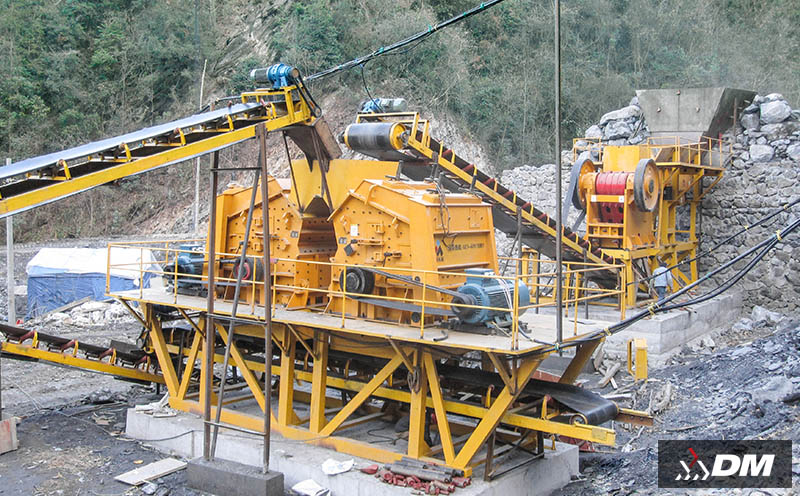
A fixed impact crusher can be a strong solution for limestone aggregate production because it combines high reduction ratio with excellent product shape. When limestone is not extremely abrasive, impact crushing can deliver cubical particles that perform well in concrete, asphalt, and base applications. In a stationary plant, the crusher can be integrated with controlled feeding, screening, dust management, and maintenance access to support reliable daily production.
The goal is not simply to break limestone. It is to convert a natural resource into saleable products that meet customer requirements and protect the producer’s margin.
The Limestone Producer’s Quality Challenge
Limestone is often easier to crush than hard granite or basalt, but that does not mean it is easy to produce profitably. Some limestone deposits are variable, with softer zones, harder bands, clay seams, or moisture-sensitive material. If the crushing process is not controlled, the plant may create too many fines, inconsistent sizing, or flaky particles that reduce product value.
Customers notice these problems quickly. Concrete producers may complain about water demand or inconsistent batching behavior. Road contractors may reject material that does not compact correctly. Asphalt plants may require better shape for mix performance. If a quarry cannot supply stable aggregate, buyers may shift to another source even if the stone itself is suitable.
A fixed impact crusher helps address this by using impact energy to create a more cubical product. Compared with some compression-only circuits, impact crushing can improve particle shape and reduce the need for additional shaping equipment in suitable limestone applications.
Why Fixed Impact Crushing Works for Stable Plants
A stationary plant gives limestone producers the chance to optimize every stage around the impact crusher. Feeders can regulate material flow. Pre-screening can remove fines before crushing. Chutes can be designed to reduce blockage. Screens can close the circuit and control final product size. Dust suppression and enclosure systems can be installed where needed.
This stability matters because impact crushing performance depends on feed consistency, rotor speed, blow bar condition, apron setting, and material flow. In a fixed installation, operators can maintain these variables more effectively than in a temporary setup. The result is more predictable product quality and better control over operating cost.
For producers with long-term limestone reserves and steady local demand, a fixed impact crusher can become the central machine in a highly efficient aggregate plant.
Product Shape as a Commercial Advantage
In many markets, cubicity influences price. Cubical limestone aggregate often compacts better, interlocks effectively, and performs more predictably in concrete and asphalt mixes. A fixed impact crusher is particularly valuable when the producer wants to supply higher-value construction aggregate rather than only low-grade fill.
For example, a limestone quarry producing 5-10 mm, 10-20 mm, and 20-31.5 mm aggregate may use an impact crusher after primary crushing to improve shape and achieve the required size reduction. The crushed material then passes through a screening machine to separate final products and return oversize if necessary. With correct settings, the plant can balance cubicity and fines generation.
This matters for customer retention. If a ready-mix customer receives aggregate that supports stable mix design, that customer has less reason to switch suppliers. If a road contractor gets material that compacts consistently across a project, the quarry becomes a trusted source rather than just another price option.
Controlling Fines Without Sacrificing Output
One concern with impact crushing is fines generation. In limestone applications, this can be managed through proper crusher selection, rotor speed, apron adjustment, feed control, and screening strategy. The objective is not to eliminate fines completely, because fine material may have a market as manufactured sand, filler, or base component. The objective is to control where fines go and how much is created.
A fixed impact crusher should be sized and configured according to the required product mix. If the crusher is forced to handle excessive reduction in one stage, fines may increase. If feed contains too much already-sized material, unnecessary crushing can create waste. Pre-screening and closed-circuit design help prevent this.
Plant operators should also monitor wear parts. Worn blow bars or liners can change product grading and increase energy consumption. Regular inspection keeps the crusher operating within its intended performance range.
Application Scenarios for Limestone Markets
A fixed impact crusher is suitable for many limestone aggregate applications. In road construction, it can produce base and surface-course aggregate with good shape. In concrete supply, it can support consistent coarse aggregate production. In industrial parks or urban expansion zones, it can help a quarry supply multiple contractors from a stable plant. In coastal or export markets, it can produce graded stone for stockpiling and shipment.
It is also useful for producers who want to upgrade from simple crushing to more differentiated products. Instead of selling most material as general crusher run, the plant can separate higher-value clean aggregate sizes. Better shape and grading allow the sales team to target customers with stricter requirements.
However, material testing is important. If the limestone is highly abrasive or contains hard silica bands, wear costs must be evaluated carefully. A responsible supplier should analyze the stone and recommend blow bar materials, liner options, and operating settings that match the deposit.
Maintenance Planning for Reliable Production
Impact crushers require attention to wear parts. Blow bars, impact plates, liners, rotor components, bearings, and drive systems should be inspected regularly. In a fixed plant, maintenance can be planned with lifting equipment, service platforms, spare part storage, and safe lockout procedures.
The advantage of a fixed installation is that maintenance routines can become predictable. Operators can record wear rates under specific feed conditions and product settings. This allows the quarry to plan shutdowns during lower-demand periods and avoid unexpected stoppages during major supply contracts.
A well-maintained impact crusher also protects product quality. As wear progresses, crusher settings and crushing behavior can change. Monitoring these changes helps keep grading and shape within target ranges.
ROI Through Product Upgrade and Process Control
The return on a fixed impact crusher comes from both production efficiency and market positioning. If the crusher helps the quarry sell more material as concrete aggregate, asphalt aggregate, or premium road stone, revenue per ton can improve. If it reduces the need for additional crushing stages, operating cost may decline. If stable shape reduces customer complaints, long-term relationships become stronger.
Producers should evaluate ROI by comparing current product sales with the potential product mix after impact crushing. How much material is currently sold as low-value crusher run? How much could be separated into higher-value sizes? What customer segments are currently inaccessible because shape or grading is not reliable enough? These questions help define the commercial value of the investment.
Conclusion: Limestone Needs More Than Capacity
For limestone quarries, profitable production depends on shape, consistency, fines control, and uptime. A fixed impact crusher gives producers a powerful tool for meeting these requirements in a stable, long-term plant.
When properly selected and maintained, the impact crusher can help transform limestone from basic crushed stone into a reliable, higher-value aggregate supply for construction markets.












We will answer your email shortly!