

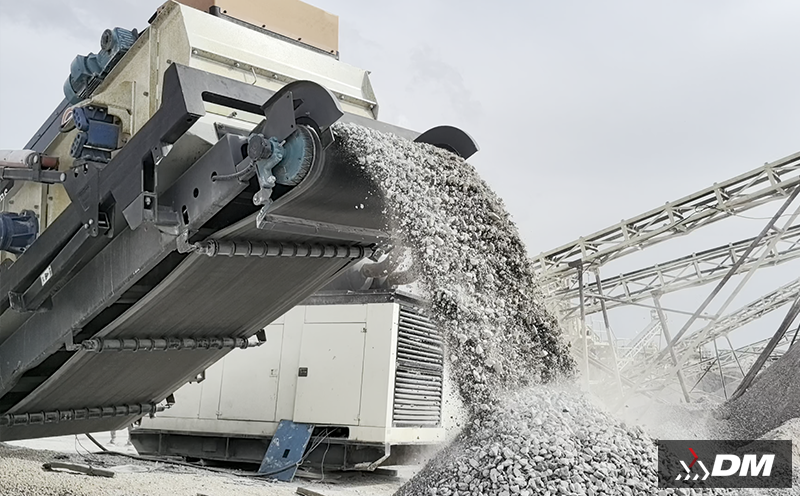
Understanding the Two Systems
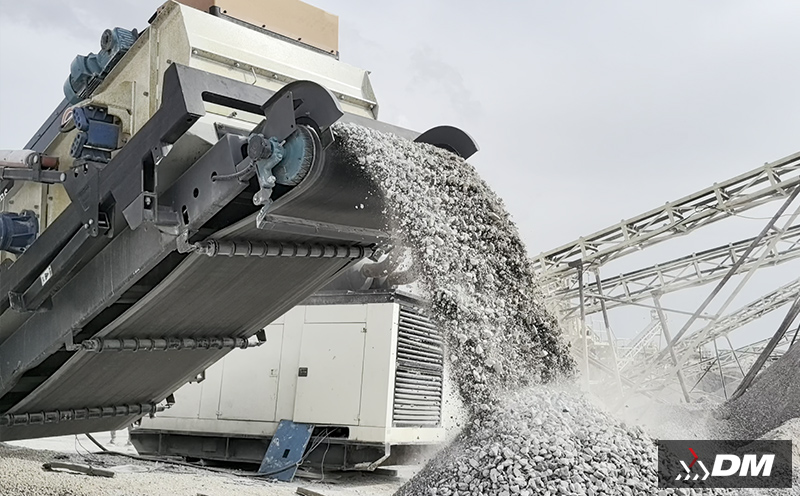
Stationary Crushing Plant
A stationary crushing plant is permanently installed on a prepared foundation.
Typical configuration:
Production capacity:
100–1000+ TPH
Applications:
- Granite quarries
- Basalt processing
- Limestone production
- Large mining operations
Tracked Mobile Crusher Plant
A tracked mobile crushing plant integrates crushing and screening equipment onto a crawler chassis.
Typical configuration:
- Tracked Jaw Crusher
- Tracked Cone Crusher
- Tracked Impact Crusher
- Mobile Screening Plant
Production capacity:
50–500 TPH
Applications:
- Contract crushing
- Construction projects
- Recycling
- Temporary quarry operations
Comparing Initial Investment Costs
Many buyers assume mobile crushers are always cheaper.
In reality, the answer depends on project conditions.
| Cost Item | Stationary Plant | Mobile Plant |
|---|---|---|
| Foundation Construction | High | Minimal |
| Civil Engineering | High | Low |
| Transportation | Medium | Low |
| Installation | High | Low |
| Relocation | Difficult | Easy |
For remote quarry sites, mobile crushers often reduce initial project costs by eliminating extensive civil engineering work.
Productivity Comparison
When production exceeds 500 TPH, stationary plants usually provide better long-term efficiency.
Example:
Stationary Granite Plant
Configuration:
Jaw Crusher + Cone Crusher + Screening Plant
Capacity:
600 TPH
Operating Hours:
20 Hours/Day
Daily Output:
12,000 Tons
Mobile Granite Plant
Configuration:
Tracked Jaw + Tracked Cone + Mobile Screen
Capacity:
350 TPH
Operating Hours:
16 Hours/Day
Daily Output:
5,600 Tons
For large mining projects requiring continuous production, stationary systems generally deliver higher throughput.
Transportation Cost Analysis
Transportation is often overlooked when evaluating crusher investments.
In a traditional quarry:
- Raw material may travel several kilometers before crushing.
A mobile crusher can move closer to the blasting area.
Benefits:
- Reduced haul truck distance
- Lower fuel consumption
- Lower tire wear
- Faster material handling
For hard rock operations processing granite or basalt, transportation savings can significantly improve profitability.
Which Crusher Is Better for Granite?
Granite is one of the hardest materials commonly processed in aggregate production.
Recommended stationary solution:
High-Capacity Quarry
- Jaw Crusher
- Hydraulic Cone Crusher
- Multi-Deck Vibrating Screen
Capacity:
300–800 TPH
Recommended mobile solution:
Flexible Production Site
- Tracked Jaw Crusher
- Tracked Cone Crusher
- Mobile Screening Plant
Capacity:
150–450 TPH
The selection depends on production targets and site mobility requirements.
The Growing Role of Automation
Automation is becoming a competitive advantage in both stationary and mobile plants.
Modern systems now provide:
- Automatic CSS adjustment
- Production monitoring
- Load optimization
- Predictive maintenance
- Remote diagnostics
Industry forecasts suggest that automation, electrification, and AI-assisted maintenance will continue reshaping crushing operations over the coming years.
Sustainability Is Influencing Equipment Purchases
Environmental regulations are becoming stricter across Europe and other developed markets.
As a result, demand for:
- Electric crushers
- Hybrid mobile crushers
- Energy-efficient screening plants
continues to increase. Equipment manufacturers are investing heavily in cleaner technologies to reduce emissions and operating costs.
Conclusion
There is no universal answer to the stationary versus mobile crusher debate.
For high-volume quarry operations processing granite, basalt, or limestone for decades, a stationary crushing plant often delivers the highest production capacity and lowest cost per ton.
For contractors, infrastructure projects, and multi-location operations, tracked mobile crushers offer unmatched flexibility and faster project deployment.
The best investment decision depends on production targets, site conditions, transportation costs, and long-term business strategy. Companies that align equipment selection with actual operating requirements are more likely to achieve stronger ROI and sustainable growth in an increasingly competitive aggregates market.












We will answer your email shortly!