

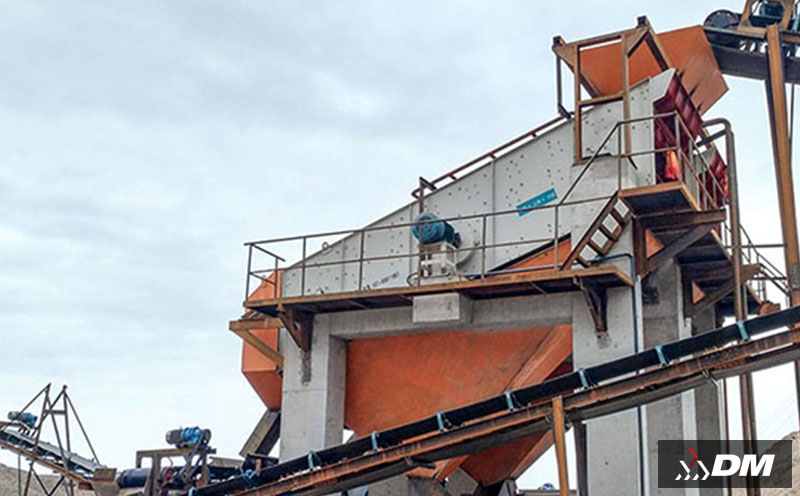
A vibrating screen is core equipment used worldwide for material classification, screening, impurity removal and solid-liquid separation. Through mechanical vibration, materials of different particle sizes move and stratify on the screen surface to achieve precise separation. It is widely applied in mining, sand and gravel, building materials, metallurgy, environmental protection, chemical engineering and other industries, serving as an indispensable part in crushing, sand making, mineral processing and other production lines.
Core Working Principle
The core of a vibrating screen is the vibrator (motor + eccentric block), which generates periodic excitation force to drive the screen box and screen mesh to vibrate:
- Material stratification: After entering the screen surface, materials loosen and bounce under vibration, with fine particles sinking and coarse particles floating up.
- Particle separation: Fine materials smaller than the screen holes pass through the mesh as "undersize products"; coarse materials larger than the screen holes move along the surface and are discharged from the outlet.
- Vibration trajectory: Main types include linear vibration (for coarse classification) and circular/elliptical vibration (for efficient screening of medium and fine materials), matching different material and precision requirements.
Main Types
- Circular vibrating screen: Circular/elliptical trajectory, high screening efficiency, suitable for medium and coarse material classification in mines and sand plants.
- Linear vibrating screen: Linear reciprocating motion, excellent in dewatering and medium removal, used for coal, tailings and sand screening.
- High-frequency vibrating screen: High frequency, small amplitude, handles fine powder, slurry and ultra-fine materials, anti-clogging and high precision.
- Multi-layer vibrating screen: 2–6 layers of screen mesh, produces multiple particle sizes in one pass, suitable for refined sand aggregate production.
Core Application Scenarios
- Mining & sand: Classification of crushed ore, manufactured sand screening, tailings dry discharge, supporting global infrastructure aggregate supply.
- Construction waste recycling: Screening of crushed construction waste, recycled aggregate reuse, in line with global green environmental trends.
- Metallurgy & coal: Classification and impurity removal of sintered ore, coke and raw coal, improving smelting and combustion efficiency.
- Environmental protection & chemical industry: Sludge dewatering, powder purification, fine raw material screening, meeting global high-standard production requirements.
Development Trends
Modern vibrating screens are upgrading toward intelligence, high efficiency and green development. Equipped with IoT remote monitoring, automatic screen cleaning and intelligent speed regulation, screening efficiency is increased by over 30%. Low-noise, energy-saving and wear-resistant designs adapt to harsh working conditions and environmental standards in Europe, America, Middle East, Africa and other regions, making them key equipment for efficient and sustainable global industrial production.
Complete Classification of Mining Vibrating Screens: How to Choose the Right Stone Grading and Screening Equipment
Mining vibrating screens are core grading equipment in the sand & gravel, mining, infrastructure and solid waste recycling industries. They directly determine aggregate grain shape, particle size accuracy and production efficiency. Based on project experience in more than 80 countries, Shanghai Dongmeng provides a systematic analysis from three dimensions: classification, working principle and selection, helping global readers accurately match equipment, avoid selection errors, and achieve efficient grading, cost reduction and efficiency improvement.
1. Core Classification of Mining Vibrating Screens (Global Mainstream)
1.1 Classification by Motion Trajectory (Core Distinction for Different Scenarios)
| Type | Core Principle | Core Advantages | Application Scenarios | Global Adaptability |
| Circular Vibrating Screen | Driven by a single-shaft exciter, the screen box moves in a circular trajectory (amplitude 1–5 mm, inclination 15°–25°) | Large processing capacity (50–500 t/h per unit), simple structure, strong impact resistance, suitable for loose coarse materials | Classification after coarse crushing of raw ore, sand pre-screening, primary screening of metal ores (iron ore/copper ore), rough grading in remote mining areas | ★★★★★ (Global Universal) |
| Linear Vibrating Screen | Dual motors rotate reversely, the screen box moves in a linear trajectory (amplitude 2–4 mm, frequency 800–1200 r/min) | High screening accuracy, low energy consumption (0.2–0.4 kWh per ton), long material retention time | Medium-fine particle grading (3–0.074 mm), dewatering and desliming, fine screening of wet and sticky materials, solid waste recycling sorting | ★★★★☆ (Mainstream in Europe, America & Southeast Asia) |
| Elliptical Vibrating Screen | Single/dual-shaft asymmetric design, synthetic elliptical motion trajectory (major axis 3–6 mm, minor axis 1–3 mm) | Balances capacity and accuracy, wide adaptability, not easy to block holes | Hybrid material grading under complex working conditions, fine grading of infrastructure aggregates, screening of materials with medium to high mud content | ★★★★ (Suitable for Middle East & Europe) |
| High-Frequency Vibrating Screen | Driven by high-frequency exciter (1500–3000 r/min), high-speed vibration with small amplitude | Efficient screening of ultra-fine particles, screening efficiency increased by 30%+, suitable for wet fine grading | Fine grading of manufactured sand, tailings recovery, fine particle control of high-grade aggregates | ★★★★ (High-end sand & metal mines) |
1.2 Classification by Structure and Form (Sub-scenario Adaptation)
- Banana Screen: The screen surface has multi-stage different inclinations, shaped like a banana, with large processing capacity and high grading efficiency, suitable for multi-size grading in large sand and gravel plants.
- Heavy-duty Vibrating Screen: Thickened screen plate and heavy-duty exciter, wear-resistant and impact-resistant, suitable for grading after coarse crushing of hard rocks (granite/basalt).
- Trommel Vibrating Screen: Combined with drum rotation and vibration, uniform material rolling, suitable for sticky materials and medium-fine particle grading.
- Multi-layer Vibrating Screen: 2–5 layers of screen surfaces stacked, realizing multi-size grading by a single machine, reducing equipment configuration and saving space, suitable for large-scale production lines.
1.3 Classification by Function and Purpose
- Grading Screen: Core equipment for multi-size grading, such as 5–10 mm, 10–20 mm, 20–31.5 mm aggregate grading, standard configuration in mines.
- Dewatering Screen: High-frequency vibration + dewatering structure, dewatering rate ≥90%, suitable for sand washing, tailings dewatering, solid waste recycling dewatering.
- Desliming Screen: Strong vibration force + large inclination design, fast separation of fine mud, suitable for high mud content materials (such as clay ore, wet sand).
2. Core Working Principle (2026 Global Standard Process)
1. Feeding: Materials are evenly fed to the screen surface by a vibrating feeder to avoid material accumulation and ensure uniform grading.
2. Vibration Stratification: The exciter generates excitation force, making materials loose, jump and stratify on the screen surface, with fine particles moving downward and coarse particles upward.
3. Penetration and Grading: Fine particles are discharged through screen holes as under-screen products; coarse particles move along the screen surface as over-screen products to complete grading.
4. Conveying and Collection: Over-screen/under-screen materials are conveyed to corresponding bins by belt conveyors, and unqualified materials are returned for re-screening (closed circuit).
5. Screen Cleaning and Anti-blocking: Rubber balls or ultrasonic screen cleaning systems are equipped for wet and sticky materials to avoid screen hole blockage and ensure continuous efficient screening.
3. 2026 Global Selection Guide (Four Core Dimensions)
3.1 Material Properties (Fundamental Basis for Selection)
- Particle Size Range: Circular vibrating screen for coarse particles (>10 mm); linear vibrating screen for medium-fine particles (<10 mm); high-frequency vibrating screen for ultra-fine particles (<0.1 mm).
- Hardness & Abrasiveness: Heavy-duty circular vibrating screen with high-manganese steel screen plates for hard rocks (granite/basalt); light linear vibrating screen for soft rocks (limestone/shale) to reduce wear.
- Moisture & Mud Content: Linear or elliptical vibrating screen with screen cleaning device for moisture content >8% and mud content >10% to avoid hole blocking.
- Material Density: Circular vibrating screen with large excitation force for heavy materials (iron ore/metal ore); conventional linear vibrating screen for light materials (sand/solid waste) to balance efficiency and cost.
3.2 Capacity & Finished Product Requirements (Core Quantitative Indicators)
- Processing Capacity: Small and medium-sized circular/linear vibrating screens for output <200 t/h; medium multi-layer circular vibrating screens for 200–500 t/h; heavy-duty circular vibrating screens or multi-unit combination for output >500 t/h.
- Finished Product Accuracy: Linear vibrating screen for high-precision aggregates (±0.5 mm error); circular vibrating screen for conventional grading (±1 mm error) to balance efficiency and cost.
- Particle Size Grading: Single-layer screen for single-size grading; multi-layer vibrating screen for multi-size grading (2–5 grades) to reduce equipment quantity.
3.3 Scenario & Configuration (Key to Global Adaptation)
- Working Scenarios:
- Large fixed mines/sand plants: Heavy-duty circular vibrating screens and multi-layer linear vibrating screens for long-term continuous production.
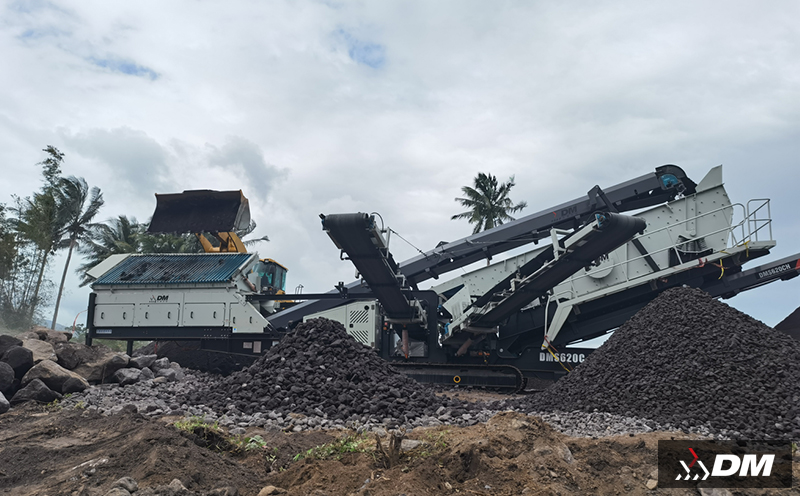
- Mobile crushing plants: Integrated vibrating screens (matching mobile chassis) for easy transfer and fast production.
- High environmental protection areas: Low-noise, dust-proof, dewatering vibrating screens to meet environmental regulations in EU, Middle East and other regions.
- Core Configuration Points:
- Screen Plate: High-manganese steel/polyurethane screen plates for hard rocks; rubber screen plates for soft rocks to extend service life.
- Exciter: Heavy-duty exciter for high-load, 24-hour continuous operation.
- Power System: Imported motors/diesel engines, suitable for remote mining areas without power grid (diesel version).
- Intelligent Control: Remote monitoring and fault self-diagnosis for global remote operation and maintenance.
3.4 Service & Quality (Core of Global Procurement)
- International Certification: Prioritize ISO9001, CE certified equipment to meet global standards and reduce compliance risks.
- Global Service: 7×24-hour technical response, reply within 30 minutes, on-site installation and commissioning, fast supply of original spare parts to ensure stable operation of overseas projects.
- Modular Design: Equipment is modularly split for easy sea transportation and quick assembly, suitable for global deployment.
4. Global Recommended Solutions by Shanghai Dongmeng (Scenario Matching)
| Global Scenario | Recommended Vibrating Screen Type | Core Configuration | Adaptation Advantages |
| Large hard rock mines (granite/basalt) | Heavy-duty multi-layer circular vibrating screen (YKS Series) | High-manganese steel screen plates, high-excitation-force exciters, multi-layer grading | Large processing capacity (500 t/h+), strong impact resistance, accurate grading |
| Sand plants in Southeast Asia/Middle East | Linear vibrating screen + dewatering screen combination | Polyurethane screen plates, high-frequency screen cleaning, low-noise design | High dewatering efficiency, suitable for hot and humid climates, lower operating costs |
| Solid waste recycling in Europe/Africa | Elliptical vibrating screen + high-frequency vibrating screen | Anti-blocking structure, fine grading, environmental compliance | Suitable for complex solid waste materials, meets local environmental standards |
| Matching for mobile crushing plants | Integrated mobile vibrating screen | Matching mobile chassis, fast transfer, ready-to-use | No infrastructure needed, shorten production cycle, reduce transportation costs |
5. Summary: The Most Suitable Is the Best
There is no absolute "best" mining vibrating screen, only the "most suitable" one. Choose circular vibrating screens for hard rock coarse grading, linear vibrating screens for medium-fine particle high-precision grading, elliptical/high-frequency vibrating screens for complex working conditions, and integrated vibrating screens for mobile scenarios. As a global expert in crushing and screening, Shanghai Dongmeng provides a full range of mining vibrating screens, one-stop selection, accurate quotation and global lifelong services. Whether your project is a large mine in Africa, a sand base in Southeast Asia, an infrastructure project in the Middle East or a solid waste recycling project in Europe, we can customize adaptive solutions to help you achieve efficient grading, cost reduction, efficiency improvement and sustainable profit.












We will answer your email shortly!