

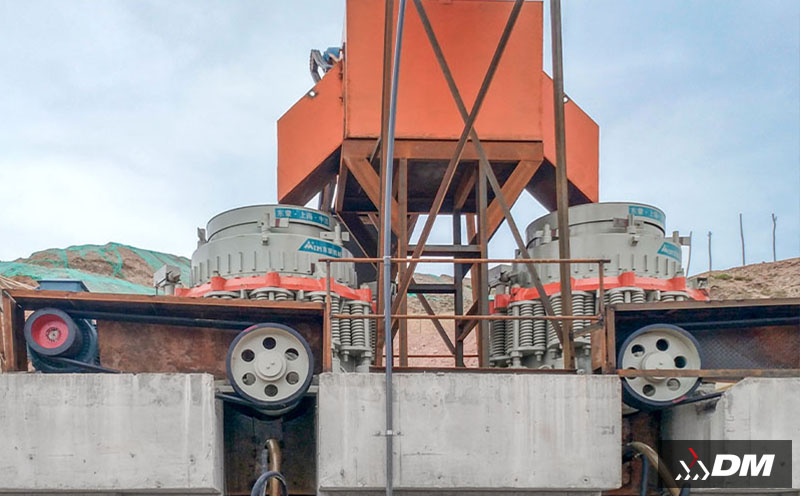
In the fields of mining, stone processing and infrastructure construction, the cone crusher is a widely used secondary and fine crushing equipment. With high production capacity, excellent product particle shape and stable operation, it has become an ideal choice for processing high-hardness materials. So what exactly is a cone crusher? What are its features and advantages? This article will give you a comprehensive analysis.
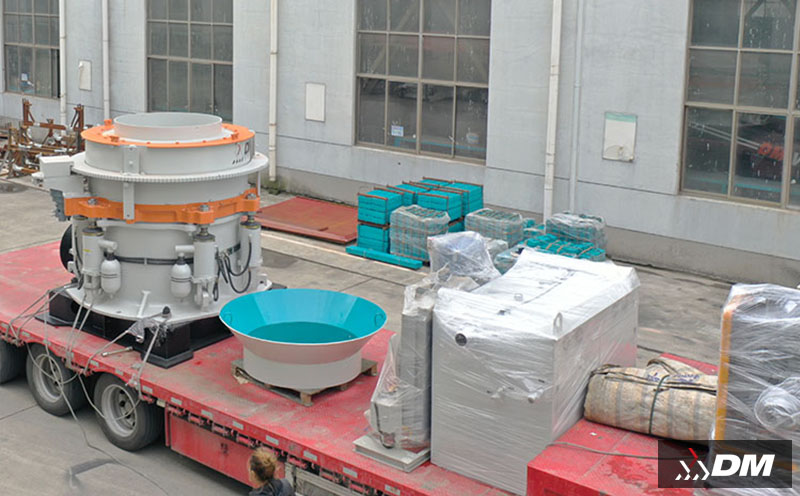
Basic Concept
A cone crusher is a piece of equipment that uses the lamination crushing principle for material crushing. The moving cone (movable cone) driven by an eccentric sleeve performs a swinging motion, periodically approaching and moving away from the fixed cone (fixed cone), to squeeze, shear and bend materials between them for efficient crushing.
Cone crushers are mainly used for secondary and fine crushing operations, suitable for processing various high-hardness materials with compressive strength not exceeding 320MPa, such as granite, basalt, iron ore, copper ore, etc. It is usually installed in the second or third process of the crushing production line, receiving materials after primary crushing by jaw crushers, and further crushing them to the particle size required by downstream processes.
Structure and Working Principle
Core Structure
A cone crusher is mainly composed of the following parts:
Frame: the main structure carrying all components
Fixed cone: fixed crushing wall on the frame, forming a crushing chamber with the moving cone
Moving cone: movable component installed on the main shaft, performing swinging motion
Eccentric sleeve mechanism: core transmission component driving the moving cone to swing
Hydraulic system: used for discharge opening adjustment and iron passing protection
Lubrication system: ensuring normal operation of bearing components
Working Principle
The working principle of a cone crusher can be summarized as "lamination crushing":
After the equipment starts, the motor drives the eccentric sleeve to rotate through the transmission device. Driven by the eccentric sleeve, the moving cone performs periodic swinging motion around the crusher center line — there is an angle between the axes of the moving cone and the fixed cone, forming a cyclic motion of "approaching" and "leaving".
Crushing stage: when the moving cone approaches the fixed cone, materials in the crushing chamber are subjected to combined forces of extrusion, shear and bending. More importantly, a dense material layer is formed between materials, and particles squeeze and grind each other, which is the core of "lamination crushing". This crushing method makes full use of energy and achieves high crushing efficiency.
Discharging stage: when the moving cone leaves the fixed cone, the crushing chamber space increases, and crushed materials are discharged downward under gravity to realize continuous discharging.
This cycle of "crushing when approaching, discharging when leaving" repeats hundreds of times per minute, making the crushing process continuous and uniform.
Main Features of Cone Crusher
1. Large crushing ratio
The crushing ratio of cone crusher can reach 6-8, up to more than 10. It can crush coarsely crushed materials to a fine particle size at one time, reducing subsequent crushing links.
2. Excellent product particle shape
Through the lamination crushing principle, materials produced by cone crusher are cubic with low needle and flake content, making it an ideal equipment for producing high-quality aggregates. This feature makes it widely used in high-grade highways, high-speed railways and other projects with strict particle shape requirements.
3. Large processing capacity
The single-machine processing capacity of large-scale cone crushers can reach more than 3000 tons per hour, meeting the needs of large-scale mining and stone production.
4. Stable and reliable operation
Cone crusher has a compact structure and stable operation, suitable for 24-hour continuous operation. The hydraulic iron-passing protection system ensures that the equipment can automatically eliminate faults and quickly resume operation when encountering unbreakable materials.
5. Adjustable discharge particle size
By adjusting the discharge opening width through the hydraulic system, the discharge particle size can be easily controlled to meet different finished product requirements.
Main Types of Cone Crusher
1. Spring cone crusher
The most classic type of cone crusher, with simple structure and convenient maintenance, suitable for secondary and fine crushing of medium-hardness materials, widely used in small and medium-sized mines and quarries.
2. Single-cylinder hydraulic cone crusher
With a simple structure, it features convenient discharge opening adjustment and reliable iron-passing protection. Suitable for secondary crushing in production lines, with large processing capacity and easy operation.
3. Multi-cylinder hydraulic cone crusher
Adopting advanced lamination crushing cavity design, it has high crushing efficiency and excellent product particle shape, making it an ideal choice for fine and super-fine crushing operations. Especially suitable for high-hardness, high-abrasive materials and projects with strict requirements on finished particle shape.
4. Compound cone crusher
Combining the characteristics of spring and hydraulic types, it balances stability and adjustment convenience, suitable for comprehensive needs of various working conditions.
Differences Between Cone Crusher and Other Crushing Equipment
| Comparison Item | Cone Crusher | Impact Crusher | Jaw Crusher |
| Applicable Stage | Secondary, Fine Crushing | Secondary, Fine Crushing | Primary Crushing |
| Applicable Materials | High Hardness (≤320MPa) | Medium Hardness (≤250MPa) | High Hardness (≤320MPa) |
| Working Principle | Lamination Crushing | Impact Crushing | Extrusion Crushing |
| Product Particle Shape | Good | Excellent | More Needle Flakes |
| Wear Parts Life | Long | Relatively Short | Long |
| Unit Energy Consumption | Relatively Low | Low | High |
Application Fields of Cone Crusher
1. Metal Mining
In iron, copper, gold, molybdenum and other metal mines, cone crushers are key equipment in the mineral processing process. It crushes coarsely crushed ores to the particle size that can be efficiently processed by ball mills, directly affecting the production capacity and metal recovery rate of the entire concentrator.
2. Sand and Aggregate Production
In the production of sand and aggregates for highways, railways, water conservancy, construction and other projects, cone crushers undertake the task of producing high-quality crushed stones. Especially for high-hardness, high-abrasive materials such as granite, basalt and river pebbles, cone crushers are the preferred equipment to ensure excellent finished particle shape and stable gradation.
3. Construction Waste Recycling
With the global emphasis on sustainable development, cone crushers can be used for secondary crushing of construction waste recycled aggregates. The lamination crushing principle improves the particle shape and gradation of recycled aggregates, enhancing their quality as recycled building materials.
4. Special Industrial Fields
In chemical, metallurgical, refractory and other industrial fields, cone crushers are also used to process various industrial raw materials such as phosphate ore, corundum and silicon carbide.
Selection Suggestions
When choosing a cone crusher, it is recommended to consider the following factors comprehensively:
1. Material characteristics: confirm the compressive strength, abrasiveness, moisture content of materials
2. Finished product requirements: clarify target particle size, particle shape and gradation requirements
3. Processing capacity: select appropriate model specifications according to project needs
4. Process flow: determine the position of cone crusher in the whole production line (secondary crushing or fine crushing)
5. Automation requirements: whether hydraulic adjustment, automatic iron-passing protection, remote monitoring and other functions are needed
Conclusion
A cone crusher is a high-efficiency equipment for secondary and fine crushing using the lamination crushing principle. With the advantages of large crushing ratio, excellent product particle shape and stable and reliable operation, it is widely used in global metal mines, sand and aggregate production, construction waste recycling and other fields.
For the production of high-hardness materials, cone crushers are indispensable core equipment. The cubic crushed stones it produces are high-quality materials for high-grade projects such as highways, high-speed railways and water conservancy dams. With the continuous advancement of global infrastructure construction and the improvement of mine automation, cone crushers will continue to evolve in the directions of efficient crushing, intelligent control and energy saving, creating greater value for global customers.
What is the difference between jaw crusher and cone crusher?
In the fields of sand and aggregate production, mining and construction waste treatment, jaw crushers and cone crushers are the two most widely used crushing equipment. They often appear on the same production line but undertake different roles. So what exactly is the difference between these two equipments? How to choose? This article will give you a systematic analysis.
Basic Concept
Jaw Crusher
A jaw crusher is a primary crushing equipment based on extrusion crushing. It applies huge extrusion and shear forces to materials through the periodic approaching and moving away of fixed jaw plate and movable jaw plate, crushing large materials into small particles. Jaw crushers are usually located in the first process of the production line, undertaking the task of primary crushing, acting as the "gate" of the whole production line.
Cone Crusher
A cone crusher is a piece of equipment that uses the lamination crushing principle for secondary and fine crushing. The moving cone driven by an eccentric sleeve performs a swinging motion, periodically approaching and moving away from the fixed cone, to squeeze, shear and bend materials for efficient crushing. Cone crushers are usually installed after jaw crushers, undertaking secondary and fine crushing tasks.
Core Difference Comparison
| Comparison Dimension | Jaw Crusher | Cone Crusher |
| Working Principle | Extrusion + Shear Crushing | Lamination Crushing |
| Applicable Stage | Primary Crushing (1st Process) | Secondary, Fine Crushing (2nd, 3rd Process) |
| Applicable Materials | High Hardness (≤320MPa) | High Hardness (≤320MPa) |
| Feed Size | Up to 1000mm+ | Usually ≤300mm |
| Discharge Size | 100-300mm | 10-50mm |
| Product Shape | High Needle Flake Content | Cubic, Excellent Shape |
| Capacity | 1-1500 TPH | 50-3000 TPH |
| Crushing Ratio | 3-6 | 6-8, Up to 10+ |
| Wear Parts | Jaw Plates | Crushing Wall, Concave |
| Main Purpose | Crush Large Raw Ore | Further Fine Crushing |
Working Principle Differences
Jaw Crusher: Extrusion Crushing
The working principle of jaw crusher is to extrude and bend materials through two jaw plates. When the movable jaw plate approaches the fixed jaw plate, materials in the crushing chamber are crushed by huge extrusion and shear forces; when the movable jaw plate retreats, crushed materials are discharged from the discharge port under gravity.
This periodic movement of crushing when approaching and discharging when moving away is carried out continuously at a frequency of 200-400 times per minute, realizing intermittent crushing and discharging of materials. The crushing force of jaw crusher acts directly on materials, suitable for processing large, high-hardness materials.
Cone Crusher: Lamination Crushing
The working principle of cone crusher is more delicate — it uses the "lamination crushing" principle. When the moving cone approaches the fixed cone, materials in the crushing chamber are not only directly squeezed by the moving cone, but more importantly, a dense material layer is formed between materials, and particles squeeze and grind each other to achieve efficient crushing.
This crushing method makes full use of energy inside materials, with higher crushing efficiency and better product particle shape. Meanwhile, materials are subjected to uniform pressure instead of impact force, so the service life of wear parts is relatively long.
Role Differences in the Production Process
Jaw Crusher: First Pass of Production Line
Jaw crusher is always located at the starting point of the production line, undertaking the most arduous primary crushing task. It crushes large raw ores (with a diameter of more than 1 meter) after blasting to a moderate particle size (about 100-300 mm) that can enter the secondary crushing equipment.
Typical position: Raw materials → Jaw Crusher (Primary crushing) → Cone Crusher (Secondary fine crushing) → Vertical Shaft Impact Crusher (Sand making) → Finished products
Cone Crusher: Second Pass of Production Line
Cone crusher is located after jaw crusher, undertaking secondary and fine crushing tasks. It further crushes coarsely crushed materials to 10-50 mm or even finer particle size, creating good conditions for subsequent sand making or grinding links.
Typical position: Raw materials → Jaw crusher (Primary crushing) → Cone Crusher (Secondary fine crushing) → Vertical Shaft Impact Crusher (Sand making) → Finished products
Application Scenario Selection Guide
Scenarios for Choosing Jaw Crusher
Processing high-hardness materials (granite, basalt, iron ore, etc.)
As the first primary crushing process of the production line
Large feed size (over 500mm)
Pursuing equipment stability and convenient maintenance
Large-scale production line with complete subsequent fine crushing processes
Scenarios for Choosing Cone Crusher
Secondary and fine crushing of high-hardness materials (granite, basalt, iron ore, etc.)
Needing to further refine coarsely crushed materials
High requirements for finished product particle shape
Pursuing efficient crushing and low energy consumption
Large-scale production lines requiring continuous and stable operation
Typical Combined Application: Jaw + Cone Crusher Production Line
In actual production, jaw crushers and cone crushers are not an either-or relationship, but a golden partner. For high-hardness materials (such as granite, basalt, iron ore), jaw + cone crusher is a classic configuration:
Standard Configuration Plan
| Equipment | Model Example | Function |
| Vibrating Feeder | ZSW1360 | Uniform feeding, fine material filtering |
| Jaw Crusher | PE750×1060 | Primary crushing to 100-200mm |
| Cone Crusher | HPT300 | Secondary fine crushing to 10-30mm |
| Vibrating Screen | 3YK2475 | Classification into various aggregates |
Advantages of this combination:
Give full play to respective advantages: jaw crusher for large material primary crushing, cone crusher for efficient fine crushing
Realize "more crushing, less grinding": lamination crushing of cone crusher fully refines materials, reducing subsequent grinding energy consumption
Excellent product particle shape: cone crusher produces cubic crushed stones to meet high-quality aggregate requirements
Stable and reliable operation: both equipments are mature models with low failure rate, suitable for continuous operation
Shanghai Dongmeng: Jaw + Cone Crusher Full-process Solutions
As a high-tech enterprise specializing in R&D, manufacturing and sales of solid waste recycling equipment, mobile (tire and crawler) and fixed crushing and screening plants, Shanghai Dongmeng deeply understands the different positioning and complementary relationship between jaw crushers and cone crushers, and provides customers with full-process solutions from primary crushing to fine crushing.
Fixed Production Line
Shanghai Dongmeng provides complete fixed jaw + cone crusher production line configurations, from feeding, primary crushing, secondary fine crushing to screening, which can be customized according to material characteristics and finished product requirements to ensure efficient and stable operation of the production line.
Mobile Crushing Plant
For projects requiring on-site operation and frequent relocation, Shanghai Dongmeng provides:
Mobile jaw crushing plant: on-site primary crushing, rapid relocation
Mobile cone crushing plant: on-site secondary fine crushing, cooperating with mobile jaw plant to realize full-process mobile crushing
Advantages of mobile combination:
No infrastructure construction needed, quick production
Flexible relocation according to construction progress
Suitable for mining, quarry, construction waste treatment and other scenarios
Construction Waste Recycling Application
In the field of urban solid waste treatment, Shanghai Dongmeng combines jaw and cone crushers to realize efficient crushing and recycling of waste concrete and bricks:
Jaw crusher: primary crushing for large construction waste
Cone crusher: secondary fine crushing, improving recycled aggregate particle shape through lamination crushing
Produce high-quality recycled aggregates for road base, brick making, etc.
Selection Suggestions
When choosing or configuring between jaw crusher and cone crusher, it is recommended to consider the following factors comprehensively:
1. Material characteristics: jaw + cone crusher combination recommended for high-hardness materials; jaw + impact crusher combination optional for medium-hardness materials
2. Finished product requirements: cone crusher has obvious lamination crushing advantages for projects with high particle shape requirements
3. Production scale: cone crusher is superior in stability and processing capacity for large-scale continuous production
4. Process connection: ensure the discharge particle size of jaw crusher matches the feed requirements of cone crusher
5. Investment budget: jaw + cone crusher combination has relatively high investment but lower long-term operation cost
Conclusion
Although jaw crushers and cone crushers belong to the same crushing equipment family, they play completely different roles in the production line:
Jaw crusher is the "strong man" in the field of primary crushing, undertaking the arduous task of crushing huge raw stones to moderate particle size, which is the first pass of the production line
Cone crusher is the "fine processing expert" in the field of fine crushing, further refining materials through lamination crushing technology to produce crushed stones with excellent particle shape, which is the second pass of the production line
In actual production, they are inseparable "golden partners". Jaw crusher creates suitable feeding conditions for cone crusher, and cone crusher completes efficient fine crushing on the basis of the former, jointly building a complete and efficient crushing production line.
With profound accumulation and continuous innovation in the crushing and screening field, Shanghai Dongmeng provides customers with a full range of products from jaw crushers to cone crushers, and full-process solutions from primary crushing to fine crushing, helping global customers achieve efficient, stable and green sand production.












We will answer your email shortly!