

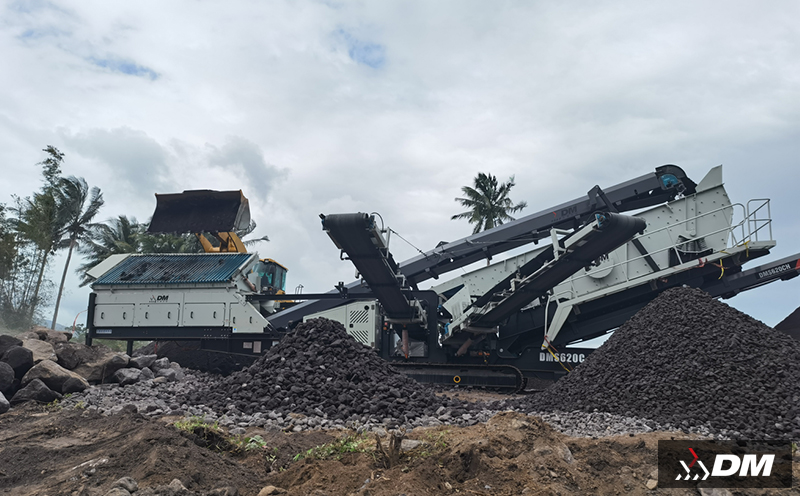
To put it simply, a crusher machine is a super grinder that turns large rocks into small stones and massive ores into fine powder. But its significance goes far beyond that.
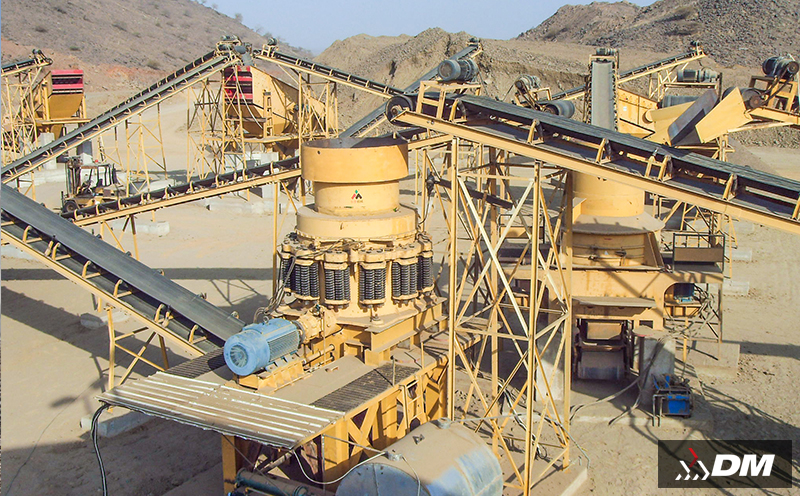
Three Core Functions
1. Supplying Materials for Infrastructure Construction
Building construction, road paving, bridge building and dam construction all rely on concrete and asphalt. More than 70% of concrete consists of sand and gravel aggregates. Crushers process granite and river pebbles into uniformly sized crushed stones. The global annual consumption of sand and gravel aggregates exceeds 40 billion tons, making it the second most consumed resource after water. Without crushers, urban development would be impossible.
2. Improving Mining Efficiency
In iron, copper and gold mines, blasted ores can be as large as houses. Crushers reduce them to fist-sized pieces, which are then sent to grinding mills for metal extraction. There is a professional term called "more crushing, less grinding" — finer crushing saves electricity and costs in the subsequent grinding process. A high-efficiency crusher significantly reduces the overall operating costs of a mine.
3. Recycling Waste into Resources
Waste concrete and bricks from demolition sites, once considered burdens, are now valuable resources. Mobile crushers process these wastes into recycled aggregates for road paving and brick making. This saves landfill space and reduces mountain quarrying, turning waste into treasure.
Different Types for Different Tasks
The crusher family has clear divisions of labor:
Jaw Crusher: A powerful machine for hard materials. It first processes large ores (over one meter) into 20-30 cm pieces for iron ore and granite.
Cone Crusher: Performs fine crushing to further refine coarsely crushed stones into well-shaped crushed stones, ensuring high-quality aggregates.
Impact Crusher: A shaping expert that produces cubic stones with minimal needle-like pieces, ideal for asphalt pavements of highways.
Vertical Shaft Impact Crusher: A sand-making machine that produces manufactured sand, a critical source of construction sand amid declining river sand resources.
Ubiquitous Applications
The highways you drive on use crushed stones from crushers; the high-speed rails you take rest on ballasts produced by crushers; the buildings you live in contain aggregates from crushers; even the water you drink may come from dams built with crusher-processed materials.
Conclusion
Crushers do not build houses directly, but no construction can proceed without them. They convert natural rocks into building materials for human civilization and turn landfills-bound waste into recyclable resources. As the unsung hero of modern industry, crushers silently support everything we see and use.
What is 200 tons per hour crusher machine?—Dongmeng Group
In the fields of sand and aggregate production, mining and infrastructure construction, the term "200 tons per hour crusher" is commonly mentioned. What exactly is this equipment and what can it do? This article provides a detailed explanation.
Basic Concept
A 200 tons per hour crusher refers to crushing equipment or a production line with a processing capacity of 200 tons per hour (200t/h). In short, it can process 200 tons of large rocks, ores or construction waste into qualified finished aggregates per hour.
200t/h is a medium production scale, one of the most widely used capacity ranges in the market. It meets the daily production needs of small and medium-sized mines and quarries, and also serves as supporting equipment for large projects.
Meaning of 200 Tons Per Hour
It is important to distinguish between processing capacity and output in crusher parameters:
Processing capacity: The amount of feed the equipment can receive per hour
Output: The actual finished products produced per hour
A 200t/h crusher typically means a finished product output of 200 tons per hour. Actual output may fluctuate due to material hardness, moisture content and equipment maintenance conditions.
Common Types of 200 Tons Per Hour Crushers
Various crusher types can achieve 200t/h capacity for different materials and working conditions:
1. Jaw Crusher
As primary crushing equipment, it is a common choice for 200t/h production lines:
PE-600×900: 50-160t/h, suitable for small and medium-sized lines
PE-750×1060: 130-330t/h, meets 200t/h requirements
PE-900×1200: 200-500t/h, large primary crusher
Jaw crushers are used for primary crushing of high-hardness materials (granite, basalt, iron ore) as the first stage of production lines.
2. Cone Crusher
Mainly used for secondary and fine crushing with 200t/h capacity:
DHP Multi-Cylinder Hydraulic Cone Crusher: Core equipment for 200t/h granite lines
DMC Spring Cone Crusher: Over 200t/h capacity
Cone crushers use lamination crushing for high-hardness, abrasive materials, producing well-shaped products.
3. Impact Crusher
Used for secondary and fine crushing of medium-hardness materials (limestone, dolomite):
PF1315 Impact Crusher: 100-180t/h, close to 200t/h
Can be matched with jaw crushers to form 200t/h lines
Impact crushers produce cubic materials with low needle-like content, ideal for projects with strict particle shape requirements.
4. Mobile Crushing Plant
Ideal for on-site operations and frequent relocation, available in 200t/h configurations:
Mobile Jaw Crushing Plant (primary crushing)
Mobile Cone Crushing Plant (secondary fine crushing)
Mobile Sand Making Machine (sand making and shaping)
Typical Configuration of 200 Tons Per Hour Production Line
A single machine cannot complete the full process from raw stones to finished aggregates. 200t/h usually refers to a complete production line with typical configurations:
Vibrating Feeder ZSW1360: Uniform feeding and fine material filtering
Jaw Crusher PE750×1060: Primary crushing to 40-100mm
Impact Crusher/Cone Crusher PF1315 / HPT220: Secondary fine crushing to finished size
Vibrating Screen 4YK1860: Classification into various aggregates
Belt Conveyor: Connects all units for material transportation
This integrated line ensures stable 200t/h output from feeding to finished products.
Factors Affecting Actual Capacity
The rated 200t/h is theoretical capacity; actual production is influenced by:
Material hardness: Output for granite (300MPa) is ~20% lower than limestone (150MPa)
Feeding uniformity: Variable frequency feeders increase output by 15% vs manual feeding
Moisture content: Materials stick and block when moisture exceeds 15%, reducing output
Equipment maintenance: Output drops by 30% when jaw plates wear over 30%
Application Scenarios of 200 Tons Per Hour Lines
This capacity scale is widely used globally:
Small and medium-sized quarries: Supplying regional sand and gravel
Highway and railway projects: Providing aggregates for subgrades, bridges and tunnels
Concrete batching plants: Supporting raw material supply
Mining concentrators: Primary or secondary crushing stages
Construction waste recycling: Processing waste concrete from urban demolition
Selection Suggestions
When choosing a 200t/h crusher, consider:
Material properties: Jaw + cone crushers for high-hardness materials; jaw + impact crushers for medium-hardness materials
Finished product requirements: Impact and vertical shaft impact crushers for better particle shape
Site conditions: Mobile plants for limited space or frequent relocation
Investment budget: Fixed lines have lower investment; mobile plants offer higher flexibility
Conclusion
A 200 tons per hour crusher is not a specific machine, but a range of equipment and production lines with 200t/h capacity, including jaw, cone, impact crushers and mobile plants. Configurations are flexible based on materials and production needs.
Shanghai Dongmeng is a high-tech enterprise specializing in R&D, manufacturing and sales of solid waste recycling equipment, mobile (tire and crawler) and fixed crushing and screening plants. Amid global infrastructure development, the 200t/h capacity scale is an ideal choice for many sand production enterprises and engineering projects due to moderate investment and wide applications.












We will answer your email shortly!