

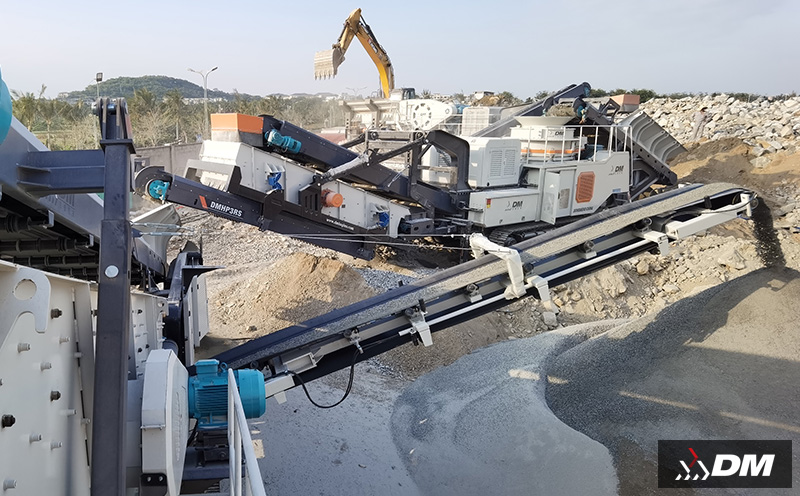
In mining, stone processing, and infrastructure construction, the cone crusher is an indispensable core piece of equipment. It often works in tandem with the jaw crusher, undertaking the crucial task of "precision processing" of materials. So, what exactly is a cone crusher used for? What unique advantages does it have? This article provides a comprehensive analysis for you.
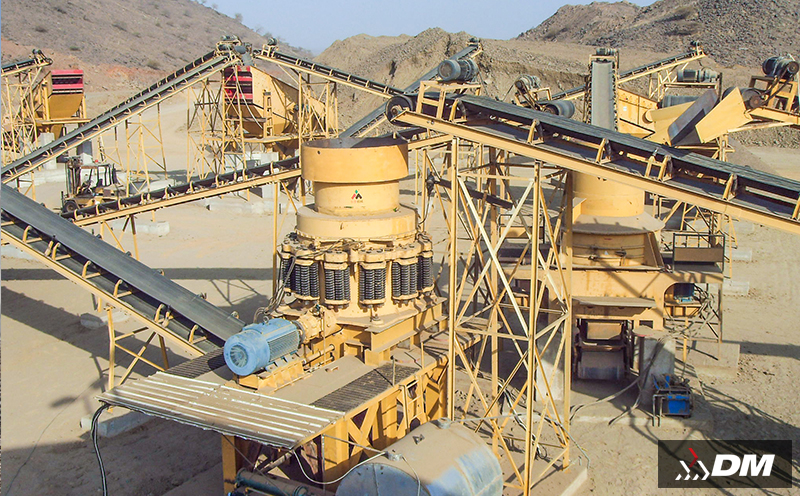
1. Core Position: "Precision Processing Expert" for Medium and Fine Crushing
A cone crusher is a crushing device designed for medium and fine crushing of materials of various hardnesses, suitable for crushing ores and rocks with medium or higher hardness. It is typically positioned after the jaw crusher to further refine coarsely crushed materials into finished aggregates that meet specified particle size requirements.
Simply put, the jaw crusher is responsible for "biting" large rocks into medium-sized pieces, while the cone crusher crushes these medium-sized materials into finished sand and gravel with uniform particle size and regular shape.
2. Working Principle: The Secret of Laminated Crushing
The working components of a cone crusher consist of two truncated cones — a fixed cone (outer cone) and a movable cone (inner cone). The fixed cone is stationary, while the movable cone is mounted on the main shaft with its lower end inserted into an eccentric bushing.
During operation, the motor drives the eccentric bushing to rotate via a transmission device, causing the movable cone to perform an eccentric rotational movement along the inner surface of the fixed cone:
- When approaching: In the area where the movable cone closes in on the fixed cone, materials are subjected to compression, impact, and bending forces within the crushing chamber
- When moving away: In the area where the movable cone deviates from the fixed cone, crushed materials are discharged from the bottom of the cone under their own weight
The laminated crushing principle is the core technical feature of the cone crusher. Materials are not only compressed by the movable cone but also subjected to interactions between particles, creating a "stone-on-stone" crushing effect. This increases the proportion of cubic particles in the finished product and reduces needle-like and flaky stones.
3. Main Application Fields
3.1 Metal Mines
In metal mines such as iron ore, copper ore, and gold ore mines, the cone crusher serves as the core equipment in the medium and fine crushing stage. It can process extremely hard ores, crushing mined raw ore to the particle size required for beneficiation and grinding processes. Its high crushing capacity and large output make it the main equipment in large-scale mines.
3.2 Construction Sand and Gravel Aggregate Production
From granite and basalt to river pebbles, cone crushers are widely used in the crushing and processing of various hard rocks. The finished aggregates produced have good particle shape and reasonable gradation, fully meeting the requirements for aggregates used in high-quality concrete and asphalt pavements.
3.3 Water Conservancy and Hydropower Projects
In key national large-scale projects such as the Three Gorges and Xiaolangdi, cone crushers undertake the core task of aggregate production. Their stable performance and excellent finished product quality provide a reliable guarantee for project quality.
3.4 Metallurgical, Chemical, and Building Materials Industries
Cone crushers are also widely used for crushing raw materials in the metallurgical, construction, road construction, chemical, and silicate industries, capable of crushing various ores and rocks with medium or higher hardness.
4. Core Advantages
4.1 High Production Efficiency
The crushing and discharging processes of the cone crusher alternate continuously along the working surface. The movable cone rotates continuously, and materials are constantly being crushed and discharged, resulting in production efficiency far higher than that of jaw crushers of the same specification.
4.2 Low Energy Consumption
Since materials are clamped between two cones and subjected to compression, bending, and shearing forces, crushing is easier and power consumption is lower. Compared with other crushing equipment, cone crushers have a significant advantage in unit power consumption.
4.3 Excellent Finished Product Particle Shape
Adopting the laminated crushing principle creates inter-particle crushing effects, resulting in a high proportion of cubic particles in the finished product, reduced needle-like and flaky stones, and more uniform particle size distribution — fully meeting the stringent requirements of high-grade concrete for aggregates.
4.4 Uniform Wear and Long Service Life
The working surface of the movable cone wears relatively uniformly with low loss. Combined with the use of high-quality wear-resistant materials, the equipment has a long service life and low operating costs.
4.5 High Degree of Automation
Modern hydraulic cone crushers are equipped with automatic control systems, featuring fully automatic crushing process control, one-button automatic start-up, and advanced fault diagnosis functions. They can achieve overload or iron passing protection for crushing operations, automatic compensation for liner wear, and other functions, significantly reducing manual intervention.
5. Common Types
According to structural and performance characteristics, cone crushers are mainly divided into the following types:
5.1 Spring Cone Crusher
A traditional type of cone crusher that uses a spring safety system as an overload protection device, allowing metal foreign objects to pass through the crushing chamber without damaging the machine. It has a reliable structure, simple maintenance, and is suitable for small and medium-sized production lines.
5.2 Hydraulic Cone Crusher
Uses a hydraulic system to adjust the discharge opening size and achieve overload protection. When foreign objects enter the crushing chamber, the hydraulic system enables the movable cone to automatically retract, and reset automatically after the foreign objects are discharged. It is divided into single-cylinder hydraulic and multi-cylinder hydraulic types based on structure. Multi-cylinder hydraulic cone crushers offer better laminated crushing effects and superior finished product particle shape.
5.3 Compound Cone Crusher
Combines the advantages of spring-type and hydraulic-type crushers, with stronger adaptability and a wider range of applications.
6. Cavity Type Selection
According to crushing stages and finished product requirements, cone crushers can be equipped with different crushing cavity types:
- Standard Type: Suitable for medium crushing, with large feed size and high production capacity
- Medium Type: Suitable for medium-fine crushing, balancing feed size and finished product fineness
- Short-head Type: Suitable for fine and ultra-fine crushing, with finer discharge size and better finished product quality
7. Comparison with Jaw Crusher
Many users often confuse cone crushers and jaw crushers, but in reality, they have distinct roles:
| Comparison Item | Cone Crusher | Jaw Crusher |
|---|---|---|
| Main Task | Medium and fine crushing | Coarse crushing |
| Feed Size | Smaller (usually < 300mm) | Very large (up to over 1.5 meters) |
| Discharge Size | Fine (down to below 5mm) | Coarser (usually > 50mm) |
| Applicable Materials | Medium hardness and above | All hardness levels |
| Finished Product Particle Shape | High cubic content, few needle-like/flaky particles | High content of needle-like/flaky particles |
| Production Efficiency | High (continuous operation) | Lower (intermittent operation) |
In actual production lines, the two are often partners: the jaw crusher is responsible for "initial breaking", while the cone crusher handles "precision processing", together achieving efficient and high-quality crushing operations.
8. Selection Suggestions
When selecting a cone crusher, the following factors should be considered:
- Material Hardness: The higher the hardness, the higher the equipment requirements — multi-cylinder hydraulic cone crushers are recommended
- Processing Capacity: Large-scale projects should choose large-specification equipment or multiple machines in parallel
- Feed Size: Select an appropriate feed opening based on the size of coarsely crushed materials
- Finished Product Requirements: For projects with high particle shape requirements, prioritize models with good laminated crushing effects
- Working Conditions: Fixed production lines and mobile equipment have different model requirements
Conclusion
The cone crusher is the core equipment for modern sand and gravel aggregate production and mineral processing. With its laminated crushing principle, high efficiency, low energy consumption, and excellent finished product particle shape, it occupies an irreplaceable position in the global mining, infrastructure, and resource recycling sectors.
Whether for large metal mines or high-quality aggregate production lines, the cone crusher is the preferred solution for medium and fine crushing stages. Understanding its working principle and application characteristics will help you select the most suitable crushing equipment for your project and achieve the best return on investment.
Cone Crusher vs Jaw Crusher
In mining, stone processing, and infrastructure construction, crushing equipment is the core of the entire production line. As two of the most common crushing equipment types, cone crushers and jaw crushers often confuse investors: what are their differences? How to choose in practical applications? This article provides a detailed analysis from multiple dimensions to help you make informed decisions.
1. Different Core Positions: Coarse Crushing vs Medium & Fine Crushing
1.1 Jaw Crusher: "Pioneer" of Primary Coarse Crushing
The jaw crusher is mainly used for primary coarse crushing of materials, serving as the "first gate" in the production line. It can process various ores and large materials with compressive strength not exceeding 320MPa, with a feed size of up to over 1.5 meters. In the entire production line, the jaw crusher is responsible for crushing mined boulders into medium-sized pieces to lay the foundation for subsequent processing.
1.2 Cone Crusher: "Precision Processing Expert" for Medium & Fine Crushing
The cone crusher is mainly used for medium and fine crushing of materials, suitable for crushing various ores and rocks with medium or higher hardness. It is typically positioned after the jaw crusher to further refine coarsely crushed materials into finished aggregates that meet specified particle size requirements. Cone crushers have advantages such as high efficiency, low energy consumption, and uniform product particle size in medium and fine crushing stages.
2. Differences in Working Principles
2.1 Jaw Crusher: Crank Motion Compression Type
The working principle of a jaw crusher can be vividly understood as "simulating the jaw movement of animals". Its core structure is a crushing chamber composed of fixed and movable jaw plates, in a V-shape that is large at the top and small at the bottom. During operation, the motor drives the eccentric shaft to rotate via a pulley, causing the movable jaw plate to perform periodic reciprocating motion relative to the fixed jaw plate:
- When approaching: Materials are crushed by the combined effects of compression, splitting, and bending fracture between the two jaw plates
- When moving away: Crushed materials are discharged from the discharge port under gravity
The jaw crusher operates intermittently, with crushing and discharging processes alternating within the jaw chamber.
2.2 Cone Crusher: Laminated Crushing Type
The working components of a cone crusher consist of two truncated cones — a fixed cone (outer cone) and a movable cone (inner cone). When the eccentric bushing rotates, the movable cone performs a swinging motion along the inner surface of the fixed cone:
- When approaching: In the area where the movable cone closes in on the fixed cone, materials are crushed by compression, impact, and bending forces from the movable cone
- When moving away: In the area where the movable cone deviates from the fixed cone, crushed materials are discharged from the bottom of the cone under their own weight
The cone crusher operates continuously, with crushing and discharging alternating simultaneously along the working surface. Its laminated crushing principle means materials are not only compressed by the movable cone but also subjected to interactions between particles, resulting in a higher proportion of cubic particles and fewer needle-like/flaky stones in the finished product.
3. Comparison of Structural Characteristics
| Comparison Item | Jaw Crusher | Cone Crusher |
|---|---|---|
| Main Structure | Frame, fixed jaw plate, movable jaw plate, eccentric shaft, toggle plate, adjustment mechanism | Frame, transmission shaft, eccentric bushing, spherical bearing, movable cone, adjustment device |
| Structural Complexity | Simple structure, easy to manufacture | Relatively complex structure with many precision components |
| Equipment Weight | Relatively light | 1.7-2 times heavier than jaw crusher of the same specification |
| Equipment Height | Relatively low | 2-3 times higher than jaw crusher, higher factory building construction costs |
4. Comparison of Performance Characteristics
4.1 Advantages of Jaw Crusher
- Simple structure: Easy to maintain and use, low operating costs
- Large feed size: Can process boulders over 1.5 meters, strong adaptability
- Price advantage: Relatively small initial investment, high cost performance
- Strong adaptability: Suitable for materials of all hardness levels, especially good at handling hard materials
- Good wear resistance: Components have strong wear resistance and long service life
4.2 Disadvantages of Jaw Crusher
- Discontinuous operation: Intermittent crushing, relatively low efficiency
- Discharge particle shape: High content of needle-like/flaky particles, finished product shape not as good as cone crusher
- High energy consumption: Unit power consumption 0.5-1.2 times higher than cone crusher
- High foundation requirements: Foundation weight is 5-10 times the machine weight
- Cannot handle full-charge feeding: Requires uniform feeding, additional feeding equipment needed
4.3 Advantages of Cone Crusher
- High production efficiency: Continuous operation, production capacity more than twice that of jaw crusher of the same specification
- Low energy consumption: Unit power consumption 0.5-1.2 times lower than jaw crusher
- Excellent finished product particle shape: Low content of needle-like/flaky particles, high proportion of cubic particles
- Can handle full-charge feeding: No need for additional ore bins and feeding machines
- Stable operation: Relatively light vibration, foundation weight only 2-3 times the machine weight
4.4 Disadvantages of Cone Crusher
- Expensive price: High initial investment cost
- Complex maintenance: Complex installation and maintenance, inconvenient inspection and repair
- Not suitable for wet materials: Easy to block when crushing wet and sticky ores
- Tall machine body: High factory building construction costs
- Feed restrictions: Must be pre-screened to control feed size
5. Comparison of Applicable Materials
| Material Characteristics | Jaw Crusher | Cone Crusher |
|---|---|---|
| Applicable Hardness | All hardness levels, compressive strength ≤320MPa | Medium hardness and above, best for hard rock |
| Applicable Material Types | Various ores, rocks, large materials | Hard rocks such as granite, basalt, river pebbles, metal ores |
| Wet and Sticky Materials | Can handle, but may block | Not suitable, easy to block |
| Materials with Metal Impurities | Can handle (with safety device) | Requires iron removal protection, otherwise prone to damage |
| Flaky Materials | Can handle | Preferred choice, better effect |
6. Selection Suggestions: How to Choose?
6.1 Situations to Prioritize Jaw Crusher
- Primary crushing scenarios: First process of production line, handling large raw ore or rocks
- Small and medium-sized projects: Small production scale, sensitive to initial investment
- Material characteristics: Processing wet and sticky ores
- Underground crushing: Underground or space-constrained locations
- Limited budget: Need to control initial equipment investment
6.2 Situations to Prioritize Cone Crusher
- Medium and fine crushing scenarios: Positioned after jaw crusher, need to further refine materials
- Large mines: Large processing capacity, need high efficiency and low energy consumption
- Hard rock crushing: High hardness materials such as granite, basalt, metal ores
- High quality requirements: Strict standards for finished product particle shape and needle-like/flaky content
- Slope terrain: Can utilize terrain advantages for factory layout
7. Common Matching Schemes
In actual production lines, cone crushers and jaw crushers are often partners rather than competitors. The most classic production line configuration is:
- First-stage crushing: Jaw crusher (coarse crushing)
- Second-stage crushing: Cone crusher (medium crushing)
- Third-stage crushing: Cone crusher (fine crushing) or sand making machine
This "jaw crusher + cone crusher" combination gives full play to the advantages of both: the jaw crusher undertakes coarse crushing of large materials, while the cone crusher is responsible for precision processing, together achieving efficient, energy-saving, and high-quality crushing operations.
8. Economic Benefit Analysis
From an investment return perspective:
- Jaw Crusher: Suitable for projects with limited budgets and sensitivity to initial investment, but requires acceptance of higher energy consumption and potential secondary crushing needs
- Cone Crusher: Suitable for large-scale projects with high processing capacity, high material hardness, and strict requirements for discharge quality. Despite higher initial investment, it offers better long-term economic benefits due to excellent performance and lower operating costs
Conclusion
Jaw crushers and cone crushers each have their own strengths — there is no absolute "better" option, only "more suitable" ones. With its simple structure, affordable price, and ability to "crush hard materials", the jaw crusher is the ideal choice for the coarse crushing stage; the cone crusher, with its advantages of high efficiency, low consumption, and excellent particle shape, dominates the medium and fine crushing field.
Shanghai Dongmeng Road & Bridge Machinery Co., Ltd. provides a full range of jaw crushers, cone crushers, and crawler mobile crushing stations to meet the diverse needs of global customers. Whether you are building a large mine or a small quarry, we can tailor the optimal crushing solution for you. Welcome to consult at any time for professional selection advice!












We will answer your email shortly!