

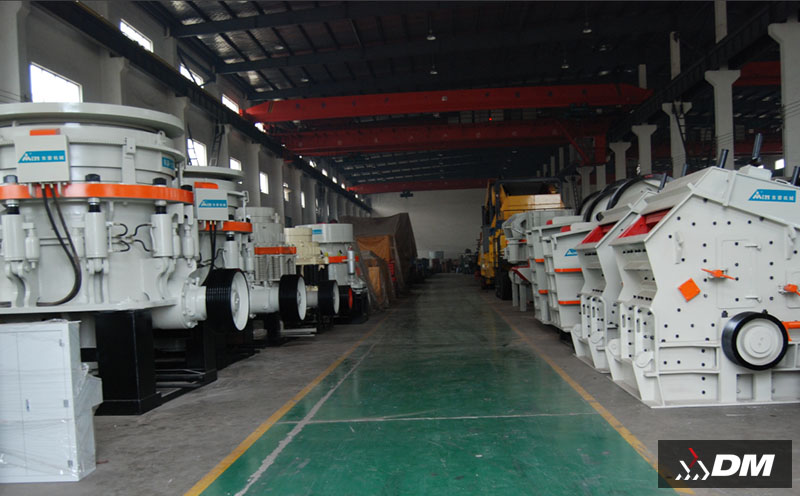
In fields such as mining, stone processing, and construction waste treatment, crusher are core equipment. Faced with a wide range of crusher products, beginners often feel confused: what types of crushers are there? What are the differences between them? Based on crushing methods, application stages, and structural characteristics, this article systematically sorts out the three major types of crushers to help you establish a clear cognitive framework.
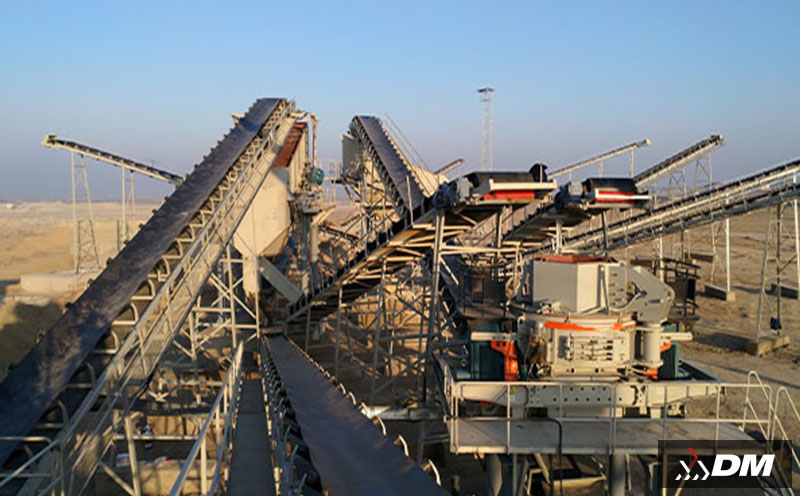
1. Classification by Crushing Method: Three Basic Principles
From the perspective of working principles, crushers are mainly divided into three categories: compression crushers, impact crushers, and grinding crushers. This is the most basic classification method, which determines the applicable materials and crushing effects of the equipment.
1.1 Compression Crushers
Compression crushers use pressure between two working surfaces to crush materials. When the applied pressure exceeds the compressive strength limit of the material, the material is crushed. This crushing method has low energy consumption and small wear, and is suitable for coarse and medium crushing of hard materials.
Representative Models:
- Jaw Crusher: Crushes large materials through periodic compression of fixed and movable jaw plates
- Cone Crusher: Achieves continuous crushing of materials through rotary swing compression of fixed and movable cones
- Roll Crusher: Crushes materials by squeezing them between two counter-rotating rollers
Applicable Materials: Hard materials such as granite, basalt, iron ore, copper ore, etc.
1.2 Impact Crushers
Impact crushers use high-speed impact energy to crush materials, including impact of moving parts on materials, high-speed impact of materials on fixed walls, and mutual impact between materials. This crushing method has high efficiency, large crushing ratio, and good finished product particle shape.
Representative Models:
- Impact Crusher: Uses hammers on the rotor to impact materials, making them collide with the impact plate for crushing
- Hammer Crusher: Uses high-speed rotating hammers to impact materials
- Sand Making Machine (Vertical Shaft Impact Crusher): Accelerates and ejects materials through the impeller to achieve "stone-on-stone" or "stone-on-metal" crushing
Applicable Materials: Medium-hard and brittle materials such as limestone, gypsum, coal, construction waste, etc.
1.3 Grinding Crushers
Grinding crushers use the relative movement between materials and grinding media (such as steel balls, rod segments) or working surfaces to crush materials through friction, shearing, and grinding effects, usually used for fine grinding and ultra-fine grinding.
Representative Models:
- Ball Mill: Uses steel balls rolling in the cylinder to grind materials
- Raymond Mill: Uses grinding rollers rolling on the grinding ring to crush materials
- Vertical Mill: Uses the relative movement of grinding disc and grinding rollers to grind materials
Applicable Materials: Fine powder materials such as cement clinker, slag, limestone powder, coal powder, etc.
2. Classification by Crushing Stage: Three-Stage Crushing System
In actual production lines, crushing is usually divided into three stages: coarse crushing, medium crushing, and fine crushing. Crushers in different stages undertake different tasks.
2.1 Coarse Crushing Crushers
Coarse crushing is the first process of the crushing flow, handling large raw ore or rocks mined, with feed size up to more than 1.5 meters. Coarse crushing equipment requires a sturdy structure and the ability to withstand huge impact loads.
- Main Models: Jaw Crusher, Gyratory Crusher
- Discharge Size: Usually 100-300mm
- Crushing Ratio: 3-6
2.2 Medium Crushing Crushers
Medium crushing is after coarse crushing, further crushing the coarsely crushed materials to prepare for fine crushing. Medium crushing equipment requires high production efficiency and low energy consumption.
- Main Models: Cone Crusher, Impact Crusher
- Discharge Size: Usually 30-100mm
- Crushing Ratio: 4-8
2.3 Fine Crushing Crushers
Fine crushing is the last process of the crushing flow, producing final finished aggregates or entering the grinding process. Fine crushing equipment requires uniform finished product size and good particle shape.
- Main Models: Short-head Cone Crusher, Sand Making Machine, Hammer Crusher
- Discharge Size: Usually 5-30mm
- Crushing Ratio: 8-15
3. Classification by Mobility: Fixed and Mobile
With the diversification of construction scenarios, crushers are divided into fixed and mobile types according to mobility.
3.1 Fixed Crushers
Fixed crushers are installed on concrete foundations and operate at a fixed position for a long time, suitable for long-term and stable production scenarios such as mines and large quarries.
Characteristics:
- Relatively low unit equipment cost
- Large production capacity, suitable for large-scale continuous production
- Need to pour concrete foundations, long construction cycle
- Unable to transfer sites, poor flexibility
Typical Applications: Large mines, cement plants, aggregate production lines
3.2 Mobile Crushers
Mobile crushers install the crushing mainframe on a vehicle-mounted chassis (crawler or tire type) to achieve flexible site transfer and rapid commissioning.
Crawler Mobile Crusher: Adopts crawler walking, can drive into complex terrain by itself, adapt to muddy ground, mountainous areas and other working conditions, no need for trailer traction
Wheel Mobile Crushing Station: Adopts wheel walking, transferred by tractor, relatively low manufacturing cost
Characteristics:
- No concrete foundation required, put into production immediately upon arrival
- Can transfer sites at any time, move with the working face
- Integrated design, complete functions
- Suitable for temporary projects and multi-site operations
Typical Applications: Construction waste treatment, road construction, small mines, temporary projects
4. Detailed Explanation of Common Models of the Three Types
4.1 Jaw Crusher
- Type Attribution: Compression crusher, coarse crushing equipment, available in fixed and mobile types
- Working Principle: Crushes materials entering the crushing chamber through periodic compression of fixed and movable jaw plates. The movable jaw plate crushes materials when approaching and discharges materials when leaving, repeating the cycle.
- Advantages: Simple structure, high reliability, strong adaptability, can handle extremely hard materials
- Limitations: Intermittent operation, relatively low efficiency, high content of needle-like and flake-like finished products
4.2 Cone Crusher
- Type Attribution: Compression crusher, medium and fine crushing equipment, available in fixed and mobile types
- Working Principle: The movable cone makes a swinging motion inside the fixed cone, squeezing materials when approaching and discharging materials when moving away. Adopts laminated crushing principle, with interaction between particles.
- Advantages: High production efficiency, low energy consumption, good finished product particle shape, suitable for hard rock
- Limitations: Complex structure, high price, not suitable for handling wet and sticky materials
4.3 Impact Crusher
- Type Attribution: Impact crusher, medium and fine crushing equipment, available in fixed and mobile types
- Working Principle: The high-speed rotating rotor drives the hammer to impact materials, throwing them to the impact plate for re-collision, repeatedly crushing until qualified for discharge.
- Advantages: Large crushing ratio, good finished product particle shape (cubic), wide adaptability
- Limitations: Fast wear of hammers and impact plates, not suitable for handling extremely hard materials
4.4 Hammer Crusher
- Type Attribution: Impact crusher, can be used for both coarse and fine crushing
- Working Principle: High-speed rotating hammers impact materials, and materials are further crushed between hammers and screen bars.
- Advantages: One-time forming, simple structure, large crushing ratio
- Limitations: Fast hammer wear, not suitable for wet materials, high powder content in finished products
4.5 Sand Making Machine (Vertical Shaft Impact Crusher)
- Type Attribution: Impact crusher, fine crushing equipment
- Working Principle: Materials are accelerated by the impeller and ejected, colliding violently with the surrounding material curtain or vortex chamber wall to achieve "stone-on-stone" crushing.
- Advantages: Round finished product particle shape, reasonable gradation, adjustable fineness modulus
- Limitations: Suitable for medium-hard materials, sensitive to mud content
5. Selection Suggestions: How to Choose the Right Crusher?
Step 1: Clarify Material Characteristics
- Hardness: Hard rock (granite, basalt) → Jaw Crusher + Cone Crusher; Medium hardness (limestone) → Impact Crusher; Soft rock → Hammer Crusher
- Humidity: Wet materials → Avoid using Cone Crusher and screen bar type Hammer Crusher
- Mud Content: High mud content → Add washing link or choose equipment with strong adaptability
Step 2: Determine Capacity Requirements
- Large-scale projects (over 500 tons per hour): Fixed production line, Jaw Crusher + multiple Cone Crushers
- Medium-scale projects (100-500 tons per hour): Fixed or mobile type, determined by construction period and site conditions
- Small-scale projects (below 100 tons per hour): Mobile Crusher, flexible and efficient
Step 3: Consider Finished Product Requirements
- High particle shape requirements (such as high-grade concrete): Prioritize Cone Crusher or Impact Crusher
- High gradation requirements: Sand Making Machine + Screening System
- Needle-like/flaky control: Cone Crusher is better than Jaw Crusher, Impact Crusher has the best particle shape
Step 4: Evaluate Site Conditions
- Long-term fixed site: Fixed production line, high return on investment
- Multiple scattered construction sites: Mobile Crusher, flexible site transfer
- Space constraints: Mobile or compact equipment
Conclusion
The three major types of crushers — classified by crushing method (compression, impact, grinding), by crushing stage (coarse, medium, fine), and by mobility (fixed, mobile) — form a complete classification system. Understanding this system helps you select the most suitable equipment according to actual needs.
In practical applications, different types of crushers are often used in combination. A typical hard rock production line may be: Jaw Crusher (coarse crushing, compression type) → Cone Crusher (medium crushing, compression type) → Sand Making Machine (fine crushing, impact type). Each type of equipment performs its own duties to jointly achieve efficient and economical crushing operations.
For practitioners in the global mining, infrastructure, and resource recycling sectors, mastering the types and characteristics of crushers is the foundation for planning production lines and optimizing process flows. We hope this article provides valuable references for you.
What is a Cone Crusher Used For?
In mining, stone processing, and infrastructure construction, the cone crusher is an indispensable core equipment. It often works with the jaw crusher to undertake the task of "finishing" materials. So, what is a cone crusher used for? What are its unique advantages? This article provides a comprehensive analysis for you.
1. Core Position: "Finishing Expert" of Medium and Fine Crushing
A cone crusher is a crushing device used for medium and fine crushing of materials of various hardnesses, suitable for crushing various ores and rocks with medium or higher hardness. It is usually located after the jaw crusher to further refine the coarsely crushed materials and produce finished aggregates that meet the particle size requirements.
Simply put, the jaw crusher is responsible for "chewing" large stones into medium-sized pieces, while the cone crusher is responsible for "grinding" these medium-sized materials into finished sand and gravel with uniform particle size and regular shape.
2. Working Principle: The Secret of Laminated Crushing
The working part of a cone crusher consists of two truncated cones — a fixed cone (outer cone) and a movable cone (inner cone). The fixed cone is stationary, while the movable cone is installed on the main shaft with its lower end inserted into the eccentric bushing.
When the equipment is in operation, the motor drives the eccentric sleeve to rotate through the transmission device, making the movable cone perform an eccentric rotation along the inner surface of the fixed cone:
- When approaching: In the section where the movable cone approaches the fixed cone, materials are subjected to extrusion, impact, and bending by the movable cone, forming the crushing chamber
- When moving away: In the place where the movable cone deviates from the fixed cone, the crushed materials are discharged from the bottom of the cone under their own weight
The laminated crushing principle is the core technical feature of the cone crusher. Materials are not only squeezed by the movable cone but also subjected to interaction between particles, producing a "stone-on-stone" crushing effect, thereby increasing the proportion of cubic particles in the finished product and reducing needle-like and flake-like stones.
3. Main Application Fields
3.1 Metal Mines
In metal mines such as iron ore, copper ore, and gold ore, the cone crusher is the core equipment in the medium and fine crushing link. It can handle extremely hard ores, crushing the mined raw ore to the particle size required for the beneficiation and grinding process. Its characteristics of strong crushing capacity and large output make it the choice for large mines.
3.2 Construction Sand and Gravel Aggregate Production
From granite, basalt to river pebbles, cone crushers are widely used in the crushing and processing of various hard rocks. The produced finished aggregates have good particle shape and reasonable gradation, fully meeting the production requirements of high-quality machine-made sand and gravel for construction.
3.3 Water Conservancy and Hydropower Projects
In key national large-scale projects such as the Three Gorges and Xiaolangdi, cone crushers undertake the core task of aggregate production. Their stable performance and excellent finished product quality provide a reliable guarantee for project quality.
3.4 Metallurgical, Chemical, and Building Materials Industries
Cone crushers are also widely used in the crushing of raw materials in the metallurgical, construction, road construction, chemical, and silicate industries, and can crush various ores and rocks with medium or higher hardness.
4. Core Advantages
4.1 High Production Efficiency
The crushing process and unloading process of the cone crusher alternate continuously along the working surface. The movable cone rotates continuously, and materials are continuously crushed and discharged, so the production efficiency is much higher than that of the jaw crusher of the same specification.
4.2 Low Energy Consumption
Since materials are clamped between two cones and subjected to extrusion, bending, and shearing, crushing is easier and power consumption is lower. Compared with other crushing equipment, the cone crusher has obvious advantages in unit power consumption.
4.3 Good Finished Product Particle Shape
Adopting the laminated crushing principle, it produces crushing effect between particles, resulting in a high proportion of cubic particles in the finished product, reduced needle-like and flake-like stones, and more uniform particle size.
4.4 Uniform Wear and Long Service Life
The wear on the working surface of the movable cone is relatively uniform, with low loss. Coupled with the selection of high-quality wear-resistant materials, the equipment has a long service life and low operating cost.
4.5 High Degree of Automation
Modern hydraulic cone crushers are equipped with automatic control systems, featuring fully automatic crushing process control, one-key automatic start, and advanced fault diagnosis functions, which can realize overload or iron passing protection for crushing operations, automatic compensation for liner wear, etc.
5. Common Types
According to structural and performance characteristics, cone crushers are mainly divided into the following types:
5.1 Spring Cone Crusher
A traditional type of cone crusher, adopting a spring safety system as an overload protection device, which allows metal foreign objects to pass through the crushing chamber without harming the machine. Reliable structure and simple maintenance.
5.2 Hydraulic Cone Crusher
Adopts a hydraulic system to adjust the discharge port size and realize overload protection. When there are foreign objects in the crushing chamber, the hydraulic system can make the movable cone retreat automatically, and reset automatically after the foreign objects are discharged. According to different structures, it is divided into single-cylinder hydraulic and multi-cylinder hydraulic types.
5.3 Compound Cone Crusher
Combines the advantages of spring type and hydraulic type, with stronger adaptability and wider application range.
6. Cavity Type Selection
According to the crushing stage and finished product requirements, cone crushers can be equipped with different crushing cavity types:
- Standard Type: Suitable for medium crushing, with large feed size
- Medium Type: Suitable for medium and fine crushing
- Short-head Type: Suitable for fine crushing and ultra-fine crushing, with finer discharge size
7. Dongmeng Cone Crushers
Shanghai Dongmeng Road & Bridge Machinery Co., Ltd. provides a full range of cone crusher products, including:
- DHP/DHY Multi-cylinder Hydraulic Cone Crusher: Introduced advanced foreign technology, using laminated crushing principle to significantly improve crushing capacity and product quality. Widely used in mine ore crushing, high-hardness rock material crushing, building material crushing, cement plants, sand and gravel manufacturing and other industries.
- DCS/DCH Series Cone Crusher: Developed by absorbing world advanced crushing technology, suitable for crushing hard and medium-hard or higher ores and rocks. The perfect combination of high-performance crushing cavity type and high crushing frequency greatly improves processing capacity.
- Crawler Mobile Cone Crushing Station: Equips the multi-cylinder hydraulic cone crusher on the crawler chassis to achieve flexible site transfer and rapid commissioning, and can be matched with mobile screening stations to form a multi-stage production system.
Conclusion
The cone crusher is the core equipment for modern sand and gravel aggregate production and mineral processing. With the laminated crushing principle, high efficiency, low energy consumption, and excellent finished product particle shape, it occupies an irreplaceable position in the global mining, infrastructure, and resource recycling sectors.
Whether it is a large metal mine or a high-quality aggregate production line, the cone crusher is the preferred solution for the medium and fine crushing link. Shanghai Dongmeng is committed to providing global customers with high-quality cone crushers and professional crushing and screening solutions. Welcome to consult at any time!












We will answer your email shortly!