

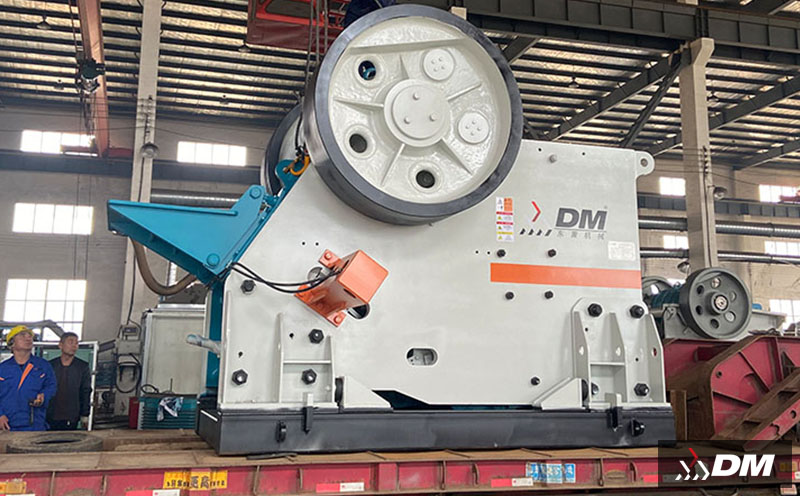
In numerous industries such as mining, construction aggregate production, metallurgy, and chemical engineering, jaw crusher serve as key primary crushing equipment and are almost a "standard configuration" for every production line. For customers with procurement needs, the most concerning question is often: "How much does a jaw crusher cost?"
This article will provide a detailed analysis of the price composition, market trends, and purchasing key points of jaw crushers to help you make a more informed investment decision.
1. Overview of Jaw Crusher Prices: From Tens of Thousands to Millions of Yuan
The price range of jaw crushers is extremely wide, spanning from tens of thousands of yuan for small equipment to millions of yuan for large-scale units. According to 2025 market data, the price range of jaw crushers is roughly as follows:
| Equipment Grade | Processing Capacity | Price Range | Applicable Scenarios |
|---|---|---|---|
| General Grade | 50-300 tons/hour | 150,000 - 600,000 yuan | Small and medium-sized mines, sand and gravel aggregate production lines |
| Large Model | >300 tons/hour | 800,000 - 5,000,000 yuan | Large open-pit mines, ten-million-ton level aggregate projects |
2. Four Core Factors Affecting Jaw Crusher Prices
1. Equipment Specifications and Models
This is the most fundamental factor determining the price. Parameters such as the processing capacity, feed opening size, and discharge opening adjustment range of jaw crushers directly affect the structural complexity and manufacturing cost of the equipment.
Taking the PE series jaw crushers as an example:
- Small-sized machine (PE250×400): Processing capacity 5-21 tons/hour, price 80,000 - 150,000 yuan, suitable for small mines with an annual output of less than 100,000 tons
- Medium-sized machine (PE600×750): Processing capacity 80-240 tons/hour, price 200,000 - 500,000 yuan, suitable for sand and gravel production lines with an annual output of 500,000 - 1,000,000 tons
- Large-sized machine (PE1200×1500): Processing capacity 400-1000 tons/hour, price 1,500,000 - 3,000,000 yuan, used for large aggregate projects with an annual output of more than 5,000,000 tons
Generally speaking, the larger the processing capacity and feed opening size of the equipment, the higher the price.
2. Material and Manufacturing Process
The material and manufacturing process of the equipment have an important impact on the price.
The difference in core component materials is particularly crucial:
- High manganese steel (Mn13): Strong impact resistance, suitable for primary crushing scenarios, accounting for 15%-20% of the total machine cost, service life 300-500 hours
- High chromium cast iron (Cr26): Wear resistance is 2-3 times that of high manganese steel, suitable for medium and fine crushing, accounting for 25%-30% of the total cost, service life 800-1500 hours
- Cemented carbide: Highest hardness, suitable for high-speed impact scenarios, accounting for 40%-50% of the total cost, service life more than 2000 hours
Key components such as jaw plates and moving jaws made of high-strength alloy steel, although with higher costs, can withstand greater impact and wear, extending the service life of the equipment.
The transmission system is also an important factor: belt drive has low cost (accounting for 10% of the total machine) and is suitable for small machines; gear drive has high efficiency (accounting for 20% of the total machine) and is mostly used in medium and large equipment.
3. Brand and Service
The price difference brought by brand factors is quite obvious:
| Brand Gradient | Price Difference | Core Advantages | Service Features |
|---|---|---|---|
| International Brands | 30%-80% higher than the average price | Technical patents, global after-sales network | 72-hour cross-border response, customized solutions |
| Domestic First-tier Brands | Close to the market average price | High cost performance, localized services | 48-hour on-site service in China, sufficient spare parts reserve |
| Regional Brands | 20%-40% lower than the average price | Basic function adaptation, cost control | Local delivery, basic installation and commissioning |
For cone crushers with the same parameters (processing capacity 300 tons/hour), international brands quote 5,000,000 yuan, domestic first-tier brands about 3,000,000 yuan, and regional brands can be as low as 2,000,000 yuan.
Well-known brands usually have better guarantees in terms of quality, performance, and after-sales service. Although the price is slightly higher, from the perspective of long-term use cost and benefits, choosing brand products is often more cost-effective.
4. Market Supply and Demand Relationship
The market supply and demand relationship will also affect the price of jaw crushers. When market demand exceeds supply, prices may rise; conversely, when supply exceeds demand, prices may fall.
3. Selection Suggestions for Different Application Scenarios
1. Small and Medium-sized Sand and Gravel Plants (Annual Output Below 500,000 Tons)
- Recommended Models: PE250×400, PE400×600
- Price Reference: 80,000 - 250,000 yuan
- Selection Points: Balance price and capacity, choose cost-effective domestic first-tier brands
2. Medium-sized Mines or Aggregate Projects (Annual Output 500,000 - 1,000,000 Tons)
- Recommended Model: PE600×900
- Price Reference: 300,000 - 600,000 yuan
- Selection Points: Jaw plate material can be high manganese steel or high chromium cast iron, determined according to material hardness
3. Large Mines or Ten-million-ton Level Aggregate Projects
- Recommended Models: PE900×1200, PE1500×1800
- Price Reference: 800,000 - 5,000,000 yuan
- Selection Points: Prioritize international brands or domestic first-tier brands, equipped with hydraulic adjustment devices, pay attention to the service life of wear-resistant parts
4. Cost-benefit Analysis: Not Just About Price
When purchasing a jaw crusher, it is recommended to conduct a comprehensive evaluation from the following perspectives:
1. Initial Procurement Cost
This is the most intuitive investment, accounting for about 30%-50% of the total project equipment investment.
2. Operation and Maintenance Costs
- Replacement cost of wear-resistant parts: The service life of high manganese steel jaw plates is 300-500 hours, and high chromium cast iron can reach 800-1500 hours
- Energy consumption cost: Determined by motor power, electricity costs need to be considered for large equipment
- Labor cost: The degree of automation affects the configuration of operators
3. Downtime Losses
Production stop losses caused by equipment failures are often hidden costs. Choosing a reliable brand and comprehensive after-sales service can effectively reduce the risk of downtime.
4. Regeneration Value
For application scenarios such as construction waste recycling, the discharge particle shape and finished product quality of the equipment directly affect the market price of recycled aggregates.
5. How to Obtain an Accurate Quotation?
Since the price of jaw crushers is affected by many factors, it is recommended that you take the following steps to obtain an accurate quotation:
- Clarify your own needs: Determine technical parameters such as the type of material to be processed, processing capacity, feed particle size, and discharge particle size
- Conduct market research: Understand the prices and technical characteristics of different brands and models through the Internet and industry exhibitions
- Consult multiple manufacturers: Communicate with 2-3 manufacturers to understand product prices, after-sales service, delivery time, etc.
- Comprehensive evaluation and selection: Conduct a comprehensive evaluation based on equipment performance, price, after-sales service and other factors
Conclusion
As core equipment for sand and gravel aggregate production, the price of jaw crushers is affected by multiple factors such as specifications and models, material processes, brand services, and market supply and demand. From tens of thousands of yuan for small equipment to millions of yuan for large-scale units, choosing products suitable for your own needs is the key.
Remember one principle: Do not seek the most expensive, but the most suitable. Within the budget, choosing a brand with high cost performance and perfect after-sales service is a wise investment.
If you need to learn more about stone crusher selection suggestions or obtain quotations, welcome to consult professional equipment suppliers.
Is stone crush a profitable business? Profit Truth from a Global Perspective
Gravel (aggregate) is a core essential material for modern infrastructure. With stable global demand and robust cash flow, the gravel business is profitable in the long run for those operating in compliance and with advantages in resources and logistics. However, it has bid farewell to crude profiteering and entered an era of profitability driven by quality and efficiency.
1. Global Demand: Supported by Rigid Needs, Long-Term Stability
Gravel is a core raw material for concrete, asphalt, roads, bridges, airports, water conservancy projects and real estate. It is irreplaceable, has a limited transportation radius, and features strong regional monopolies.
- The global aggregate market size exceeds 1 trillion US dollars, with an annual growth rate of 6%–8.5%.
- Urbanization and infrastructure construction are advancing rapidly in the Asia-Pacific, the Middle East, Africa and Latin America, driving strong demand.
- Mature markets in Europe and North America maintain stable demand through renovation, maintenance and recycled aggregates.
- Infrastructure for renewable energy (photovoltaic and wind power bases) has become a new growth driver.
As long as there is construction, gravel is indispensable. Its demand resilience far exceeds ordinary bulk commodities.
2. Sources of Profit: Three Core Profit Drivers
- Resource Premium: Mines with access to high-quality limestone/granite and complete formalities have a natural cost advantage, with significantly higher tonnage gross profit than enterprises relying on external procurement and processing.
- Logistics Dividend: For gravel, "production location determines the market". Enterprises close to construction sites or with access to water/railway dedicated lines can reduce transportation costs by more than 30%.
- Product Upgrading: Ordinary gravel yields meager profits; high-grade aggregates, manufactured sand, recycled aggregates and customized gradation command higher premiums, increasing gross profit margins by 15–25 percentage points.
3. Global Profit Logic: Significant Regional Differences
- High-Growth Regions (Southeast Asia, South Asia, Africa): With explosive demand and relatively low entry barriers, "early entry means early market occupation" with attractive returns, but compliance and environmental protection must be prioritized.
- Mature and Stable Regions (North America, Europe): Strict regulations and high market concentration make "green compliance, recycled aggregates and integrated operations" the key to profitability, with stable cash flow.
- Transformation and Optimization Regions (China, etc.): Industry reshuffling and exit of small mines mean "large-scale green mines and closed-loop full industrial chain" are more profitable, with net profit per ton reaching 15–20 RMB.
4. Risks: Determinants of Profitability
- Compliance Risks: Mining licenses, environmental protection, safety and land rights are prerequisites for entry; unlicensed and non-compliant operations will inevitably lead to losses.
- Cost Risks: Fluctuations in oil prices, electricity fees, explosives and labor costs directly squeeze profits.
- Competition Risks: Local overcapacity can trigger price wars, with low-end ordinary materials being the most vulnerable to impact.
- Environmental Risks: Stricter requirements for dust control, sewage treatment, solid waste disposal and ecological restoration; failure to meet standards will result in production suspension.
5. Conclusion: Is It Worth Doing?
- Short-term excessive profits are gone, but long-term stable profits are achievable.
- Prerequisites for profitability: reliable resources, complete formalities, convenient logistics, compliance with environmental standards, and high-end product positioning.
- More profitable directions: green mines, intelligent production, recycled aggregates, and integrated operations of "mine + logistics + commercial concrete".
- Unsuitable for: those without resources, insufficient capital, disregard for compliance, or seeking quick profits only.
The gravel business is a heavy-asset, long-cycle, and stable cash flow venture, not a speculative track. Amid the global wave of infrastructure construction and urbanization, the gravel business that follows the path of compliance, green development and high efficiency remains a high-quality physical profit-making project.












We will answer your email shortly!