

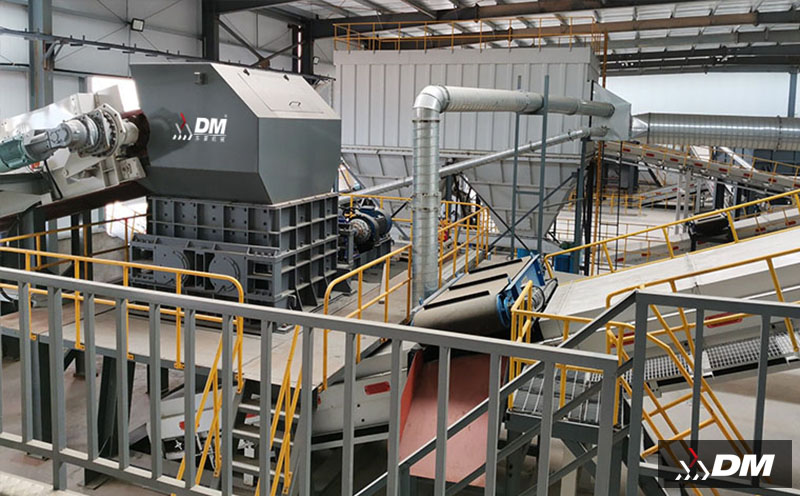
Against the backdrop of the continuous development of global infrastructure and mining industries, crushers, as core equipment, profoundly impact project benefits through their performance, reliability, and overall costs. Faced with numerous domestic and international Crusher Manufacturers, scientific equipment selection has become a crucial decision for investors, owners, and general contractors. This article will provide a systematic selection framework by analyzing the global market landscape, helping to make rational decisions.
Global Market Landscape and Major Camp Analysis
Currently, global Crusher Manufacturers can be divided into three major camps based on their technical origins, market positioning, and core competitiveness:
1. European and American Traditional Technology Leaders
Enterprises in this camp typically have profound industry history and strong R&D capabilities. Leveraging their cutting-edge technological innovation, high product intelligence, and outstanding reliability, they have long dominated the global high-end market. Their solutions are renowned for high performance and long service life, but correspondingly come with higher initial investment, maintenance costs, and relatively longer delivery cycles.
2. Chinese Value-Creation Manufacturers
After decades of technology introduction, digestion, absorption, and independent innovation, leading Chinese manufacturers have achieved a leap from following to running alongside, and even leading in certain fields. The key to their core competitiveness lies in: excellent adaptability to complex and diverse working conditions (such as high-hardness, highly abrasive rocks), more advantageous overall cost-performance ratio, and a rapidly responsive localized service support system. Enterprises in this camp are actively expanding into international markets, with their products and technologies gaining increasingly widespread recognition in emerging markets and some mature markets.
3. Regional Professional Brands
Including manufacturers from Japan, South Korea, India, and other regions, they usually focus on specific regional markets or niche application areas. By accurately grasping local needs, adopting flexible business strategies, or offering differentiated product features, they meet the diversified market demands.
Core Evaluation Dimensions for Scientific Equipment Selection
When conducting global equipment selection, decision-makers should move beyond simple price comparisons and instead conduct a comprehensive evaluation from the perspective of total lifecycle value:
- Material and Working Condition Adaptability: Clarify the physical characteristics (hardness, abrasiveness, humidity, mud content) of the materials to be crushed and the final product requirements—this is the foundation for selecting equipment types (such as jaw crushers, cone crushers, or impact crushers) and process routes.
- Total Cost of Ownership Analysis: comprehensively calculate all costs including equipment procurement, installation, energy consumption, wear part consumption, maintenance labor, and potential downtime losses, rather than only focusing on the initial purchase quote.
- Technical Reliability and Case Verification: Conduct in-depth investigations into manufacturers' successful cases with similar materials and project scales, and pay attention to reliability indicators such as core component configuration and mean time between failures (MTBF) of the equipment.
- Manufacturer's Comprehensive Strength: Evaluate their R&D capabilities, quality control systems in production and manufacturing, coverage and response efficiency of after-sales service networks, and spare parts supply guarantee capabilities. On-site inspections of factories and operating projects are effective verification methods.
- Sustainable Development and Long-Term Cooperation Value: Consider the equipment's environmental performance in terms of energy efficiency, noise, and dust control, as well as whether the manufacturer has the ability to provide continuous process optimization and technical upgrade support to establish a long-term win-win partnership.

Recommendations for Construction Waste Treatment Equipment Manufacturers
With the deepening of global urbanization and the concept of sustainable development, the resource utilization of construction demolition and construction waste has become a promising track. This is not only a requirement of environmental regulations but also breeds huge circular economy opportunities. Applying stone crushing technology to construction waste treatment places higher demands on equipment, making the selection of suitable partners crucial.
Technical Challenges and System Requirements for Construction Waste Treatment
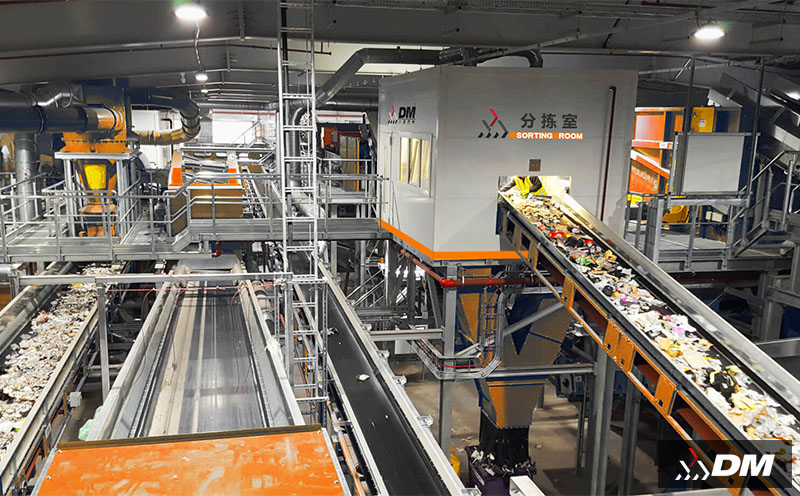
Construction waste has complex and variable components, and its treatment is by no means a single crushing operation, but a systematic project integrating multiple links such as pre-sorting, crushing, iron removal, screening, and light material separation. Therefore, an excellent equipment supplier should possess:
- Overall Solution Design Capability: Ability to provide full-process technical support from process planning to equipment integration.
- High Flexibility and Mobility of Equipment: Mobile production lines enable on-site processing, significantly reducing material transportation costs and environmental footprint.
- Strong Adaptability to Mixed Materials: Technology capable of effectively handling construction waste mixtures with uneven composition and humidity.
- Efficient Sorting and Cleaning Technology: This is the key to improving the purity and market value of recycled aggregates, directly impacting project profitability.
Main Supplier Types and Selection Considerations
In the field of construction waste resource utilization, equipment suppliers mainly fall into the following types:
1. European Environmental Protection Technology Experts
Specializing in intelligent sorting (such as air separation, optical sorting) and automated control, they excel in designing and delivering high-standard large-scale fixed processing plants with advanced technology but relatively high overall investment and operating costs.
2. Chinese System Solution Providers
Mature Chinese crushing and screening manufacturers are innovatively applying their profound experience accumulated in hard rock crushing to construction waste resource utilization. Their core advantages include:
- Flexible and Efficient Mobile Solutions: Providing crawler-type and tire-type mobile crushing and screening stations, suitable for flexible relocation operations at urban demolition sites and multiple construction sites.
- Mature Process Integration Capability: Ability to provide complete sets of systems from feeding, crushing, screening to iron removal, dust removal, and light material separation, and can undertake the construction of fixed resource utilization plants.
- Excellent Return on Investment: Under the premise of ensuring processing capacity and finished product quality, they usually have significant competitiveness in total project investment and operation and maintenance costs.
- Rapidly Growing Global Project Experience: Their equipment and solutions have been verified in practical applications in multiple overseas markets including Southeast Asia, the Middle East, and Africa.
3. International Comprehensive Construction Machinery Brands
Providing mobile crushing and screening equipment with high brand awareness and extensive global networks, suitable for users pursuing unified brand management, but may differ in the professional process depth and customized solutions for construction waste treatment.
Key Selection Recommendations
- Start with the End in Mind, Clarify Product Standards: Determine the required treatment processes and finished product standards based on the target use of recycled aggregates (such as for roadbed backfilling or commercial concrete).
- Emphasize Sorting Effectiveness: Focus on investigating suppliers' metal stripping rate and light material (plastic, wood, etc.) removal efficiency—this is the lifeline of project economics.
- Seek Localized Adaptation Support: Require suppliers to provide targeted solutions based on typical local construction waste components, and investigate their successful cases in regions with similar climate and material conditions.
- Evaluate Full Lifecycle Services: Ensure the supplier has reliable technical support, timely spare parts supply, and rapid service response capabilities to guarantee the long-term stable operation of the project.
Conclusion: Strategic Choice Towards a Green Future
From traditional ore crushing to construction waste resource utilization, the global crushing and processing equipment industry is undergoing a profound green transformation. Whether for mine investors or urban resource utilization project operators, successful equipment selection depends on accurately balancing technology, cost, and services.
Among the Chinese manufacturer camp, enterprises represented by Shanghai Dongmeng have demonstrated their ability to provide highly adaptable and cost-effective overall solutions by combining technical accumulation in hard rock crushing with innovative demands for construction waste treatment. Their development path confirms that "Made in China" based on in-depth technical understanding and customer value innovation is becoming an important reliable option for global customers to achieve dual goals of economic benefits and environmental responsibility.
In today's global advocacy for a circular economy, partnering with professional equipment and solution providers is not only completing a procurement but also investing in a more sustainable and resilient future.












We will answer your email shortly!