

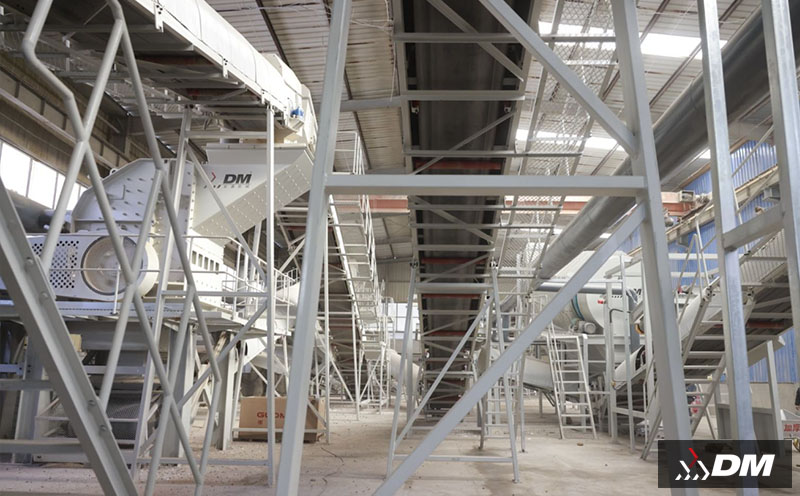
Crushers vs. Screens: Unveiling Core Distinctions Beyond Basic Functions
In industries spanning mining, construction, and recycling, crushers and screens are indispensable pillars of material processing systems. While their collaborative role in refining raw materials is widely recognized, the deeper disparities in operational demands, maintenance requirements, and performance metrics often go overlooked. This article explores the key differences between the two from four unique perspectives: energy consumption characteristics, wear part management, environmental impact, and performance optimization logic.
1. Energy Consumption: Active Breaking vs. Passive Classification
The energy demands of crushers and screens stem from their fundamentally different operational objectives, leading to distinct consumption patterns.
Crushers: High-Energy-Density Operation
- Crushers rely on intense mechanical force (compression, impact, or shear) to alter material structure, resulting in high energy intensity. Their power consumption directly correlates with feed size and hardness—crushing 500mm hard rock to 50mm requires significantly more energy than processing soft aggregates.
- Different crusher types exhibit varying energy efficiencies: jaw and cone crushers typically have lower unit energy consumption (more efficient) compared to impact crushers and fine crushers, with overall operational efficiency ranging from 50% to 70%.
- Energy use is continuous and non-adjustable in real time; once the crushing gap and speed are set, the system maintains consistent power draw regardless of minor fluctuations in material properties.
Screens: Low-Energy Classification
- Screens operate through passive motion (vibration, rotation, or tumbling) to separate materials by size, requiring only enough energy to drive screen surface movement—resulting in 30-50% lower energy consumption than crushers of similar processing capacity.
- Energy use is flexible and adjustable: modifying vibration frequency or amplitude to handle light materials (e.g., municipal solid waste) or dense aggregates allows for energy optimization without compromising performance.
- No direct correlation between energy input and material hardness; even for abrasive materials, energy demands remain stable as the screen does not alter material structure.
2. Wear Part Management: High-Impact vs. Low-Stress Components
The nature of wear parts and their maintenance cycles reflect the differing mechanical stresses each equipment endures.
Crushers: Heavy-Wear Critical Components
- Key wear parts include jaw plates, cone liners, and blow bars—components directly in contact with hard materials and subject to intense impact and friction. These parts require regular inspection and replacement to avoid efficiency loss.
- Wear rate is directly influenced by material properties: crushing high-silica ore or construction waste with metal impurities accelerates wear, shortening part lifespan from months to weeks in extreme cases.
- Replacement of wear parts involves downtime for disassembly and calibration, requiring planned maintenance schedules to minimize production disruptions.
Screens: Low-Stress Replaceable Elements
- Wear parts primarily consist of screen meshes, deck panels, and vibrator bearings—parts that experience indirect stress through material contact rather than direct force application.
- Wear mechanisms differ: screen meshes suffer from abrasive wear (clogging or thinning) rather than impact damage, with lifespan largely dependent on mesh material (steel, polyurethane) and aperture size.
- Maintenance is simpler and faster: damaged screens can be swapped out without complex calibration, and routine maintenance focuses on cleaning and lubrication rather than major component overhauls.
3. Environmental Impact: Contamination Control vs. Emission Mitigation
The environmental footprint of each equipment type varies significantly, requiring targeted control measures.
Crushers: Focus on Dust and Noise Suppression
- Crushers generate substantial dust during material fragmentation, especially when processing dry ores or construction waste, necessitating dedicated dust collection systems (e.g., bag filters) and sealed housings.
- Operational noise levels are high (85-105 dB) due to mechanical impact and material collision, requiring sound insulation enclosures or distance-based noise control in industrial settings.
- Minimal secondary environmental impact beyond dust and noise; no chemical reactions or waste byproducts are produced during crushing.
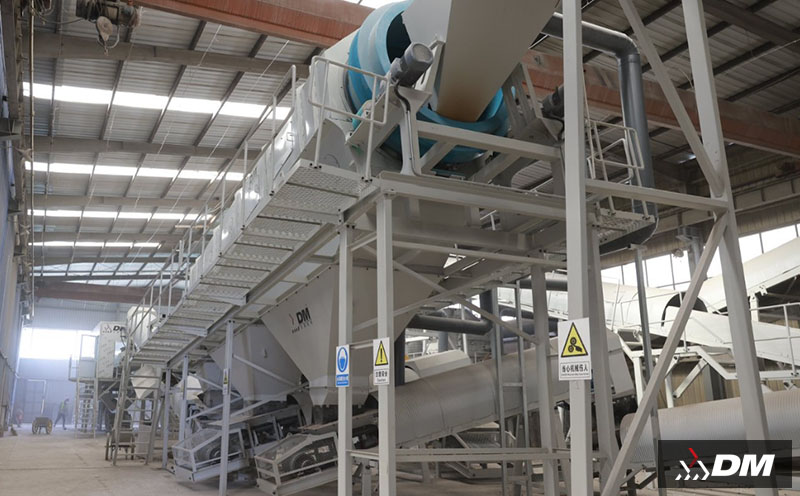
Screens: Addressing Clogging and Light Material Pollution
- Noise levels are significantly lower (65-80 dB) than crushers, with vibration-induced noise easily mitigated by rubber damping pads, making them suitable for urban recycling facilities or near-residential operations.
- Dust generation is minimal, but screen clogging—especially with high-moisture or light materials (e.g., plastic fragments in municipal waste)—can lead to operational inefficiencies and indirect environmental impact from prolonged processing.
- Dongmeng Group’s specialized high-frequency composite screen resolves clogging issues through optimized vibration design, reducing the need for manual cleaning and minimizing operational interruptions.
Performance Optimization: Output Uniformity vs. Classification Precision
The core metrics for evaluating crusher and screen performance are fundamentally different, guiding distinct optimization strategies.
Crushers: Prioritizing Size Consistency and Throughput
- Key performance indicators (KPIs) include output particle size distribution (PSD), throughput rate, and oversize particle ratio. The goal is to produce uniformly sized materials that meet downstream process requirements (e.g., 80mm for incineration feedstock).
- Optimization focuses on adjusting crushing parameters: narrowing the discharge gap improves particle uniformity but reduces throughput, while increasing rotor speed enhances crushing efficiency for brittle materials.
- Performance is constrained by material properties; even well-calibrated crushers struggle to maintain consistency when processing mixed-hardness feedstock.
Screens: Focusing on Classification Accuracy and Recovery Rate
- KPIs center on classification efficiency (ratio of correctly sized particles), recovery rate of target fractions, and screen utilization. For example, sorting construction waste to recover 0-5mm fine aggregates for brick-making requires precise aperture control.
- Optimization involves mesh selection and motion adjustment: using multi-layer screens with varying apertures enables simultaneous separation of multiple fractions (e.g., 0-5mm, 5-20mm, 20-40mm), while adjusting vibration frequency prevents light material buildup.
- Performance is less affected by material hardness and more by screen design—wear-resistant punched plates and anti-clogging screen bars (as in Dongmeng’s high-frequency model) significantly improve long-term classification accuracy.
Comparative Summary: Complementary Yet Distinct
Crushers and screens operate on contrasting principles: crushers are "energy-intensive transformers" that actively reduce material size through mechanical force, with high operational costs but irreplaceable for size reduction. Screens are "precision sorters" that passively classify materials with low energy use, ensuring product quality and process efficiency.
Their differences are not competitive but complementary: crushers lay the foundation by breaking down oversized materials, while screens optimize output value through precise classification. Understanding these disparities—from energy use to maintenance needs—enables more informed equipment selection, process design, and cost control. For example, placing a screen upstream of a crusher reduces energy waste by pre-removing fine materials, while choosing the right wear parts for each equipment type minimizes downtime.
In modern material processing systems—especially in solid waste recycling and high-precision aggregate production—leveraging these differences to design synergistic workflows is key to achieving efficiency, sustainability, and cost-effectiveness. Dongmeng Group’s specialized equipment (including high-frequency composite screens and energy-efficient crushers) is engineered to address these distinct operational needs, delivering integrated solutions that maximize the strengths of both devices.












We will answer your email shortly!