

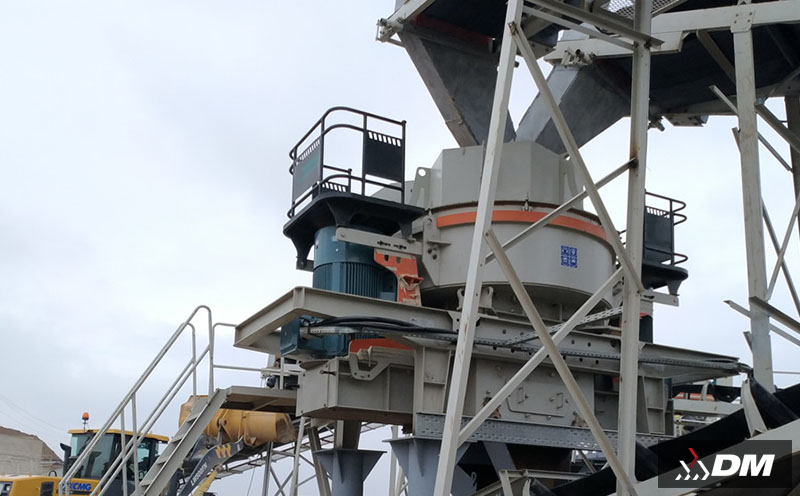
I. Basic Understanding of VSI Crusher
VSI Crusher (Vertical Shaft Impact Crusher) is a high-efficiency equipment integrating stone crushing and sand making functions, playing a pivotal role in industries such as sand and gravel aggregate processing, fine ore crushing, and resource recycling of construction waste. Its core operation relies on two crushing modes: "stone-on-stone" and "stone-on-iron". Driven by the centrifugal force generated by the high-speed rotation of the rotor, materials complete the entire process of impact, grinding and crushing in the crushing chamber, ultimately producing high-quality finished materials with uniform particle size and regular particle shape.
II. Analysis of VSI Crusher Working Mechanism
The operation process of a VSI crusher can be divided into three key stages: First, after materials enter the equipment through the feeding system, they are accurately split by the distributor—one part is directly guided to the center of the high-speed rotating impeller, while the other part is evenly scattered into the annular buffer area of the crushing chamber; Second, materials inside the impeller are accelerated to tens of meters per second under the action of centrifugal force, and after high-speed projection, they collide with high intensity with materials in the annular area and the impact liner on the wall of the crushing chamber; Third, materials after the initial impact form cyclic collisions inside the chamber, undergoing continuous grinding and refinement until they meet the preset particle size standard, and then are discharged through the discharge port.
Specifically, the "stone-on-stone" mode achieves crushing through mutual impact between materials, resulting in minimal wear on vulnerable parts, and is particularly suitable for sand making operations of medium-hard and above hardness materials such as granite and basalt; the "stone-on-iron" mode completes crushing by means of impact between materials and metal impact plates, featuring higher crushing efficiency and being more suitable for processing low-hardness materials such as limestone and construction waste.
III. Core Advantages of VSI Crusher
- Superior Particle Shape: Finished materials are in a standard cubic shape with a low proportion of needle-like and flake-like particles and a balanced gradation curve, fully meeting the aggregate quality requirements of key projects such as high-speed railways, expressways and large bridges;
- Outstanding Efficiency: Rotor speed can be flexibly adjusted to precisely adapt to different material characteristics and discharge particle size requirements, with processing efficiency 20%-30% higher than that of traditional crushing equipment;
- Energy Saving and Consumption Reduction: Adopting an optimized cavity structure design and power system matching scheme, the unit energy consumption is significantly lower than that of traditional crushers such as hammer crushers and cone crushers, resulting in more competitive operating costs;
- Convenient Maintenance: Vulnerable parts adopt a modular integrated design, with simple installation and replacement processes, greatly reducing downtime for maintenance and lowering the difficulty of equipment operation and maintenance;
- Wide Adaptability: It can efficiently process various materials such as river pebbles, quartz stone, marble and construction waste, not only achieving high-quality sand making but also completing aggregate shaping operations, with functions covering multiple scenarios.
IV. Typical Application Fields of VSI Crusher
1. Sand and Gravel Aggregate Production: In professional sand and gravel plants, it is used for sand making processing of raw materials such as river pebbles, cobblestones and diabase, producing finished sand that meets the GB/T 14684-2022 construction sand standard and aggregates for road construction;
2. Deep Ore Processing: Conducting fine crushing treatment on ores such as iron ore, copper ore and quartz sand to provide raw materials with uniform particle size for subsequent mineral processing and purification processes;
3. Construction Waste Recycling: Crushing and screening construction waste such as demolished concrete blocks, waste bricks and mortar into recycled aggregates, which are applied in the production of recycled concrete, permeable bricks and other products to realize resource recycling;
4. Large-Scale Engineering Construction: Providing high-performance sand and gravel aggregates for large-scale infrastructure projects such as hydropower station dams, cross-sea bridges and urban rail transit to ensure the structural strength and durability of the projects.
V. Core Differences Between VSI Crusher and Traditional Crushers
Compared with traditional equipment such as jaw crushers and cone crushers, the core competitiveness of VSI crushers lies in their sand making and aggregate shaping capabilities. Traditional crushers mainly focus on coarse and medium crushing functions, with finished materials featuring irregular particle shapes and high content of needle-like and flake-like particles, which are difficult to meet the needs of high-end projects; while VSI crushers are core-positioned for fine crushing and shaping, which can not only crush materials to the 0-5mm fine sand level but also optimize the particle shape and gradation of aggregates. At the same time, VSI crushers adopt a compact structural design, occupying a smaller area, and are more suitable for the layout of small and medium-sized sand and gravel production lines or processing projects with limited space.
VI. Summary
As a landmark equipment in the modern sand making industry, VSI crushers have become the preferred equipment in the sand and gravel processing field due to their core characteristics of high efficiency, energy saving and excellent particle shape. With the continuous improvement of aggregate quality requirements in infrastructure construction and the increasingly urgent demand for resource recycling under environmental protection policies, the application scenarios of VSI crushers will be further expanded, providing strong equipment support for the green and efficient development of the building materials industry.
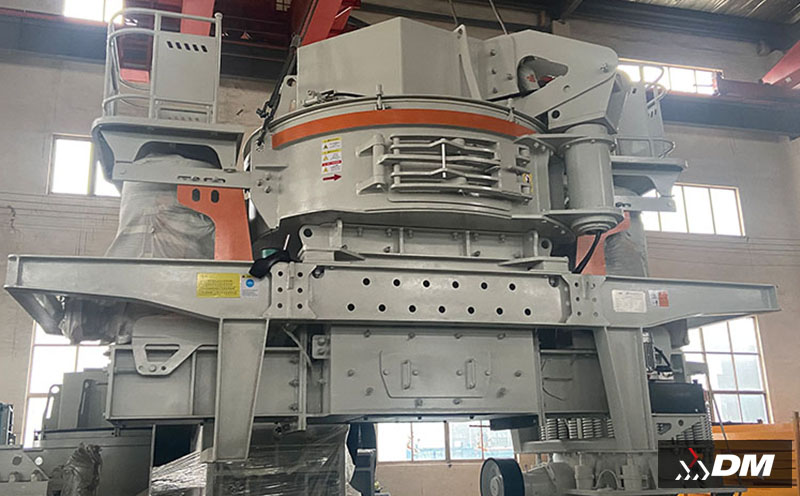
What is the difference between cone crusher and VSI crusher?
I. Core Differences in Working Principles
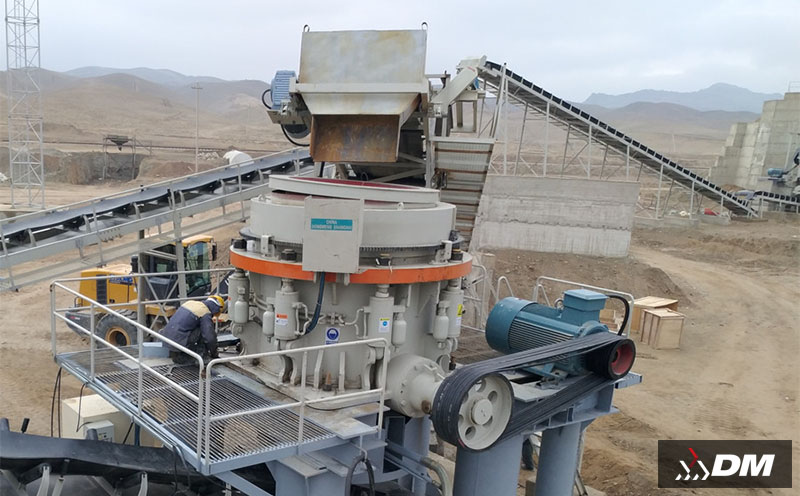
Cone crushers adopt the laminating crushing principle. The motor drives the eccentric sleeve to rotate, driving the moving cone to swing periodically, so that the materials between the moving cone and the fixed cone are crushed under the combined action of extrusion, bending and shearing forces. The entire crushing process is centered on "extrusion crushing", and the materials are in a relatively static stress environment.
VSI crushers take impact crushing as their core working principle. After entering the equipment, materials are accelerated and projected by the high-speed rotating impeller, impacting the impact liner or other materials at a speed of tens of meters per second. Crushing is achieved through the dual effects of impact and grinding in the "stone-on-stone" or "stone-on-iron" modes, and the crushing process relies on the high-speed movement and collision kinetic energy of the materials.
II. Differences in Crushing Positioning and Particle Size Range
Cone crushers mainly undertake medium and fine crushing operations, and are commonly used in the secondary and tertiary crushing processes after coarse crushing by jaw crushers. The discharge particle size is usually between 10-60mm, which can be fine-tuned by adjusting the discharge port, but cannot directly produce 0-5mm construction sand, and the finished products are mainly aggregate-grade particles.
VSI crushers are core-positioned for fine crushing and sand making, and are the core equipment of sand making production lines. They can crush 10-30mm intermediate aggregates into 0-5mm construction sand, and also have the aggregate shaping function to improve the particle shape and gradation of aggregates. The discharge particle size is finer with high adjustment precision, which can simultaneously meet the dual needs of sand making and aggregate quality improvement.
III. Differences in Finished Material Quality and Particle Shape
Due to the adoption of the extrusion crushing method, cone crushers produce finished materials with a high content of needle-like and flake-like particles, mostly in irregular shapes with uneven gradation distribution. They can only meet the aggregate usage needs of ordinary construction projects, and are difficult to meet the stringent requirements of key projects for aggregate particle shape.
Through high-speed impact and multiple collision grinding, VSI crushers produce finished materials in regular cubic shapes with needle-like and flake-like content controlled within 5%. The particle shape is round and the gradation is reasonable. They can not only produce high-quality construction sand, but also the shaped aggregates can meet the quality standards of high-end infrastructure projects such as high-speed railways and expressways.
IV. Differences in Applicable Materials and Working Conditions
Cone crushers have a wider adaptability to the compressive strength of materials, and can process medium-hard to extra-hard materials such as granite, basalt and iron ore (compressive strength ≤ 350MPa). They are suitable for large-capacity, continuous ore crushing and the medium and fine crushing links of large-scale sand and gravel aggregate production lines, with a single-machine processing capacity of up to several hundred tons per hour.
VSI crushers are more suitable for sand making and shaping of medium-hard and below hardness materials (compressive strength ≤ 280MPa), such as river pebbles, limestone and recycled construction waste materials. Although the single-machine processing capacity is lower than that of cone crushers of the same specification, the unit capacity efficiency in sand making scenarios is higher. In addition, the wear of vulnerable parts is positively correlated with material hardness, and the wear will increase significantly when processing extra-hard materials.
V. Differences in Equipment Structure and Maintenance
Cone crushers have a complex structure, with core components including the moving cone, fixed cone, eccentric sleeve and main shaft. The equipment is large in size and heavy in weight, making installation and commissioning difficult; vulnerable parts are mainly the bowl liner and crushing wall, with a long replacement cycle, but replacement requires shutdown and disassembly of multiple components, resulting in long maintenance time and high technical requirements for operators.
VSI crushers have a compact structure, with core components including the impeller, impact liner and distributor. The equipment is small in size and occupies a small area, with convenient installation; vulnerable parts adopt a modular design, mainly including the impeller guard and impact block. Replacement does not require disassembly of the entire machine, with short maintenance time and a lower operation threshold. However, the replacement frequency of vulnerable parts is higher than that of cone crushers, especially in the "stone-on-iron" mode.
VI. Differences in Energy Consumption Level and Application Scenarios
Cone crushers have relatively high unit energy consumption but large single-machine processing capacity. They are suitable for large-scale, continuous aggregate production scenarios, such as the crushing sections of large sand and gravel plants and metal mines, and their core role is to meet the massive aggregate supply demand.
VSI crushers have lower unit energy consumption and strong functional targeting. They are mainly used in professional sand making production lines, aggregate shaping production lines, construction waste recycling sand making projects, etc. They are especially suitable for small and medium-sized sand and gravel plants or engineering supporting projects with high requirements for sand quality, and are the core equipment for aggregate processing in high-end infrastructure projects.
VII. Summary
The core differences between cone crushers and VSI crushers stem from the essential differences in their crushing principles: the former is centered on extrusion crushing and focuses on medium and fine aggregate production; the latter is centered on impact crushing and focuses on sand making and aggregate shaping functions. In practical engineering applications, the two often form a complementary combination—cone crushers complete the medium and fine crushing processing of aggregates, while VSI crushers are responsible for subsequent sand making and aggregate quality improvement, jointly forming a complete sand and gravel processing production line to fully meet the material usage needs of different particle sizes and qualities.












We will answer your email shortly!