

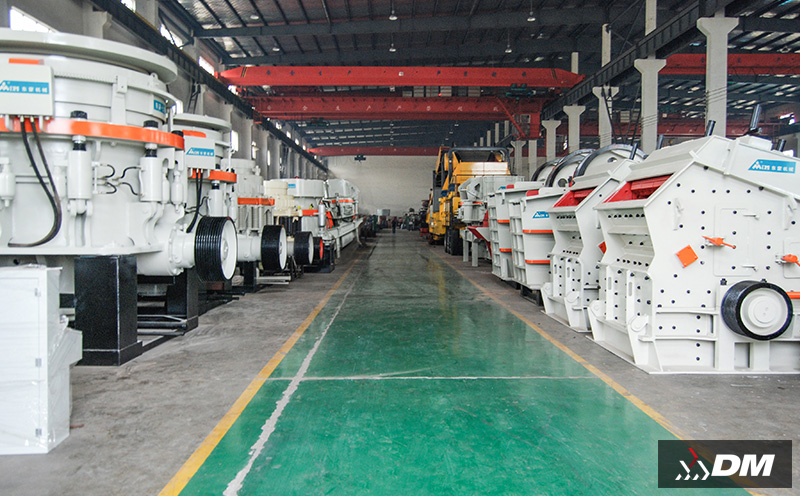
Not all aggregate is created equal. While most crushed rock is used for construction—concrete, asphalt, road base—a specialized category of aggregate is produced for industrial applications where extreme hardness and wear resistance are required. Basalt, diabase, andesite, and other dense volcanic rocks are prized for their exceptional hardness, toughness, and abrasion resistance. These rocks are processed into specialty aggregates used in steel slag conditioning, foundry mold sands, abrasion-resistant flooring, railroad ballast, filter media, and even high-performance concrete for industrial floors and heavy-duty pavements. Producing these specialty aggregates requires crushing equipment that can handle the extreme hardness and abrasiveness of volcanic rock while maintaining precise control over particle size and shape. The fixed cone crusher is the technology of choice for this demanding application. Built around the proven principle of compression crushing, a stationary cone crusher reduces hard volcanic rock to specification-sized aggregate with minimal wear, consistent gradation, and the cubical particle shape that industrial users demand. For quarry operators serving industrial aggregate markets, investing in a heavy-duty fixed cone crusher is the key to producing a high-value product that commands premium pricing and builds long-term customer relationships with industrial clients.
The Unique Challenges of Hard Volcanic Rock Aggregate Production
Crushing basalt, diabase, and similar hard volcanic rocks presents challenges that go far beyond normal aggregate production. First, the rock is extremely hard—typically 200–300 MPa unconfined compressive strength, sometimes higher. This hardness means high crushing forces, rapid wear of crusher components, and high energy consumption per ton of product. Second, the rock is highly abrasive. The silica and mineral content of volcanic rocks wears out crusher liners, screen media, and conveyor belts much faster than softer rocks like limestone. Third, industrial aggregate customers have strict specifications. Particle size distribution, particle shape (cubical, not flaky), cleanliness, and specific gravity must all meet tight tolerances. A fixed cone crusher that drifts out of adjustment or produces inconsistent product can cause the entire batch to be rejected. Fourth, production volumes are typically lower than construction aggregate but with much higher value per ton. The equipment must be reliable and efficient at moderate production rates, and the product quality must justify the premium price. Fifth, the market is specialized and quality-driven. Industrial customers buy based on consistent quality and reliable supply, not just price. The producer must be able to deliver specification-grade product batch after batch, year after year.
How a Fixed Cone Crusher Excels with Hard Volcanic Rock
Compression Crushing for Maximum Wear Life
The single biggest advantage of the fixed cone crusher for hard volcanic rock is the compression crushing principle. Material is squeezed between the gyrating mantle and the stationary concave, fractured by compressive force rather than by impact or abrasion. This means less direct abrasive contact between the rock and the crusher liners compared to impact crushers or hammer mills. For extremely abrasive basalt and diabase, this difference in wear mechanism translates into dramatically longer liner life—often two to five times longer than an impact crusher processing the same material. Longer liner life means fewer liner changes, less downtime, and lower wear cost per ton of product—critical factors when processing hard, abrasive rock.
Consistent Gradation and Cubical Particle Shape
Industrial aggregate applications demand consistent particle size and shape. A fixed cone crusher with a properly selected chamber profile produces remarkably consistent gradation and a high proportion of cubical particles. The multiple crushing events that occur as material passes through the cone's parallel zone ensure that each particle is properly shaped, not just fractured. Modern cone crushers with automatic setting regulation maintain consistent product gradation even as liners wear, ensuring batch-to-batch uniformity that industrial customers require. This consistency is essential for maintaining product specifications and customer trust.
Heavy-Duty Construction for Hard Rock Duty
A fixed cone crusher designed for hard rock service is built with heavier components, larger bearings, and stronger frames than standard aggregate-duty machines. The eccentric shaft, bevel gear set, and main frame are all sized for the high crushing forces generated by hard volcanic rock. The hydraulic system—used for gap adjustment and tramp release—is robust and reliable, capable of handling frequent overload events from hard, tough feed material. This heavy-duty construction is necessary for reliable operation with basalt and diabase; a lighter-duty cone crusher simply would not survive the punishing duty cycle.
Versatility Across Multiple Product Sizes
A fixed cone crusher can produce a range of product sizes by adjusting the closed side setting (CSS). From coarse base-course aggregate to fine manufactured sand, the same machine can be configured for different products by changing the CSS and, if necessary, the chamber liner set. This versatility allows quarry operators to produce multiple industrial aggregate products from a single cone crusher, matching production to market demand and maximizing the utilization of the equipment investment.
Industrial Aggregate Application Scenarios
Steel Slag Conditioning Aggregate
Steel mills use crushed basalt or diabase aggregate as a slag conditioner in blast furnaces and BOF converters. The hard, dense aggregate helps control slag chemistry and viscosity, improving steel production efficiency. A fixed cone crusher produces the specific size fractions—typically 10–30 mm or 20–50 mm—required for slag conditioning. The high density and hardness of basalt make it ideal for this application, and the cone crusher's consistent gradation ensures reliable performance in the steelmaking process.
Foundry Sand and Mold Aggregate
Foundries use specialty aggregates for mold and core making, especially for steel and iron casting. Chromite sand and zircon sand are traditional but expensive; crushed basalt and andesite are increasingly used as cost-effective alternatives. A fixed cone crusher with fine settings produces the carefully sized fine aggregate and manufactured sand used in foundry applications. The cubical particle shape and consistent gradation from the cone crusher contribute to good mold strength and surface finish in castings.
Abrasion-Resistant Flooring and Overlays
Industrial floors, warehouse pavements, and heavy-traffic surfaces require abrasion-resistant aggregate in the concrete topping. Basalt and diabase aggregate—with their high hardness and toughness—provide excellent abrasion resistance, extending the life of industrial floors and pavements. A fixed cone crusher produces the graded coarse and fine aggregate used in these high-performance concrete mixes. The cubical particle shape from the cone crusher improves concrete workability and strength while maintaining maximum wear resistance.
High-Performance Railroad Ballast
Railroad ballast must be hard, tough, and resistant to breakdown under load and vibration. Basalt and diabase are among the best ballast materials available, prized for their durability and angular shape. A fixed cone crusher produces railway ballast with the precise gradation, particle shape, and toughness that railroads require. The compression crushing action produces angular, interlocking particles that form a stable, well-draining ballast bed that maintains track alignment under heavy traffic.
Industrial Filter Media and Drainage Aggregate
Water treatment plants, industrial filtration systems, and drainage infrastructure use hard, durable aggregate as filter media and support material. Basalt and diabase aggregate—chemically inert and resistant to breakdown—are ideal for these applications. A fixed cone crusher produces the specified size fractions for filter media, with tight control over top size and bottom size to ensure proper filtration performance. The consistent gradation from the cone crusher is essential for uniform filter bed performance.
Heavy-Duty Concrete Aggregate
For industrial concrete applications—dam spillways, heavy machinery foundations, airport runways, port pavements—hard basalt or diabase aggregate provides superior strength and durability compared to softer limestone or gravel aggregate. A fixed cone crusher produces the high-quality coarse and fine aggregate needed for these demanding concrete applications. The combination of hardness, toughness, and cubical shape makes basalt aggregate from a cone crusher the premium choice for heavy-duty concrete.
Customer Benefits for Industrial Aggregate Producers
Premium Pricing and Higher Margins
Industrial aggregate products command significantly higher prices per ton than standard construction aggregate. Steel slag aggregate, foundry sand, and filter media are all specialty products sold based on performance specifications, not commodity pricing. A fixed cone crusher that can reliably produce these high-value products transforms a quarry from a commodity aggregate producer into a specialty industrial supplier with much higher profit margins.
Consistent Quality for Long-Term Customer Relationships
Industrial customers—steel mills, foundries, water treatment plants—value consistency above almost everything else. They need aggregate that meets specification every single shipment, because variation can disrupt their production processes or affect product quality. A fixed cone crusher with automatic setting regulation delivers consistent product batch after batch, year after year. This consistency builds trust, secures long-term supply contracts, and creates a competitive barrier that is hard for lower-quality producers to overcome.
Low Wear Cost on Hard Abrasive Rock
While the upfront cost of a heavy-duty fixed cone crusher is significant, the wear cost per ton on hard volcanic rock is lower than any alternative crushing technology. The compression crushing principle, combined with high-quality manganese liners, delivers long liner life and predictable wear costs. For producers processing basalt or diabase, this wear advantage directly improves the bottom line.
Product Diversification and Market Resilience
Producing industrial aggregate with a fixed cone crusher allows quarry operators to diversify their product mix beyond standard construction aggregate. This diversification reduces dependence on the cyclical construction market and provides a more stable revenue base. When construction demand is low, industrial aggregate sales can help keep the quarry productive. When construction is booming, both product lines contribute to revenue.
Technical Differentiation and Market Positioning
Not every quarry can produce high-quality industrial aggregate. It requires the right rock deposit, the right processing equipment, and the right quality control systems. Investing in a fixed cone crusher and developing industrial aggregate products positions the quarry as a technical leader in the market. This technical differentiation supports premium pricing, attracts higher-value customers, and strengthens the company's reputation in the industry.
Selection Logic for Industrial Aggregate Production
Selecting a fixed cone crusher for basalt or diabase industrial aggregate production requires careful consideration of several factors. First, the rock characteristics—hardness, abrasiveness, feed size distribution—determine the required crusher size and duty rating. Harder, more abrasive rock requires a heavier-duty machine with more robust components. Second, the target product specifications—size range, gradation, shape requirements—influence chamber selection (standard, medium, or short-head) and the range of closed side settings needed. Third, the required production capacity determines the crusher size and drive power. Fourth, the expected wear life and maintenance strategy should be evaluated; some producers prefer more frequent liner changes with lower-cost liners, while others prioritize maximum uptime with premium liner materials. Fifth, automation level is important for industrial production where consistency is critical. Automatic setting regulation, power monitoring, and integration with plant control systems all help maintain consistent product quality. Finally, the supplier's technical support and service capability matter—industrial aggregate producers need a partner who can help optimize crusher performance for their specific product and rock type.
Operation and Optimization for Premium Quality
Choke Feeding for Best Particle Shape
A fixed cone crusher produces the best particle shape and most consistent gradation when operating in choke-fed condition. The feed should be regulated to maintain a full crushing chamber, which promotes particle-on-particle crushing and improves cubical shape. For industrial aggregate where shape is critical, maintaining choke feed is essential. The feed rate should be adjusted based on power draw and cavity level to keep the crusher properly loaded.
CSS Control and Liner Wear Management
The closed side setting (CSS) directly affects product size and shape. As liners wear, the CSS gradually increases and product gradation shifts. For industrial aggregate with tight specifications, this drift must be managed. Modern fixed cone crusher units with automatic setting regulation continuously adjust the CSS to compensate for liner wear, maintaining consistent product size throughout the liner life. For machines without automation, regular CSS measurement and manual adjustment are necessary.
Closed-Circuit Screening for Precision Gradation
For the tightest gradation control, a fixed cone crusher should operate in closed circuit with a fixed screening machine. The screen separates the crusher discharge into finished product and oversize that returns to the cone for further crushing. This closed-circuit arrangement allows precise control over the top size of the product and ensures that every particle is properly crushed for shape. The recirculating load can be tuned to optimize the balance between throughput and product quality.
Liner Material and Profile Optimization
The choice of liner material and chamber profile significantly affects both wear life and product quality. For hard basalt and diabase, high-manganese steel (18–22% Mn) is standard, but some producers use modified alloys or carbide-reinforced liners in high-wear zones for extended life. The chamber profile—concave and mantle shape—should be matched to the specific application. Different profiles optimize for throughput, reduction ratio, or particle shape. Working with the crusher supplier to select the right liner set for the specific rock and product can significantly improve performance.
Quality Control and Testing Program
Producing industrial-grade aggregate requires a formal quality control program. Regular sampling and testing—sieve analysis, specific gravity, absorption, Los Angeles abrasion, soundness—should be conducted to verify that the product meets specification. The fixed cone crusher settings should be adjusted as needed based on test results. Maintaining complete quality records and providing them to customers demonstrates professionalism and supports premium pricing.
Conclusion
Industrial aggregate production from hard volcanic rock is a specialized, high-value business that demands specialized equipment. The fixed cone crusher is the proven technology for processing basalt, diabase, and other hard abrasive rocks into specification-grade industrial aggregate. Its compression crushing principle delivers long wear life and low operating cost per ton. Its consistent gradation and cubical particle shape meet the strict requirements of industrial customers—steel mills, foundries, water treatment plants, and heavy construction contractors. And its heavy-duty construction stands up to the punishing duty cycle of continuous hard-rock crushing. For quarry operators looking to move beyond commodity aggregate into higher-value industrial products, investing in a properly specified fixed cone crusher is the key that unlocks access to these premium markets. When combined with a rigorous quality control program, strong technical support, and a focus on customer service, the cone crusher becomes the foundation of a profitable industrial aggregate business that commands premium prices and builds lasting customer relationships. As industrial demand for high-quality, wear-resistant aggregate continues to grow, and as natural sources of good aggregate become scarcer and more regulated, the value of a well-run hard-rock cone crushing operation will only increase. For operators willing to invest in the right equipment and commit to quality, the industrial aggregate market offers both strong returns and long-term stability.
We will answer your email shortly!