

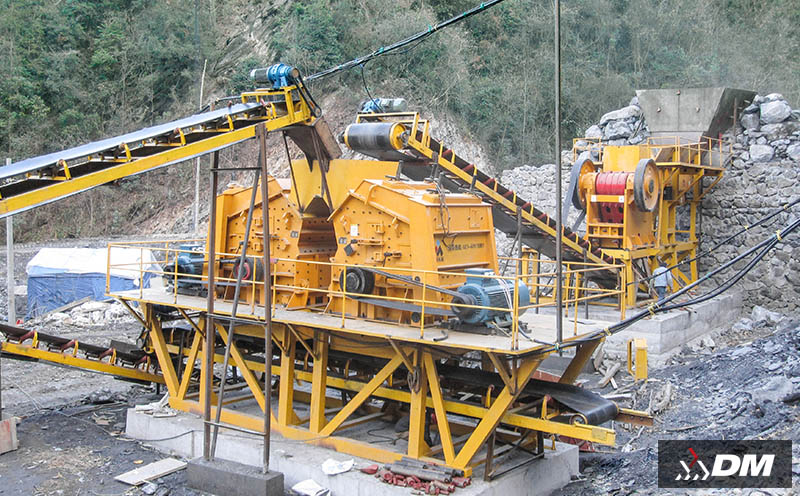
Turn Waste Into Margin With Impact Crushing
In construction and demolition recycling, the challenge is not only to reduce material size. The bigger challenge is to separate value from waste, create saleable products from inconsistent input, and do it at a cost that still makes commercial sense. Many recyclers discover that traditional crushing setups can reduce volume, but they do not always produce the liberation, shape, and finished product quality needed for strong resale value.
This is where the fixed impact crusher becomes a high-value solution. In permanent recycling yards and long-life processing plants, it gives operators a way to process concrete, asphalt, brick, and similar materials with better reduction control, stronger particle shaping, and improved separation potential. For overseas customers serving urban redevelopment, municipal recycling, and recycled aggregate markets, the fixed impact crusher can be the machine that changes a waste-handling site into a profit center.
The commercial logic is straightforward. If incoming material is difficult, variable, and contaminated, the crushing stage must do more than break it. It must help liberate embedded materials, support downstream screening and metal removal, and produce usable fractions that customers are willing to buy.
The Real Pain Points in Recycling Plants
Recycling operations face a very different set of pressures than hard rock quarries. Feed is less predictable, contamination is more common, and customers often judge the product based on practical usability rather than just size.
Typical pain points include:
Mixed feed quality
Concrete, asphalt, brick, and other materials arrive in highly inconsistent proportions.
Embedded steel and contamination
Material often contains rebar, wire, wood, plastic, or fines that complicate processing.
Weak product value
Poor liberation or poor particle shape can limit acceptance in secondary applications.
Margin pressure
Tipping fees and recycled product sales must offset high handling and sorting costs.
A fixed impact crusher helps solve these issues by applying impact-based reduction that can improve breakage selectivity and particle shaping, especially in recycling applications where liberation matters.
Why a Fixed Impact Crusher Fits Recycling Yards
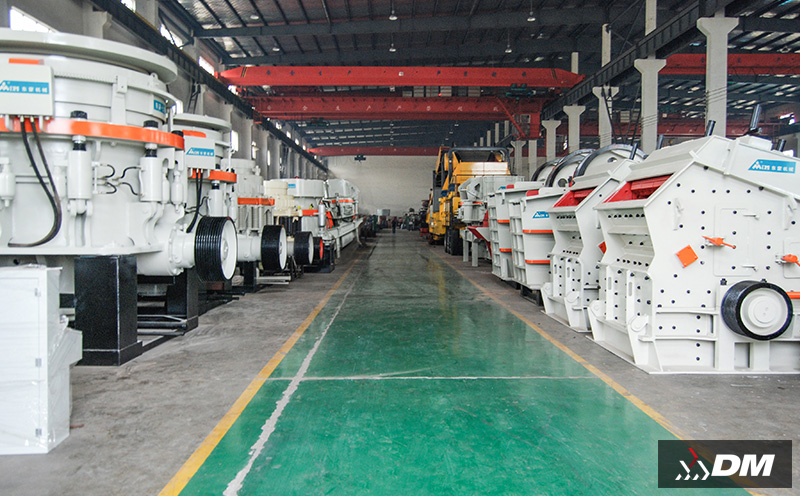
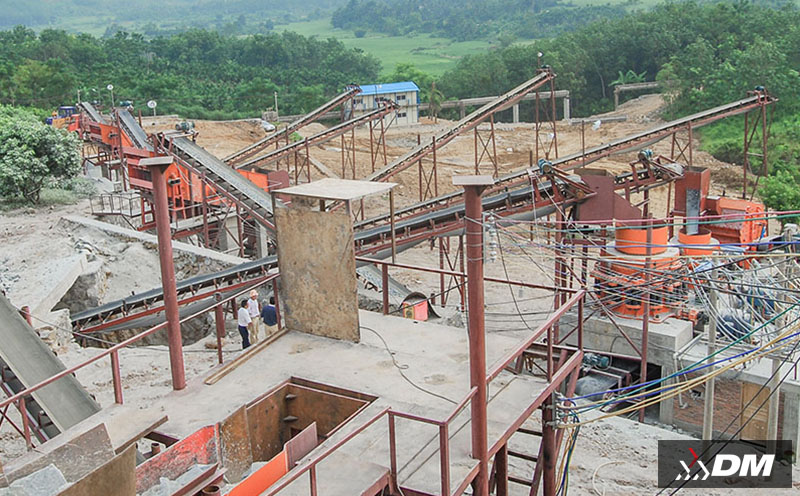
In a permanent recycling facility, a fixed impact crusher offers advantages that go beyond crushing mechanics. Because the machine is installed in a stable layout, the operator can build a complete system around it: controlled infeed, pre-sorting, magnetic separation, dust suppression, downstream screening, and stockpile organization.
This matters because recycling performance depends on process discipline. If materials are handled randomly, even good equipment struggles. A fixed setup allows the impact crusher to work in an engineered flow where each stage supports the next.
The crushing action itself is especially useful for materials like concrete and asphalt. It helps release bonded components and generate shaped output that can be more attractive for sub-base, road base, recycled concrete aggregate, or other practical applications. In some cases, better liberation also improves the efficiency of metal recovery systems, creating additional value.
Best-Fit Applications
The fixed impact crusher is not the answer to every crushing duty, but in the right applications it is highly effective.
Recycled concrete processing
For turning demolition concrete into reusable aggregate with improved particle shape.
Asphalt recycling
Where controlled reduction helps prepare material for reuse in road construction.
Urban demolition waste lines
Especially when consistent plant layout supports sorting and separation steps.
Mixed inert waste processing
Where brick, concrete, and similar materials can be converted into saleable fractions.
Municipal or private recycling hubs
Facilities that receive large, steady waste streams benefit from fixed installation stability.
For customers building a long-term recycling business, the fixed impact crusher often supports better product quality than a basic volume-reduction approach.
How It Improves Product Quality and Recovery
The financial value of a fixed impact crusher comes from what it enables downstream. When material is broken in a way that improves liberation and reduces oversized contamination clusters, screening and separation become more efficient.
The resulting aggregate can show better shape, making it easier to use in road base, fill, drainage layers, and other applications where handling and compaction matter. Recovered metal can also be cleaner and easier to separate when the crushing stage is properly configured.
This improves total plant economics in three ways:
More saleable aggregate
Better output means more material can enter defined market channels.
Better recovery of valuable components
Metals and reusable fractions can be extracted more effectively.
Lower disposal burden
Less material ends up as residual waste with negative value.
For recycling operators, these improvements are often more important than absolute crusher throughput.
Selection Should Follow the Material Strategy
A fixed impact crusher should be chosen based on the expected input stream and the intended product mix. Concrete-heavy feed behaves differently from asphalt-rich or mixed demolition feed. Rotor design, chamber configuration, apron adjustment, and wear protection all influence performance.
Buyers should also assess how the crusher fits into the whole process. Pre-screening, overband magnets, hand-sorting stations, air separation, and final screening all affect the value that the crusher can unlock. Purchasing the machine without designing the surrounding process is a common mistake.
Wear cost should be analyzed realistically. In recycling, contamination levels can strongly influence part consumption. International buyers should work with suppliers who understand their feed profile rather than relying on generic capacity claims.
Operations and Maintenance in Recycling Conditions
Recycling is tough on equipment because contamination introduces unpredictability. Daily discipline is essential. Operators should control feed presentation, remove major tramp materials before crushing when possible, and monitor wear components carefully.
A good fixed impact crusher should allow safe and efficient access to blow bars, aprons, liners, and inspection points. In a recycling yard, lost hours quickly become lost margin because incoming waste continues to arrive whether the crusher is running or not.
Dust control and noise management are also important, especially in urban or regulated environments. Permanent installation makes it easier to build these protective systems properly. For overseas operators working near cities or industrial zones, this can support compliance and customer trust.
Why the ROI Can Be Strong
Many recycling businesses operate under thin margins, so every investment is examined carefully. The ROI of a fixed impact crusher becomes compelling when management looks beyond simple tonnage.
The machine can support higher product quality, better liberation, lower disposal cost, stronger metal recovery, and more reliable commercial output. Those gains directly improve the economics of recycling yards that depend on both tipping revenue and material sales.
In markets where natural aggregate supply is tightening or environmental rules are pushing more waste into recovery channels, the ability to produce better recycled material becomes a strategic advantage. A plant that only crushes waste may survive. A plant that turns waste into specification-driven product is better positioned to grow.
Conclusion
The fixed impact crusher is a strong solution for recycling plants that need more than basic size reduction. It helps convert difficult demolition materials into more valuable, more usable products by improving liberation, shaping output, and supporting efficient downstream separation.
For overseas customers building long-term recycling operations, the right fixed impact crusher can become a cornerstone of profitability. It reduces dependence on landfill disposal, increases product value, and helps transform complex waste streams into reliable commercial opportunities.
We will answer your email shortly!